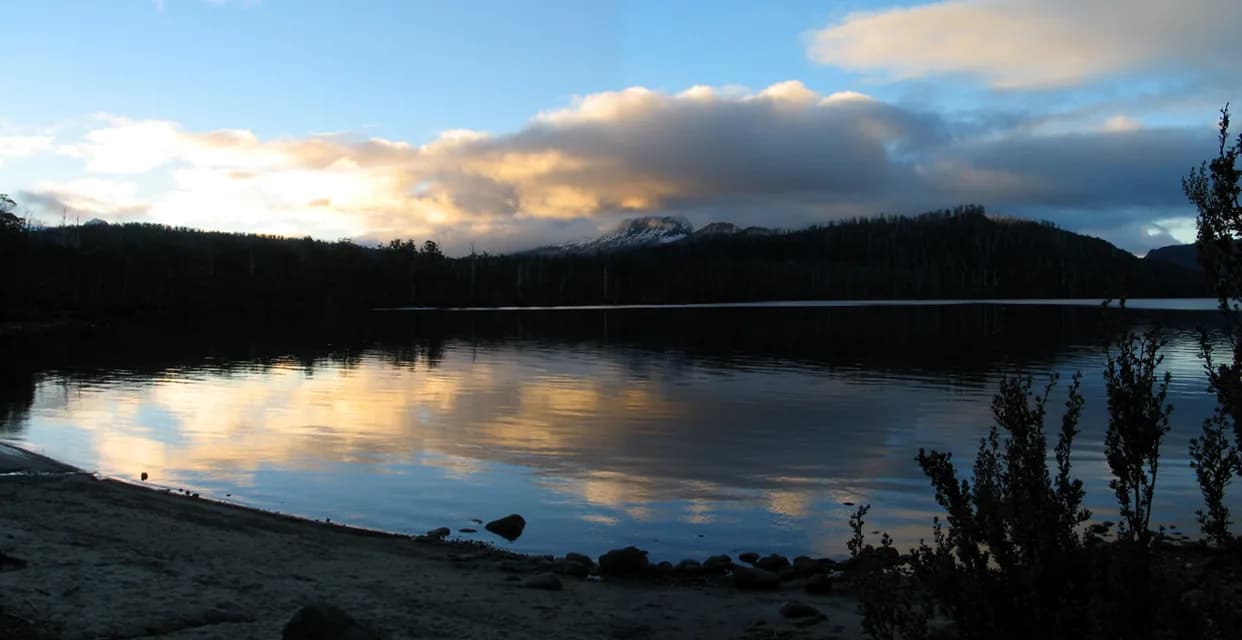

Glacial lakes and mountain tarns
Some of Tasmania’s best-known mountain waters occupy ground shaped by ice. Dove Lake and Lake St Clair sit in glacially carved basins. Formed walking tracks give straightforward access at popular viewpoints, but shorelines can be fragile. Vegetation around highland tarns is often protected and easily damaged, so keep to marked paths and avoid trampling littoral plants.
Water temperature remains low even in summer at altitude. Cold water increases the risk of rapid loss of body heat and shock after immersion, so treat swimming in these places as risky rather than recreational.
Central Plateau and the highland network
The Central Plateau contains many natural basins and a scattering of larger waters such as Great Lake and the Western Lakes. Some of these basins have been modified by dams and diversions, which affects shoreline shape and access. Roads across the plateau and the A5 Highland Lakes Road can be exposed to ice, hail and snow in colder months. Road surfaces and conditions change through the year, and seasonal weather can make otherwise short trips remote in practice.
Bring maps, warm clothing and expect changeable weather. Check park alerts and local road status before heading into high country.
Hydro storages and working infrastructure
Several large Tasmanian lakes are managed as hydro-electric storages. Lake Gordon and other storages are operational infrastructure: water levels can be varied, steep and muddy banks may appear when levels fall, and gates, fences and signage mark restricted areas.
Do not enter dams, intakes, spillways or other infrastructure. Respect signs and locked gates. If you plan to paddle or fish near a storage, check that the area is open for recreation and confirm current lake levels and safety advice from the manager before you go.
Swimming, paddling and general water safety
Appearance is a poor guide to risk. A broad, calm surface does not guarantee safe swimming. Assume cold water immersion risk year-round in many Tasmanian lakes, limited access for emergency response in remote places, and variable shore conditions such as steep, muddy banks at storage lakes.
Paddling, kayaking and canoeing are popular activities in many lakes. For paddling near operated storages consider boat ramp access, prevailing wind and likely water release activity. Hydro Tasmania publishes lake-level information and safety guidance; check those details and any current alerts if your plan involves power-station rivers or storages.
Fishing, licences and biosecurity checks
Tasmania has an established trout fishery in its inland waters and many anglers target brown and rainbow trout in highland lakes. Recreational rules apply: a licence is required for freshwater angling and some waters have seasonal or area restrictions. Before you fish, confirm licence requirements, open seasons and any special rules that apply to the specific lake you will visit.
Biosecurity matters for inland waters. Clean gear, dry boats and nets between waters to reduce the risk of spreading aquatic pests. Check Inland Fisheries Service guidance for current requirements before moving between catchments.
Access, road conditions and planning for remote travel
Some lakes are roadside and well served by formed tracks, but many highland and western waters are remote. Roads into the Central Plateau or across the high country can be affected by snow, ice or flood. Hydro access roads and approaches to storages may close without much notice for operational reasons.
Plan fuel and supplies for longer detours, tell someone your route and expected return, and consider carrying an emergency locator or satellite communication device where mobile coverage is unreliable. Check national park alerts, Hydro Tasmania visitor information and local road status before setting out.
Where to stay and visitor facilities
Hydro Tasmania operates or lists a few accommodation options located beside major waters. Some heritage villages and lodges near storages offer visitor facilities and a base for fishing, paddling or walking. Services and opening arrangements can change with operational needs, so confirm availability and any entry conditions before travel.
Practical checks to do before you go
- Confirm current park alerts and visitor information for the lake’s reserve or national park. These alerts can cover track closures, weather warnings and access limits.
- Check lake levels and safety notices from the manager for any hydro storage you plan to visit. Sign up to receive water alerts where offered.
- Buy the correct freshwater angling licence and familiarise yourself with seasonal rules for the water you intend to fish.
- Observe biosecurity steps: clean, drain and dry boats and equipment when moving between waters.
- Verify road status for the route you intend to take and expect winter conditions on highland roads.
Visiting Tasmania’s lakes rewards planning. Knowing the origin of the waterbody, who manages it, and which practical checks apply will help you choose suitable activities and keep both people and places safe.