
Geology and coastal forms
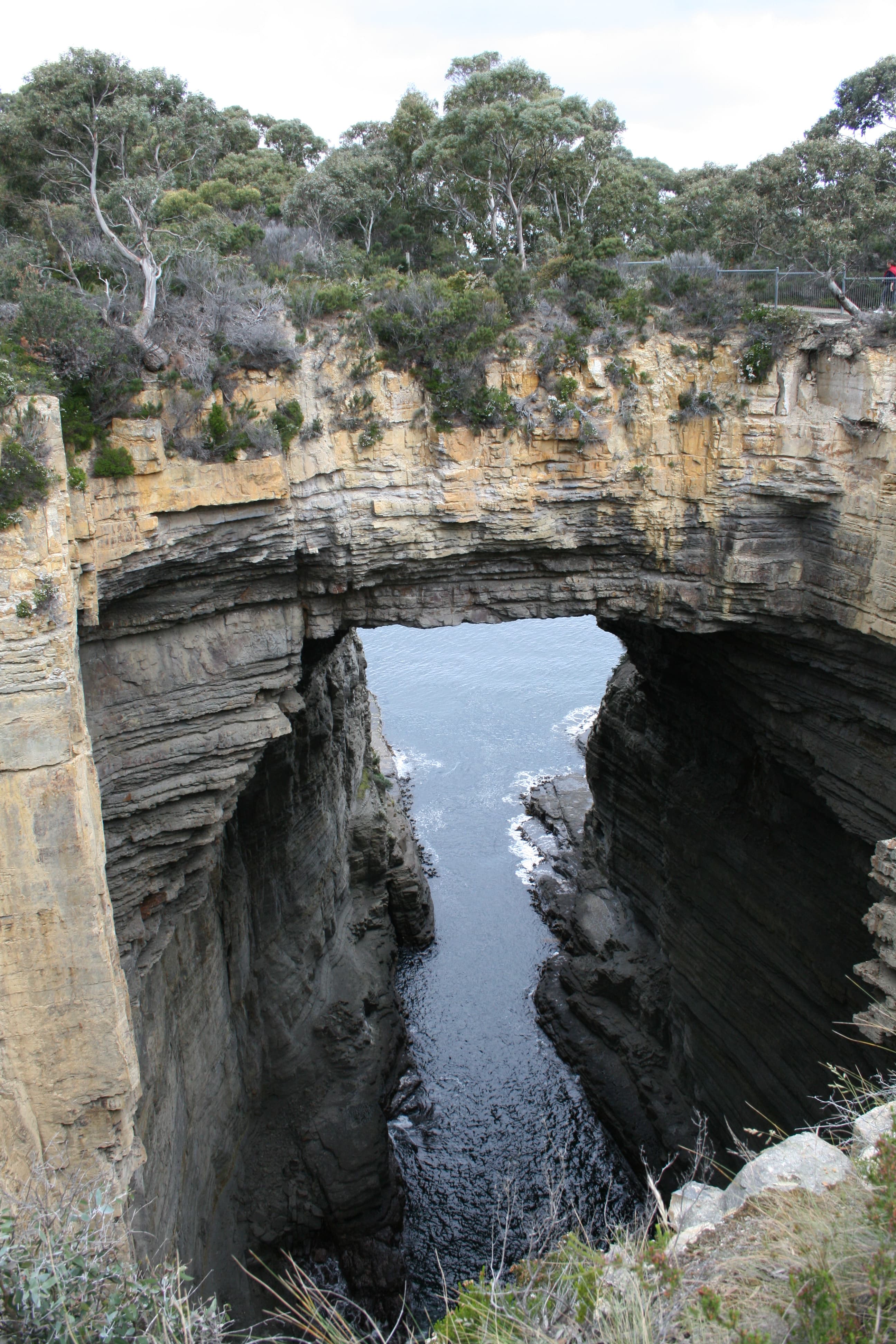
Sea caves, arches and blowholes on the Tasman Peninsula form where waves exploit joints and weaker layers in coastal rock. In this park there are two main rock stories. Dolerite makes up the towering sea cliffs and stacks at the capes. Softer sandstones and mudstones have been sculpted into tunnels, arches and blowholes. The same coastal processes can produce different shapes, so one viewpoint will not show the full sequence of change.
Where to see the main features
Most accessible formations lie within Tasman National Park on the Tasman and Forestier peninsulas. Notable features close to Eaglehawk Neck include Tasman Arch, Devils Kitchen and the Blowhole. Remarkable Cave sits near the southern end of Port Arthur and is reached from a central carpark. Maignon Bay Lookout offers vehicle access to views across the southern coastline. Many lookouts are formed with viewing platforms and barriers at the edge.
Remarkable Cave: access and what to expect
From the central carpark follow the signed short walk to Maignon Bay Lookout and to the viewing platform for Remarkable Cave. The official description records a descent of about 115 steps to the lower platform. The walk is graded so that some bushwalking experience is recommended. The surface may be rough and there are many steps and short steep sections. In certain swell conditions waves can rush through the tunnel and spray the platform. That can make the platform wet and slippery, so expect spray and the possibility of getting damp if conditions are right.
Dolerite cliffs, Tasman Arch and nearby lookouts
The great dolerite cliffs that line parts of the park are Australia’s highest sea cliffs according to park information. Formed lookouts give safe vantage points to view these sheer faces, natural arches and stacks. Barriers exist at many viewpoints. Do not cross fences or venture onto unstable ground. Headlands are exposed to strong coastal winds and rockfall is an ongoing process which can alter cliff edges and lookouts without much notice.
Park rules, passes and fuel stove areas
A valid parks pass is required to enter Tasmania’s national parks, including Tasman National Park. Most of the park is designated Fuel Stove Only, and open campfires are not permitted except in designated campground areas. Fortescue Bay campground is an example of a campground with regulated facilities. Check and arrange the appropriate parks pass before you travel and follow campground booking requirements where they apply.
Tracks, grades and suitability
Short walks to lookouts are generally accessible for people with reasonable mobility, but other routes involve steep steps and rough surfaces. Some short walks are rated Grade 3 which means you should expect a rough track surface and short steep sections. The Maignon Bay Lookout is accessible from the carpark. Other short walks and the staircase descent to Remarkable Cave are not suitable for people with limited mobility or for wheelchair users. Choose routes that match your group’s fitness and experience and consult the track classification guidance for longer or more remote walks.
Safety checks before you go
Conditions on the Tasman Peninsula can change quickly. Check park alerts for closures, hazards and temporary restrictions before you travel. On the day, check the weather forecast and leave your trip intentions with someone. For remote or uncertain conditions, carry extra food, warm clothing, an emergency shelter and consider a Personal Locator Beacon. Obey signs, barriers and the safe walking guidance provided by the park. Never enter an unmarked cave or walk onto a rock platform just because a photograph shows people there.
Practical viewing notes and road safety
Best photographic positions are the formed lookouts and platforms. If you plan to use the stair access to the lower platform at Remarkable Cave, wear sturdy footwear and watch for slippery surfaces from spray. Visitors arriving by car should expect sealed roads to the park; the drive from Hobart is commonly shown as about 90 minutes via Sorell and the Arthur Highway. Where possible, avoid driving in park reserves at night. Native animals commonly cross roads after dark and collisions risk damage to vehicles and harm to wildlife.
Camping and additional activities
Fortescue Bay is identified as a well-vegetated campsite offering beach access and a base for activities such as swimming, snorkeling, scuba diving, kayaking, fishing and walking. If you intend to camp in the park book at designated campgrounds and follow the fuel stove-only rule in most areas. Facilities vary between lookouts and carparks; some have toilets and parking while others are simple short walks from a carpark.
Final practical checklist
Buy or arrange a valid parks pass before arrival. Check current park alerts and weather. Match walks to the skill and fitness of your group. Wear sturdy footwear and layered clothing for wind and spray. Stay behind fences and on formed platforms. Avoid driving at night in reserves and carry suitable emergency equipment for remote walking where required.