Buckland, Tasmania
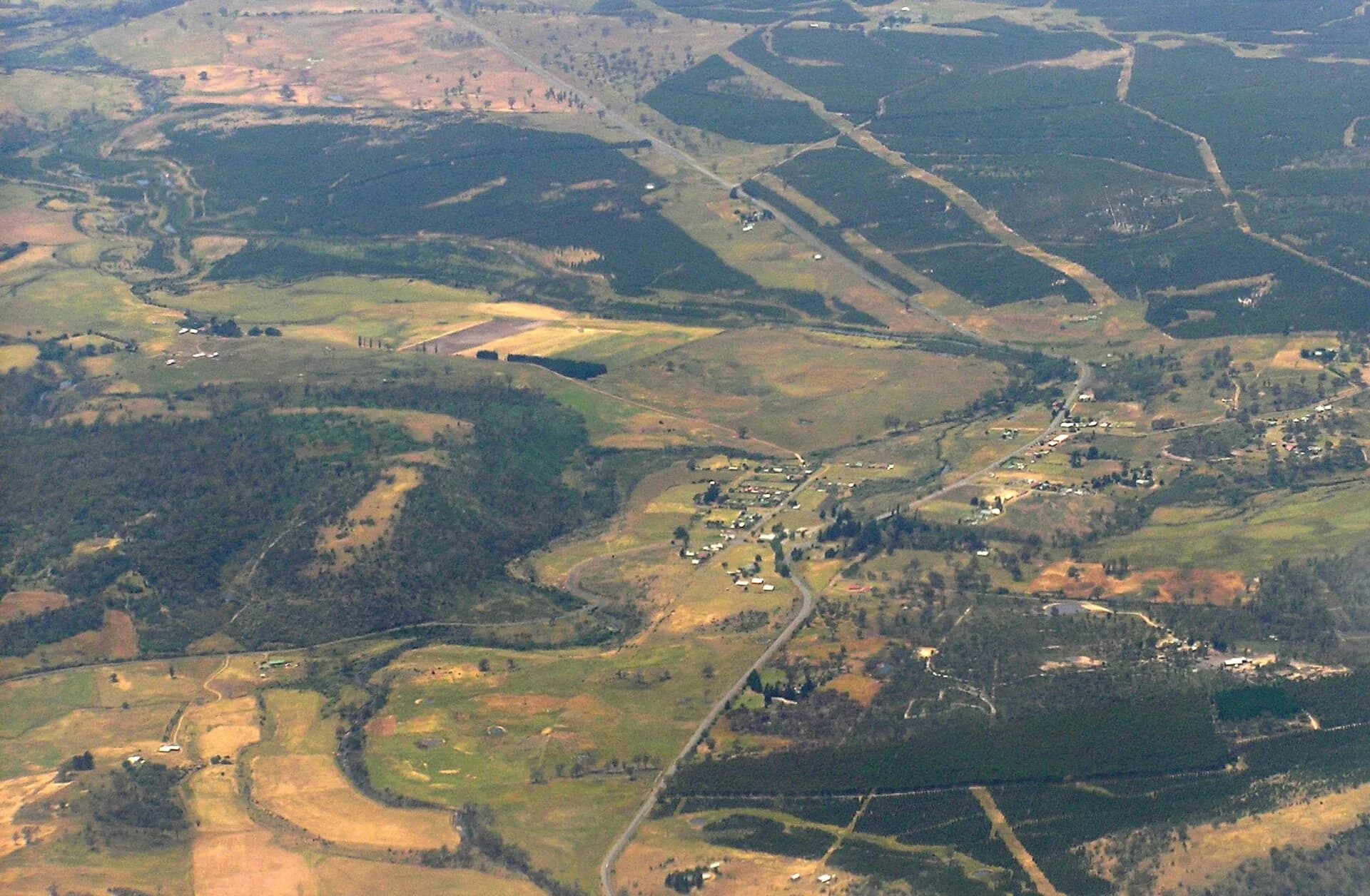
Located 63 km north east of Hobart on the Tasman Highway, Buckland is a quiet rural village noted for the beauty and historic importance of its St John the Baptist Anglican Church.
The district around Buckland was originally known as Prosser Plains. It was settled in the 1820s and the oldest house in the district 'Woodsden', which lies north east of the town, was built in 1826. In 1846 Governor Franklin renamed the tiny settlement Buckland, after William Buckland, Dean of Westminster (1845-56) who as a noted geologist (he had been appointed Professor of Mineralogy at Oxford University in 1813) had tried to reconcile geology with the Bible. The Buckland timber mill operated from 1948 until 1981.
The town's Tasmanian Bushland Garden displays endemic and rare Tasmanian east coast plants. The Garden also has picnic facilities, a landscaped quarry and waterfall. Next door, at the Pulchella Nursery, you can browse the selection of native Tasmanian plants for sale.
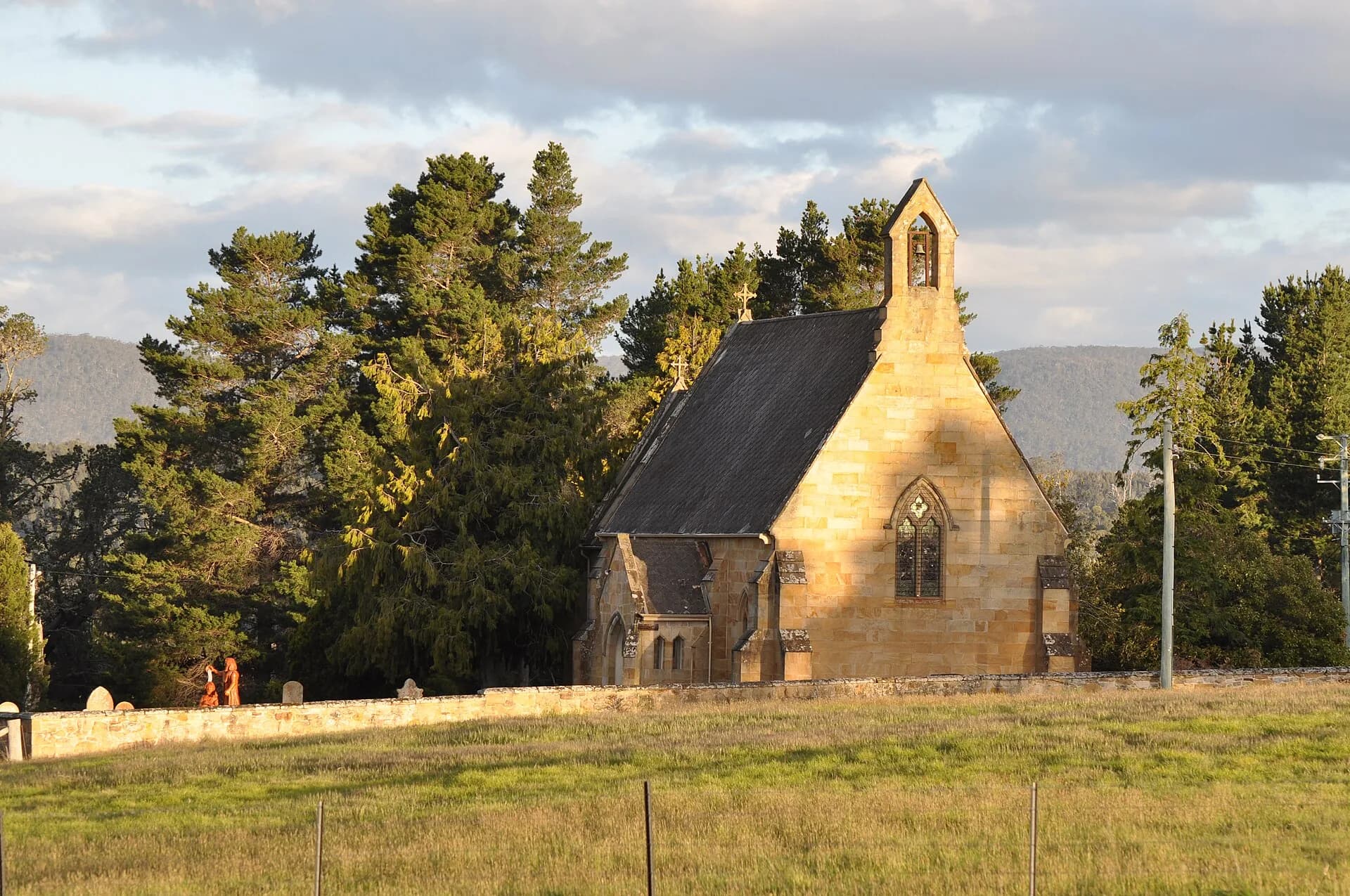
Today Buckland's historic features include the Buckland Hotel, which was licensed in 1845 (although extensively modified the original bar still exists) and St John the Baptist Church (turn at Sally Peak Road). The church was constructed as a replica of the church at Cookham Dean in Sussex, England. Brockley Estate is a stunning 1841 colonial homestead offering accommodation in total seclusion.

St John the Baptist Church
The importance of St John the Baptist Church is partly its age - it was built in 1846 to a design by architect Crawford Cripps Wegman - but more so for its East Window. There have probably been no other historical Australian stained glass windows more talked of, argued about, or written of, than those in the Chancel of St John the Baptist Church at Buckland. The windows comprise the main triple light east window depicting the life of St John and the crucifixion of Jesus and the two light window to the left of it with depictions of Matthew, Mark, Luke and John as their alter egos of; the winged man (Matthew), the winged Lion (Mark), the winged bull (Luke) and the Eagle (John). The entire east window is made up of ten individual panels of varying sizes and shapes to form a lancet shape overall.

There has been much speculation about the age of the windows with some people claiming that it was originally designed for Battle Abbey in England, a church which dates from 1094. The story is that before the famous Battle of Hastings, which was actually fought at Battle in Sussex, William the Conqueror vowed that if he won he would build an abbey to commemorate his victory. Legend has it that he built it where the English king Harold II had fallen. The church was pulled down during the Reformation and it is thought that the window may have found its way out to Australia.
The problem, however, is that experts believe the window in St John the Baptist Church was created sometime in the fourteenth century (some 300 years after the Battle of Hastings). The mystery of the window probably started because it is accepted that the Reverend F. H. Cox, who was Rector of the church from 1846-48, brought it to Australia when he emigrated from Sussex. One account even has Lord Robert Cecil, the British Secretary of State for the Colonies, giving the window to Cox before he departed from England. Whatever the story it is still remarkable to see a fourteenth century church window in a church which wasn't built until 1846.
The legendary tales about the window's origin will no doubt continue for many more centuries. The simplest explanation of the window's origins, as it was originally stated in The Mercury newspaper in 1850, is that it was the work of Irish born artist Michael O'Connor in London in the late 1840's. The perpetuation of the pre-Reformation legend probably started because of the window's unique design showing more 'medieval' depictions of the figures yet still having Gothic Grisaille patterns in the surrounding decorative work.
The Mystery of the Window
The church's graveyard is also of particular interest. A recent wood sculpture in the church grounds picks up the theme of Jesus' baptism from the church's historic stained glass window.

Tasmanian Bushland Garden
As a Regional Botanic Garden, the Tasmanian Bushland Garden is one of the very few public gardens in Tasmania devoted entirely to Tasmanian native plants. Located beside the Tasman Highway, next door to Pulchella Nursery, it features two hectares of enclosed display gardens set in a 20 ha bushland reserve in a peaceful rural setting. The gardens have been entirely developed by volunteers passionate about native plants.
The display gardens are laid out in natural communities, with rocks and logs a feature of the landscaping. Communities from granite and sandstone areas are included, as well as displays of some of the rare and threatened plants of the region. Signs and labels give explanations and names for the communities and plants, and also explain other aspects of the landscape.
A large landscaped quarry with a waterfall and pond is a popular attraction, as are a number of sculptures around the gardens. A picnic shelter, toilets, electric barbecue and picnic tables are available, making this a perfect place for a lunch or tea stop. The bushland area has walking tracks to a hilltop lookout, a grassy valley with majestic white gums, and a delightful wading pool in the local creek. Birds and wildlife are plentiful. Walks range from 20 minutes to about 45 minutes.
Free entry (donations warmly welcomed). Open daily during daylight hours. Ph: (03) 6239 1688. Location; Tasman Highway, Buckland (next door to Pulchella Nursery).