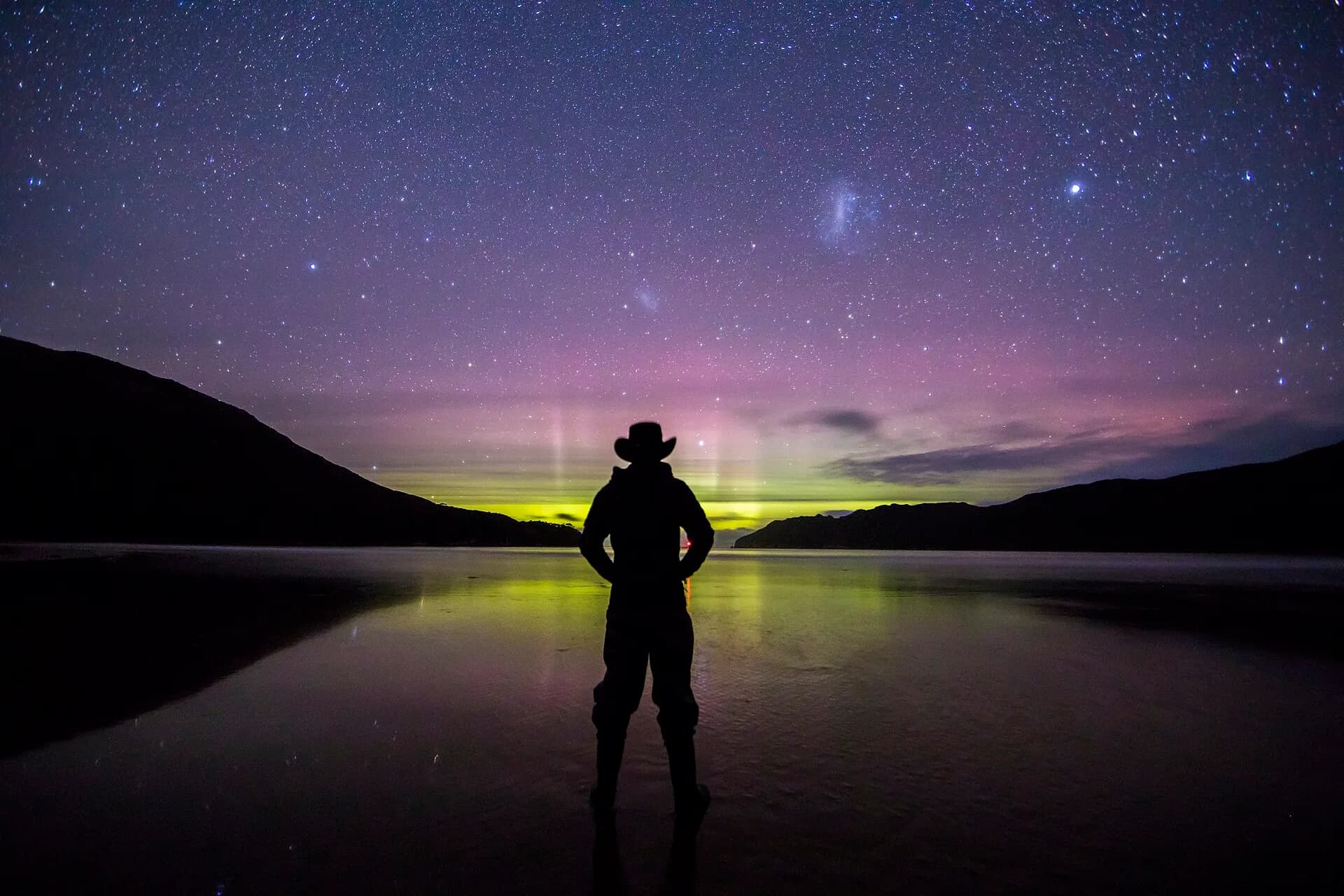

Aurora australis appears when charged particles and the solar wind interact with Earth’s magnetic field and upper atmosphere. Tasmania’s latitude improves the chance of a view, but no place offers a guaranteed show on a chosen night.
Start with space weather and cloud
The Bureau’s Australian Space Weather Forecasting Centre issues Aurora Watches for favourable future conditions and Alerts when visibility is possible now. Then check local cloud, rain and moonlight. Strong activity behind thick cloud is still invisible.

Look south from a safe dark place
A clear southern horizon and low light pollution help. Choose a legal public place you already know, arrive before dark and keep off roads, dunes, private land and penguin habitat.

Cameras see more colour than eyes
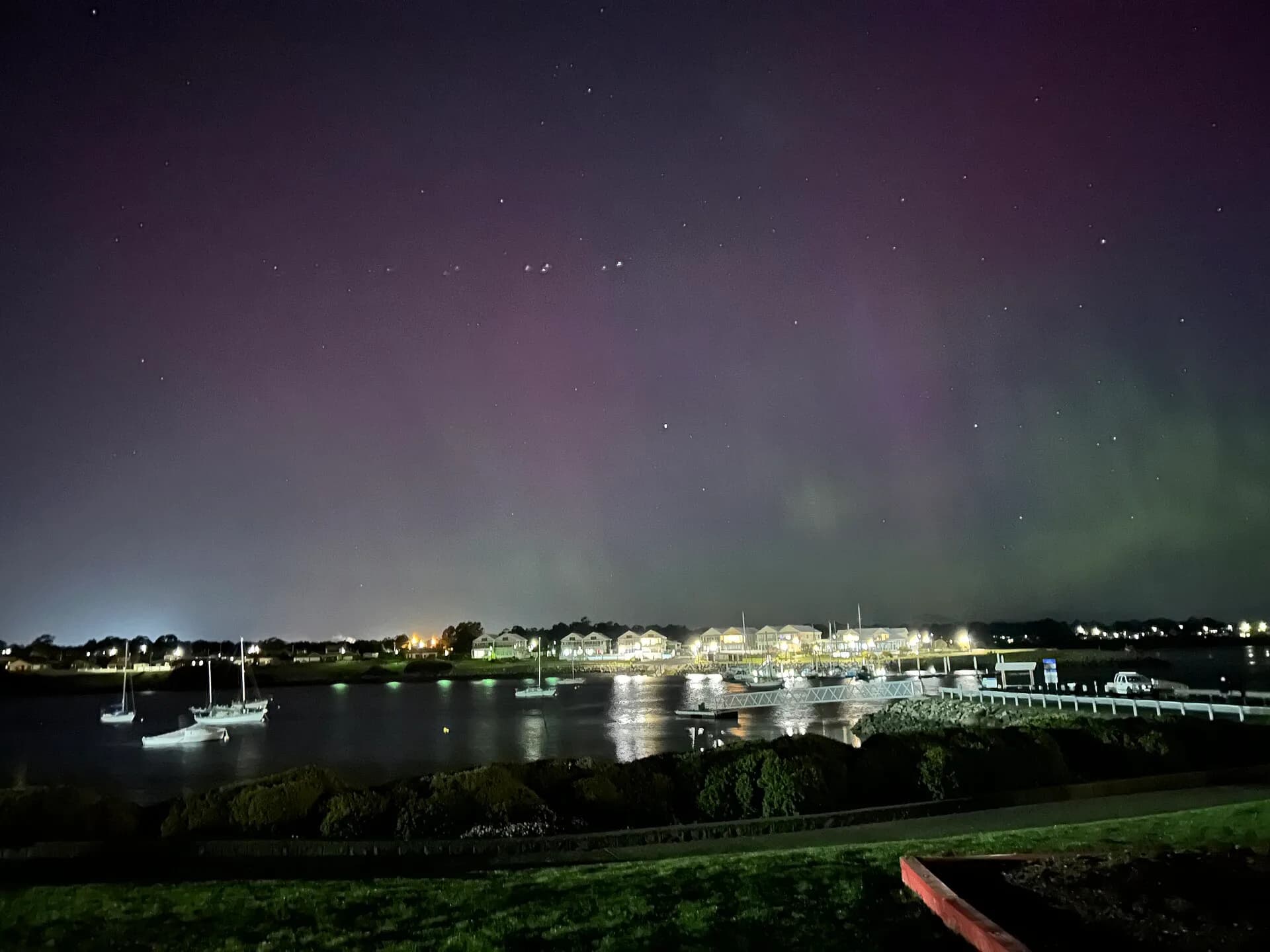
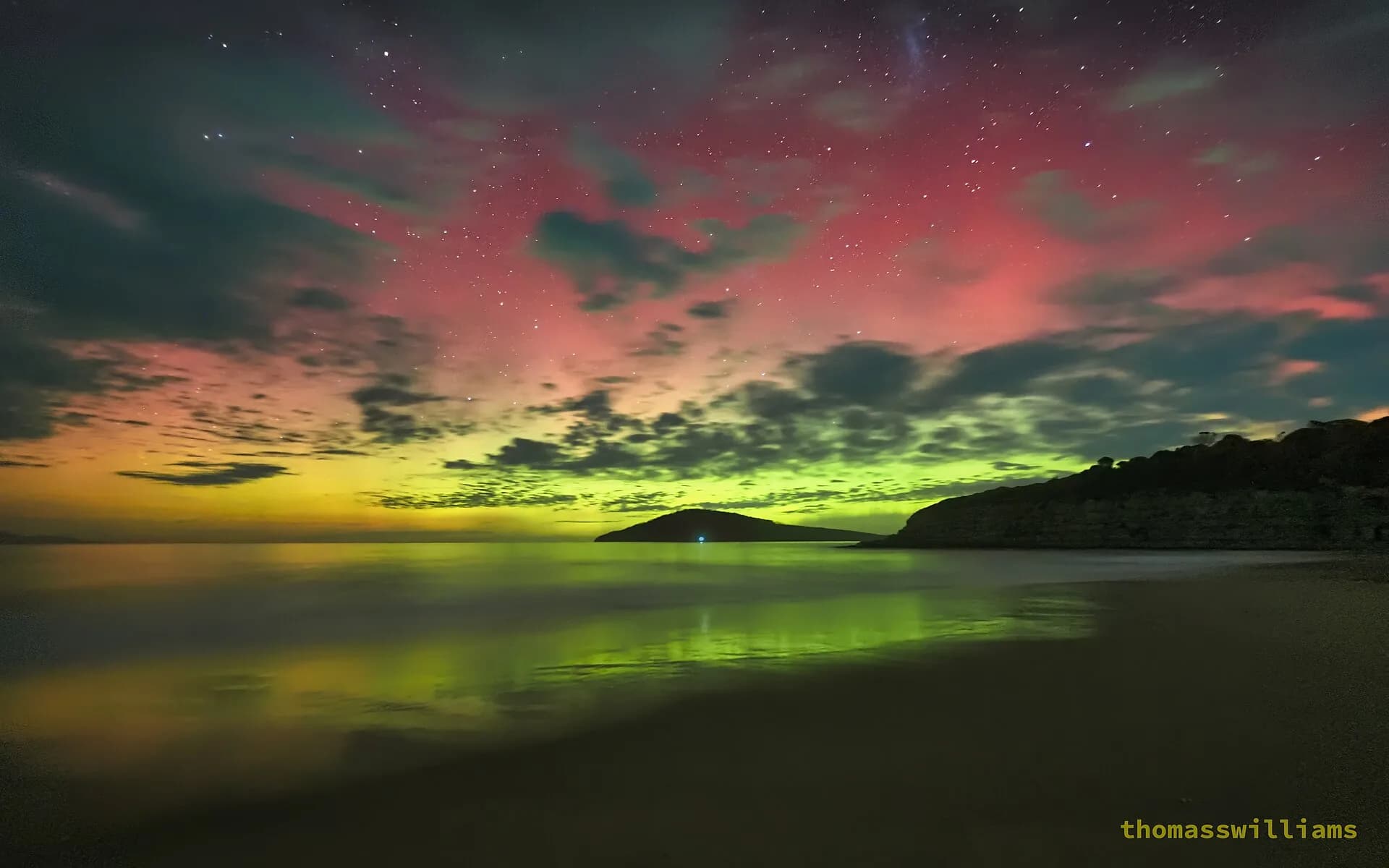
At Tasmania’s latitude, a weak aurora may appear as a pale glow while a long camera exposure records pink, red or green. Do not interpret every edited photograph as a normal naked-eye view.
.jpg)
The Tasman Peninsula, Bruny Island and other dark coasts can work only when access, weather and the southern view align. Avoid driving long distances solely on a social-media forecast.