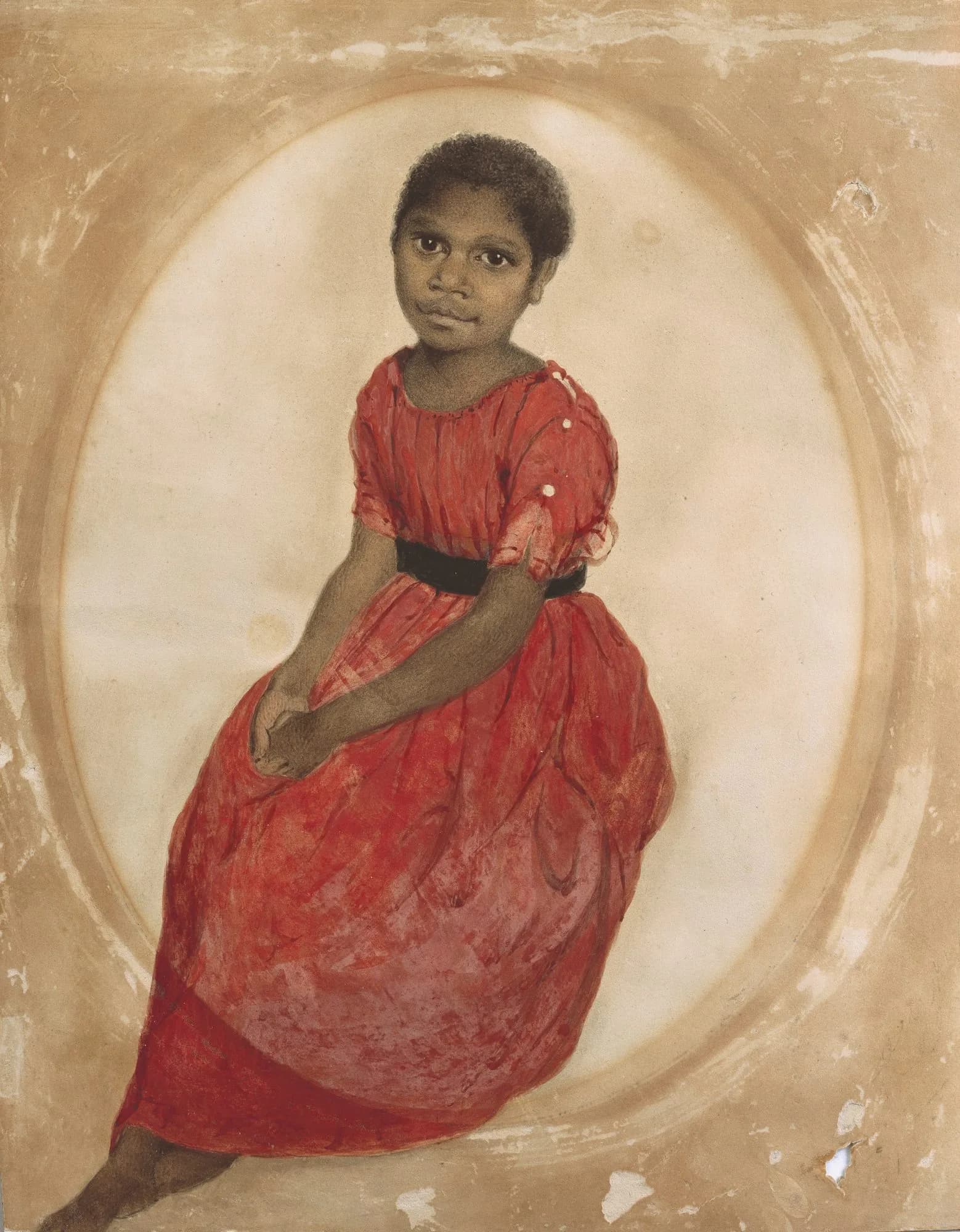

Mathinna was a Tasmanian Aboriginal girl whose short life is known mainly through records made by the colonial society that controlled her movements. Her story is often reduced to a tragic anecdote about Government House. A responsible account keeps her family, forced removal and the limits of the evidence in view.
Family and Wybalenna
Mathinna was born on Flinders Island around 1835. The University of Tasmania identifies her parents as Towterer, also recorded as Romeo, and Wongerneep, also recorded as Evelyne. Her family belonged to the Lowreenne people of south-west Tasmania and had been displaced to the Wybalenna Aboriginal Establishment.
Names and dates vary across historical records. Those variations reflect the way officials recorded Aboriginal people, not a lack of identity or family connection.
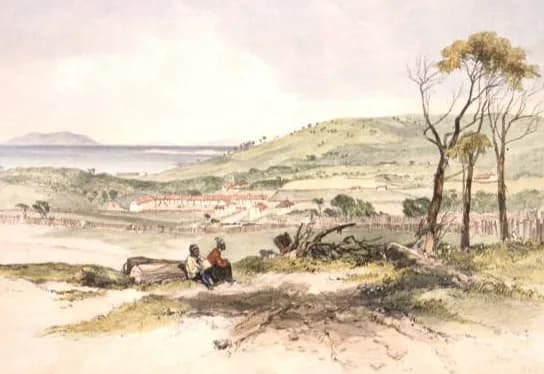

Taken to Government House
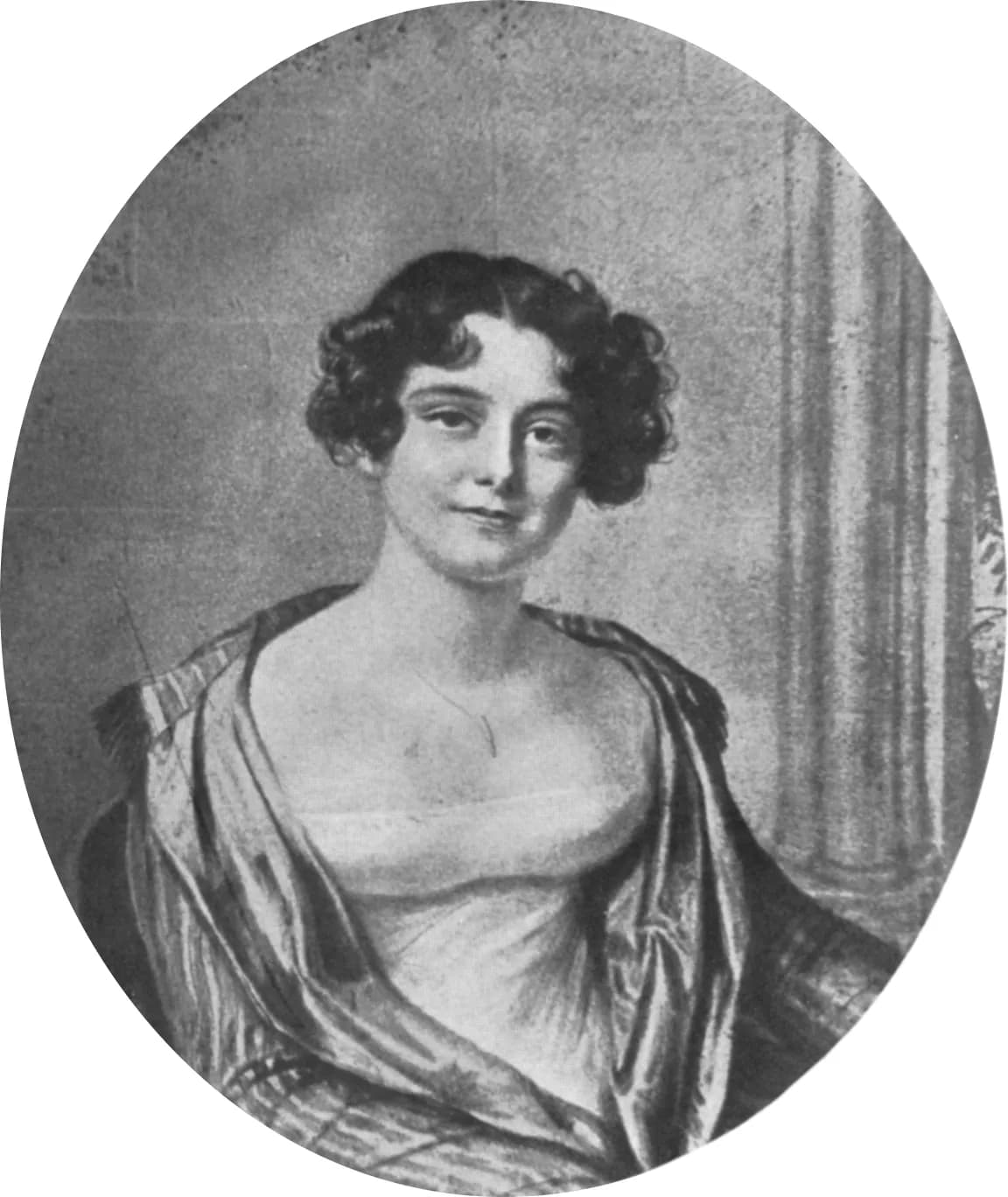
After John and Jane Franklin visited Wybalenna, Mathinna was sent to Hobart in 1839 and lived at Government House. Colonial accounts described this as adoption or education. Modern readers must also recognise the unequal power involved in removing a young child from family and community.
The Franklins renamed, dressed and educated her within their household. Surviving letters and recollections reveal how adults observed her, but they do not give us Mathinna’s full perspective. The Hobart history timeline places Government House within the wider colonial city.

The Thomas Bock portrait
Lady Jane Franklin commissioned Thomas Bock to paint Mathinna in 1842. The watercolour is now one of the most widely reproduced images of a Tasmanian Aboriginal person from the period.
The portrait is evidence, but it was also staged and commissioned within a colonial household. Clothing, pose and the circumstances of production need interpretation. It should not be treated as a transparent record of Mathinna’s inner life.
After the Franklins left
When the Franklins departed in 1843, Mathinna was placed at the Queen’s Orphan School. She later returned to Wybalenna and, after that establishment closed, was among Aboriginal people moved to Oyster Cove.
The Companion to Tasmanian History gives her death as 1852, probably by drowning near Oyster Cove. Some older secondary sources give 1856. The difference is a reminder to cite the record being used rather than repeating an unsourced date.
Reading the archives carefully
Libraries Tasmania provides guides to government records concerning Aboriginal people, including orphan-school and Oyster Cove material. These archives document policy and administration, but they were largely created by officials. Community knowledge and Aboriginal scholarship are essential to understanding what those records omit.
Mathinna’s life should not be used to claim that Tasmanian Aboriginal people disappeared. Tasmanian Aboriginal communities survived, and their culture and political life continue. The history of southern Tasmania provides broader context for colonisation and resistance.