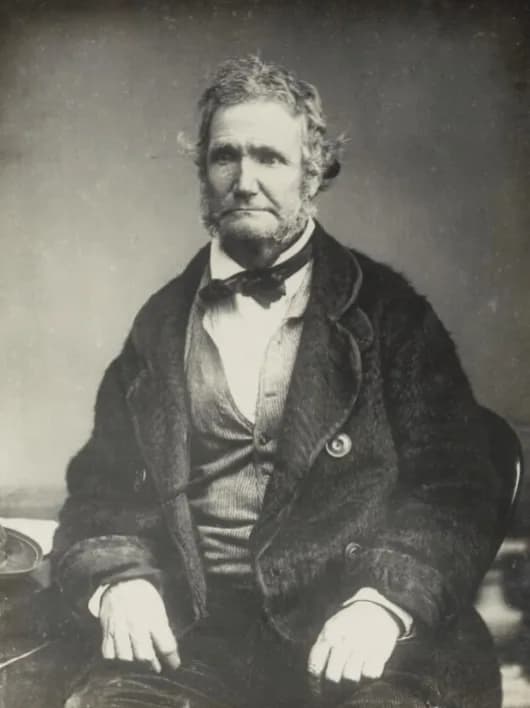

Martin Cash was transported from Ireland to New South Wales in 1827 and moved to Van Diemen’s Land in 1837. Convictions and repeated escapes led him to Port Arthur, from which he escaped with George Jones and Lawrence Kavanagh in 1843.
A short, highly visible bushranging career
The group robbed inns and settler households before Cash entered Hobart and was captured. Later descriptions as “gentlemen bushrangers” softened the fear and coercion involved in armed robbery.


A death sentence was commuted
Cash was convicted after a constable died during his capture. His death sentence was eventually commuted and he was sent to Norfolk Island, where his conduct and circumstances changed.
_(15205244415).jpg)
Memoir and record need to be separated
After returning to Tasmania, Cash worked and farmed near Glenorchy until his death in 1877. His published narrative was shaped with an editor and presents a coloured version of events, valuable but not neutral.


Compare Cash with Matthew Brady, William Westwood and the broader convict-sites guide.