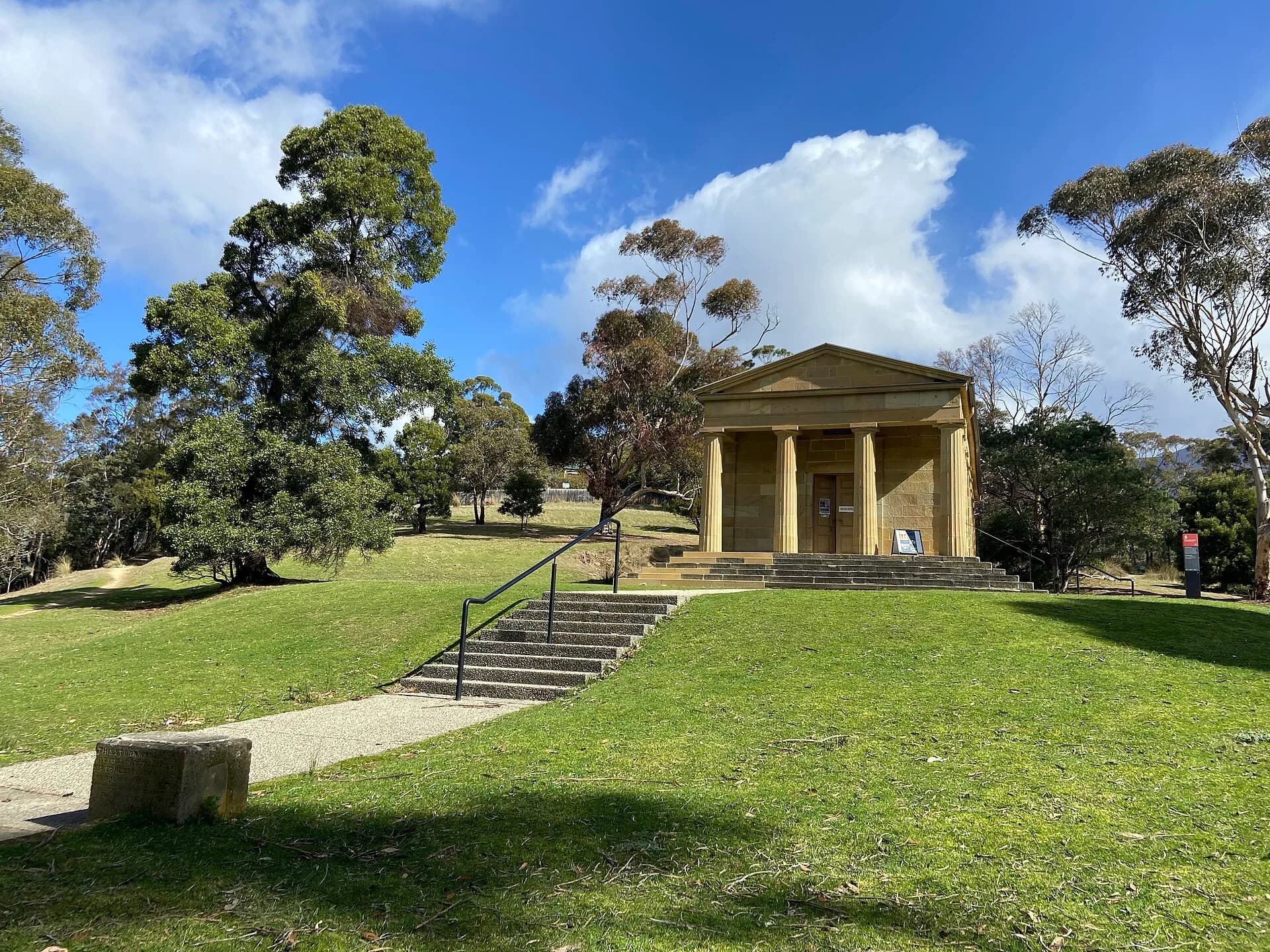

James Blackburn was transported for forgery in 1833 after working in London surveying and drainage. In Van Diemen’s Land, officials immediately used his engineering skill. His career exposes both the coercion of transportation and the responsibility sometimes entrusted to skilled prisoners.
Public work under another signature
Blackburn worked in the Roads and Bridges department and then Public Works. Many projects appeared under senior officials’ names, which makes documentary attribution important. He contributed to roads, surveys, bridges and government architecture before receiving a free pardon in 1841.

An inventive architectural range
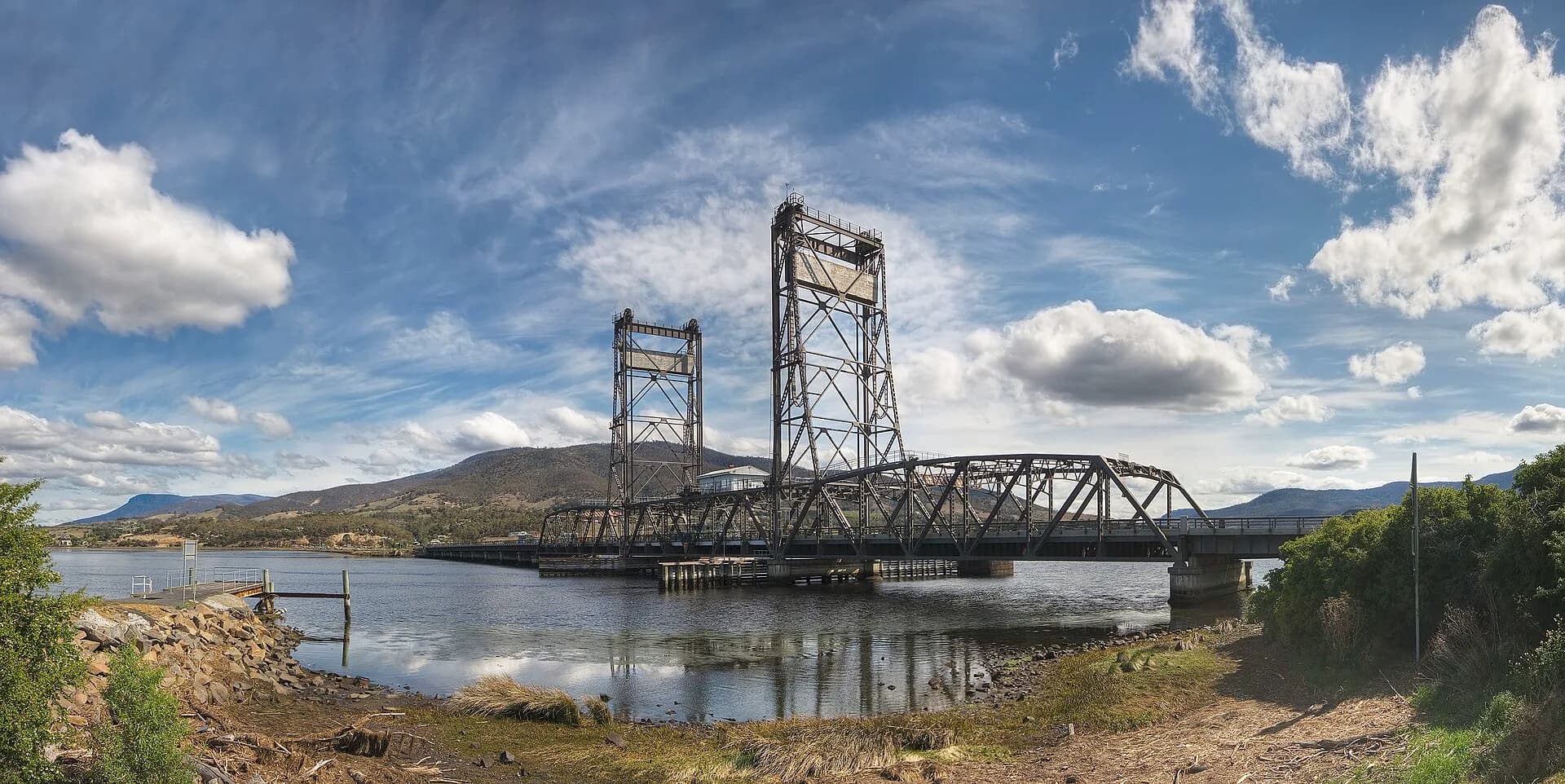
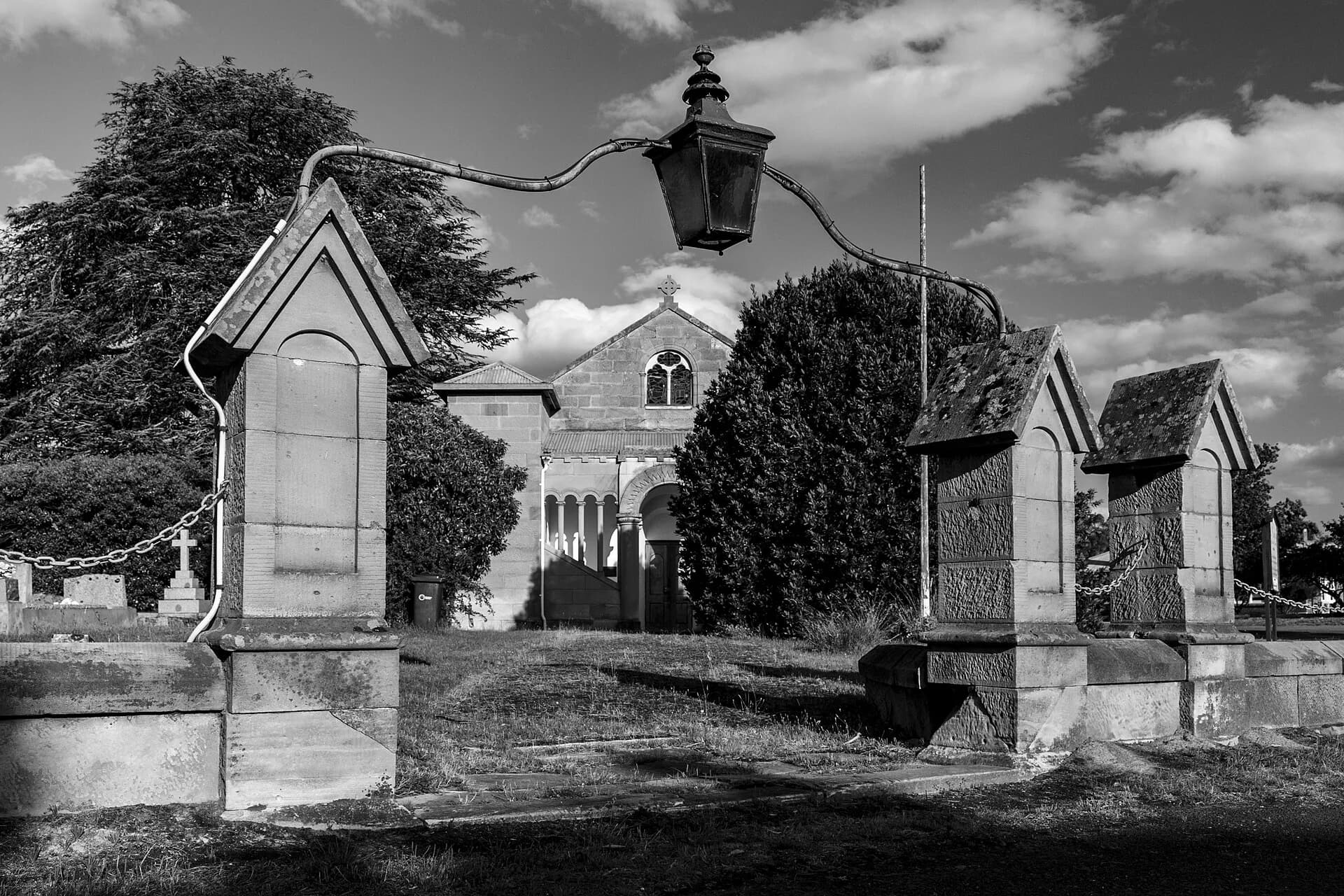
Works attributed to Blackburn include St Mark’s at Pontville, the Lady Franklin Museum, churches at Glenorchy and Sorell, and the Bridgewater bridge scheme. He used Gothic, Romanesque, Greek Revival and picturesque forms rather than one repeated style.
.jpg)
Tasmania and Melbourne
Blackburn moved to Melbourne in 1849 and became city surveyor. His work on the concept for a metropolitan water supply extended an engineering career begun under sentence. He died in 1854 before the Yan Yean scheme was completed.
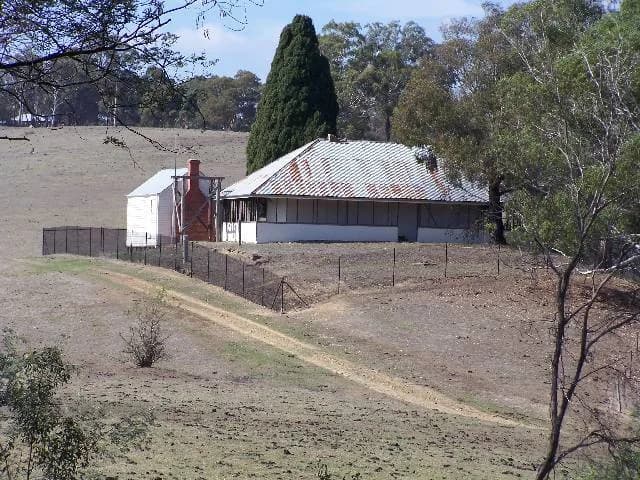

Compare his work with John Lee Archer’s public buildings and explore colonial infrastructure through Tasmania’s historic bridges.