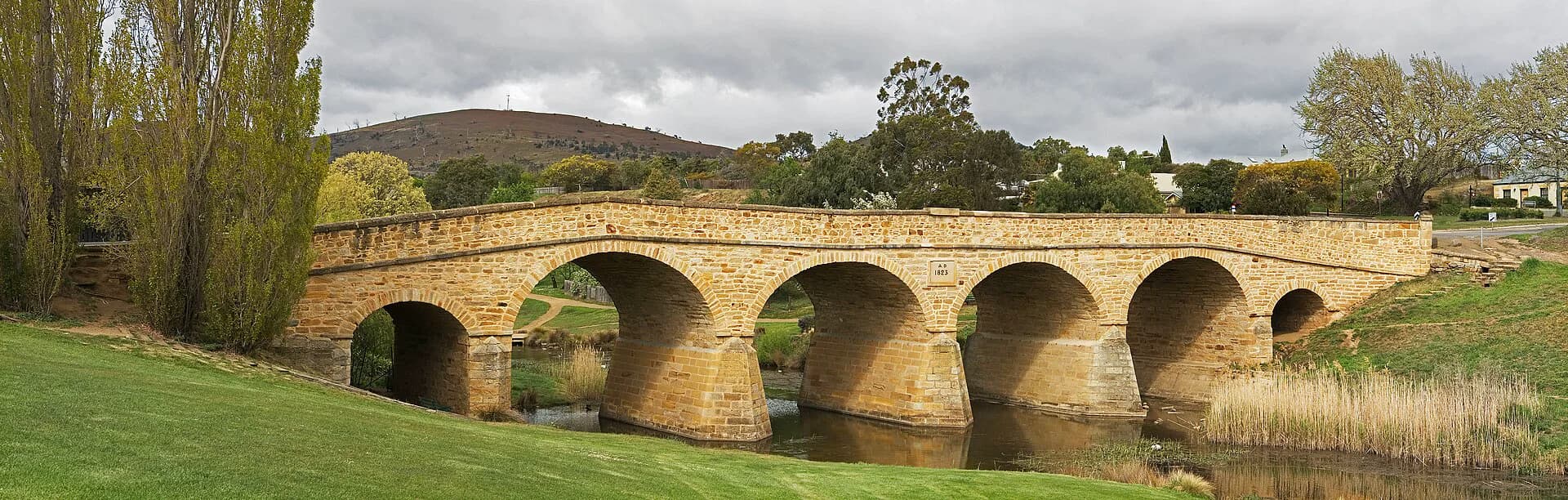

Tasmania’s historic bridges range from convict-era masonry arches to timber, iron and concrete structures. Their value lies in engineering and the routes, labour systems and river crossings they made possible.
Sandstone at Richmond and Ross
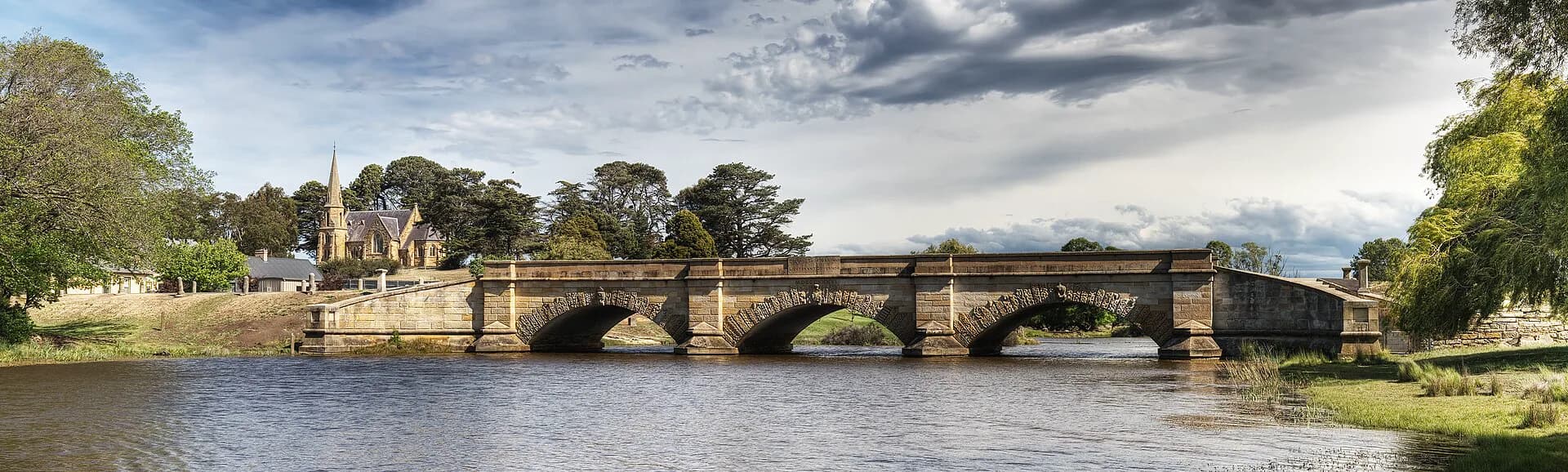
Richmond Bridge and Ross Bridge are major masonry landmarks, but they belong to different settings and construction histories. Both remain transport structures, so pedestrians need to use designated paths and watch traffic.

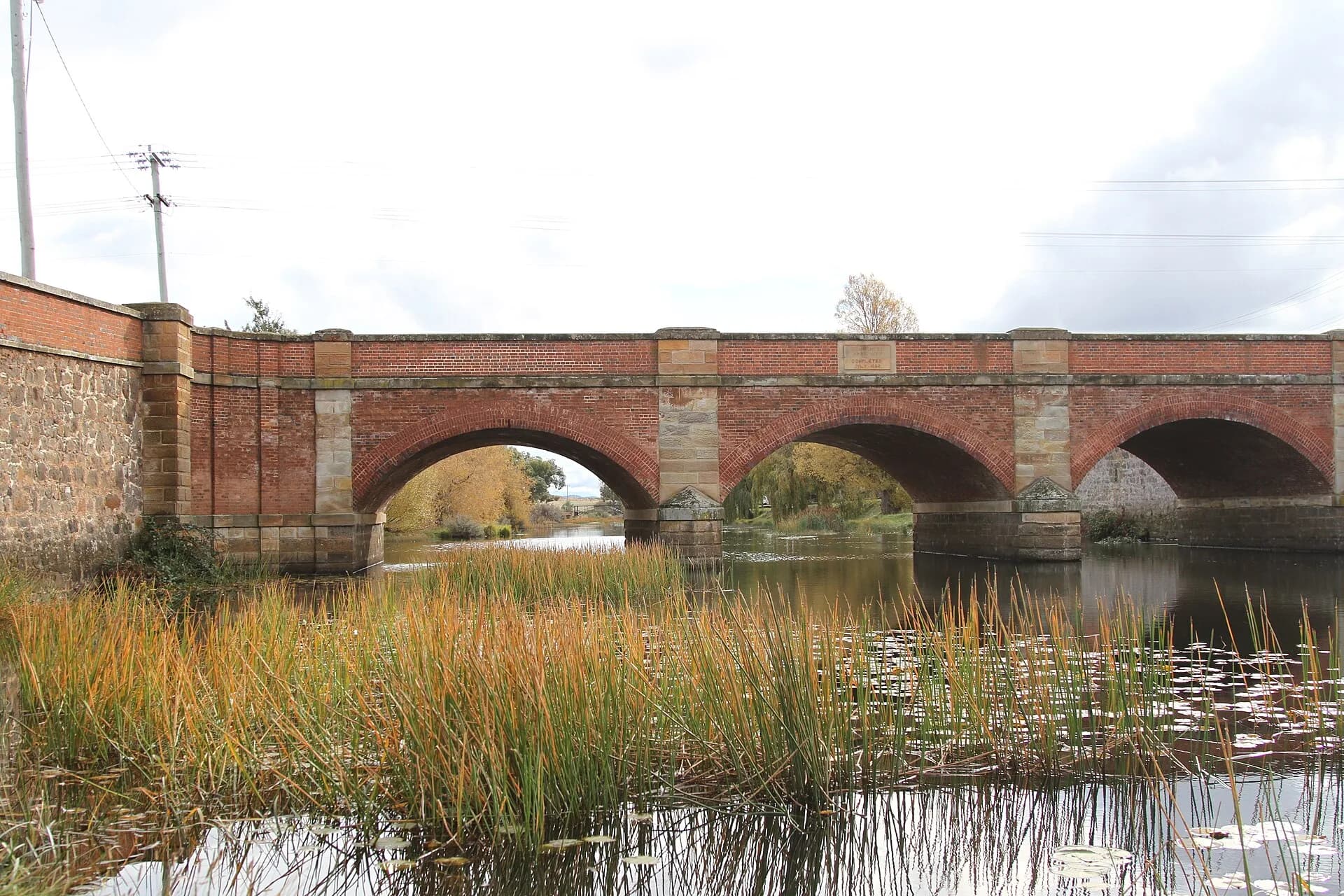
Brick at Campbell Town
Red Bridge uses locally made brick in a broad arch over the Elizabeth River. Its Midland Highway role demonstrates how old fabric can remain part of a modern transport corridor.

Read alteration as part of the story
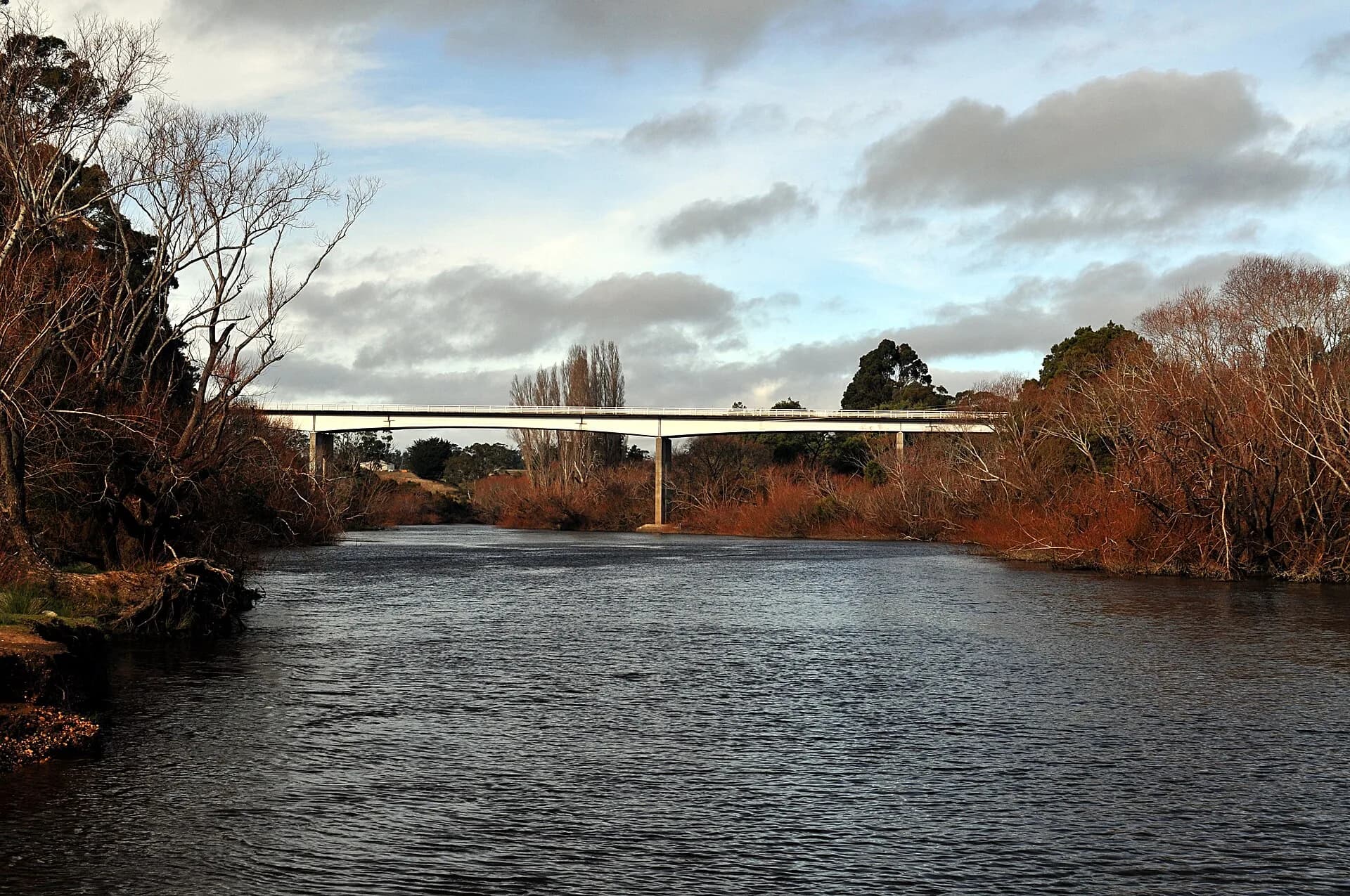
Widening, strengthening, flood damage and replacement approaches reveal changing vehicles and engineering standards. A picturesque view should not erase convict labour or later maintenance work.

Use the detailed guides to Richmond, Ross Bridge and the Campbell Town heritage walk.