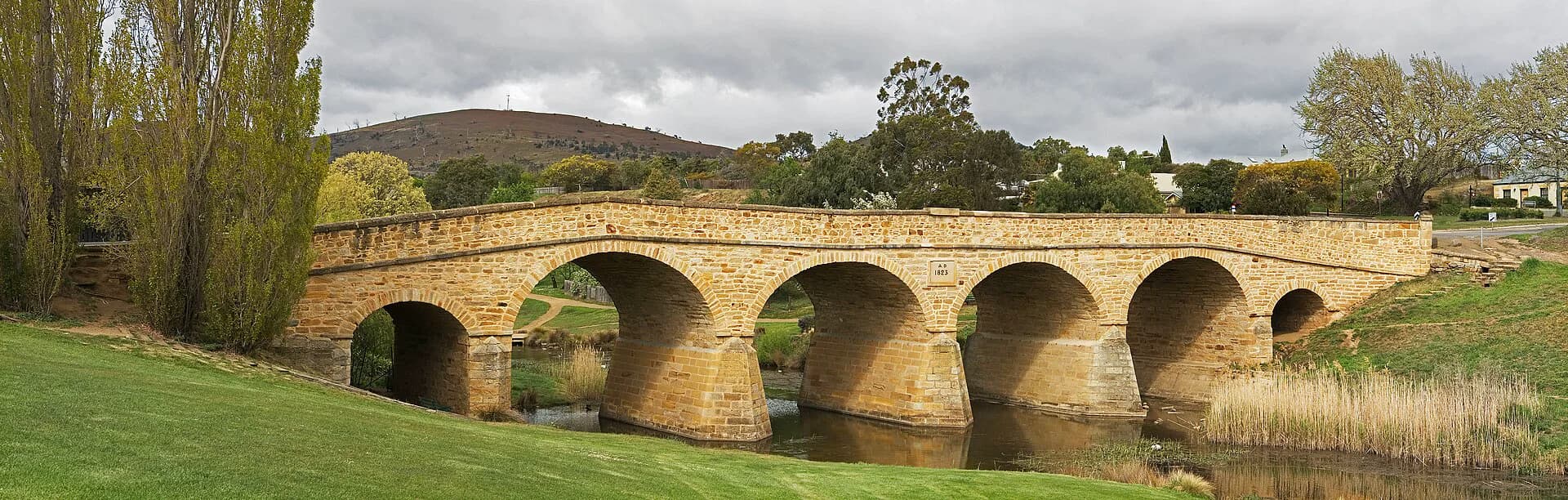

Richmond is a compact town in the Coal River Valley, north-east of Hobart. Its sandstone bridge, gaol, churches and early street plan form one of Tasmania's most recognisable colonial landscapes. The town is also a living service centre, not an open-air museum, so its busiest streets carry local traffic as well as visitors.
A useful visit begins with the bridge and continues on foot. Allow half a day for the public streets and riverbank, longer if you plan to enter Richmond Gaol or other ticketed sites.
Country before the town
The Coal River Valley was Mumirimina Country, part of the Oyster Bay nation. The river corridor was hunted, managed with fire and used as a meeting and crossing place. British land grants from 1808 intruded into this landscape. Colonial settlement restricted Aboriginal movement and contributed to the destruction of the Mumirimina community.
This context changes how the town should be read. Its bridge and administrative buildings were not simply signs of progress. They helped consolidate an occupying colony and a new agricultural economy.
Richmond Bridge
Construction began in 1823, the bridge was completed in 1824 and it opened to traffic in January 1825. Originally called Bigges Bridge, it was built from locally quarried sandstone using convict labour. It remains Australia's oldest surviving bridge still serving its original road purpose.
The riverbank gives the clearest view of the arches and setting. The bridge is still a road, so use the footpaths and crossings rather than standing in the carriageway. Avoid climbing masonry or feeding large groups of ducks, which damages the riverbank environment.
The bridge was a catalyst for the town. It made the Coal River crossing dependable and strengthened the road connection through the district. Richmond was proclaimed in 1824 and developed as a police and judicial centre.
Gaol, court and colonial authority
Richmond Gaol was built in 1825 as part of Governor George Arthur's network of police districts. It expanded during the 1830s and remained in use as a gaol until 1928. The surviving cells, yards and service spaces give a close view of local imprisonment, including the confinement of people awaiting court or transfer.
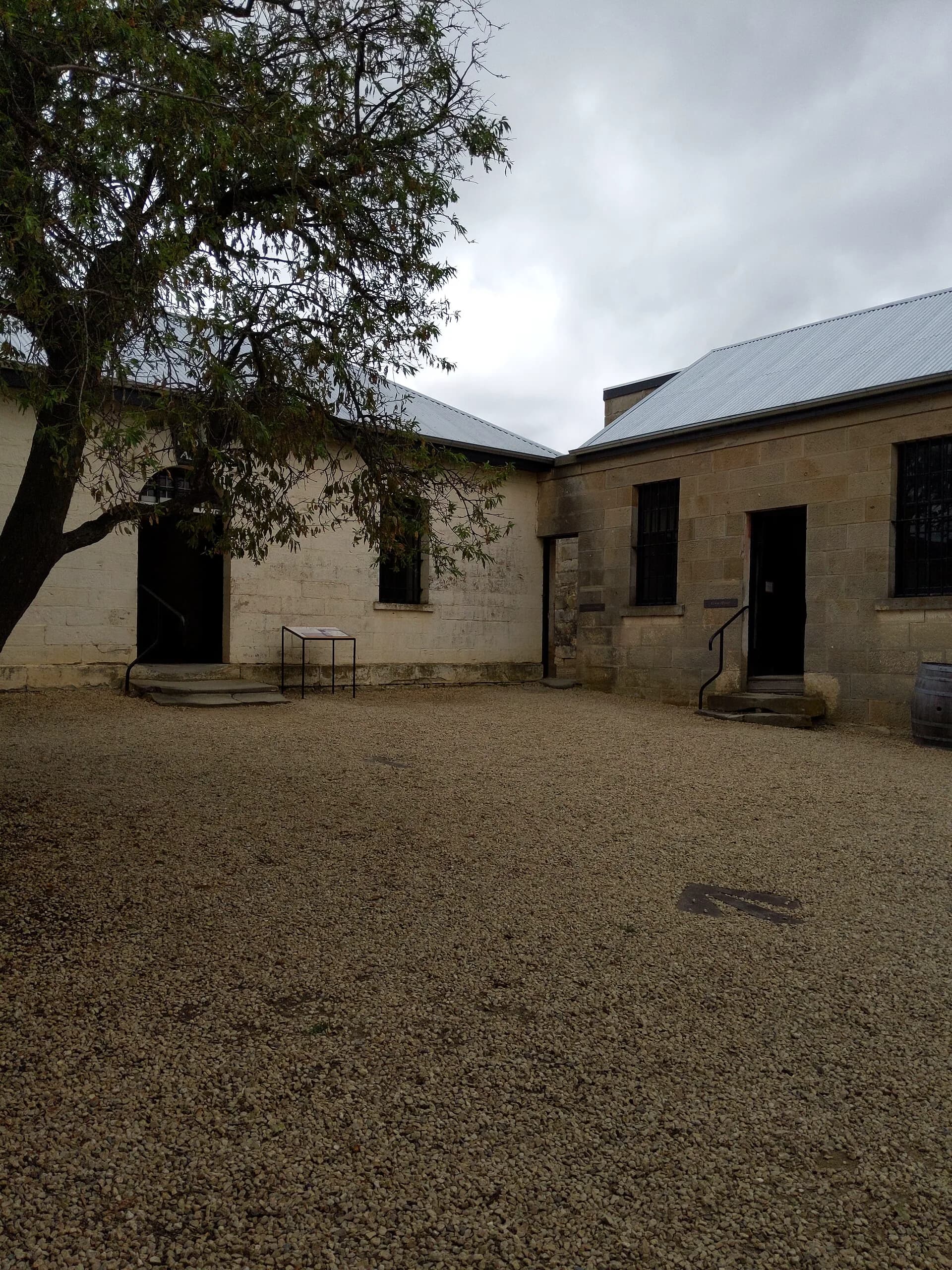

Nearby, the courthouse dates from the same period and later served as municipal chambers. Together these buildings explain why Richmond acquired substantial public architecture so early. They administered a district shaped by assigned convict labour, land grants and conflict over Country.
Stories about famous inmates can attract attention, but they should not displace the ordinary record of confinement. Thousands of less-known people passed through local courts, lockups and work systems. The Tasmania convict history page provides the wider framework and links to original records.
Churches, school and Georgian streets
St John's Catholic Church stands beyond the bridge and is recognised as Australia's oldest Roman Catholic church still in use. St Luke's Anglican Church was designed by colonial architect John Lee Archer and built with convict labour. The old schoolhouse and Oak Lodge add education, domestic life and professional work to a streetscape often described only through justice buildings.
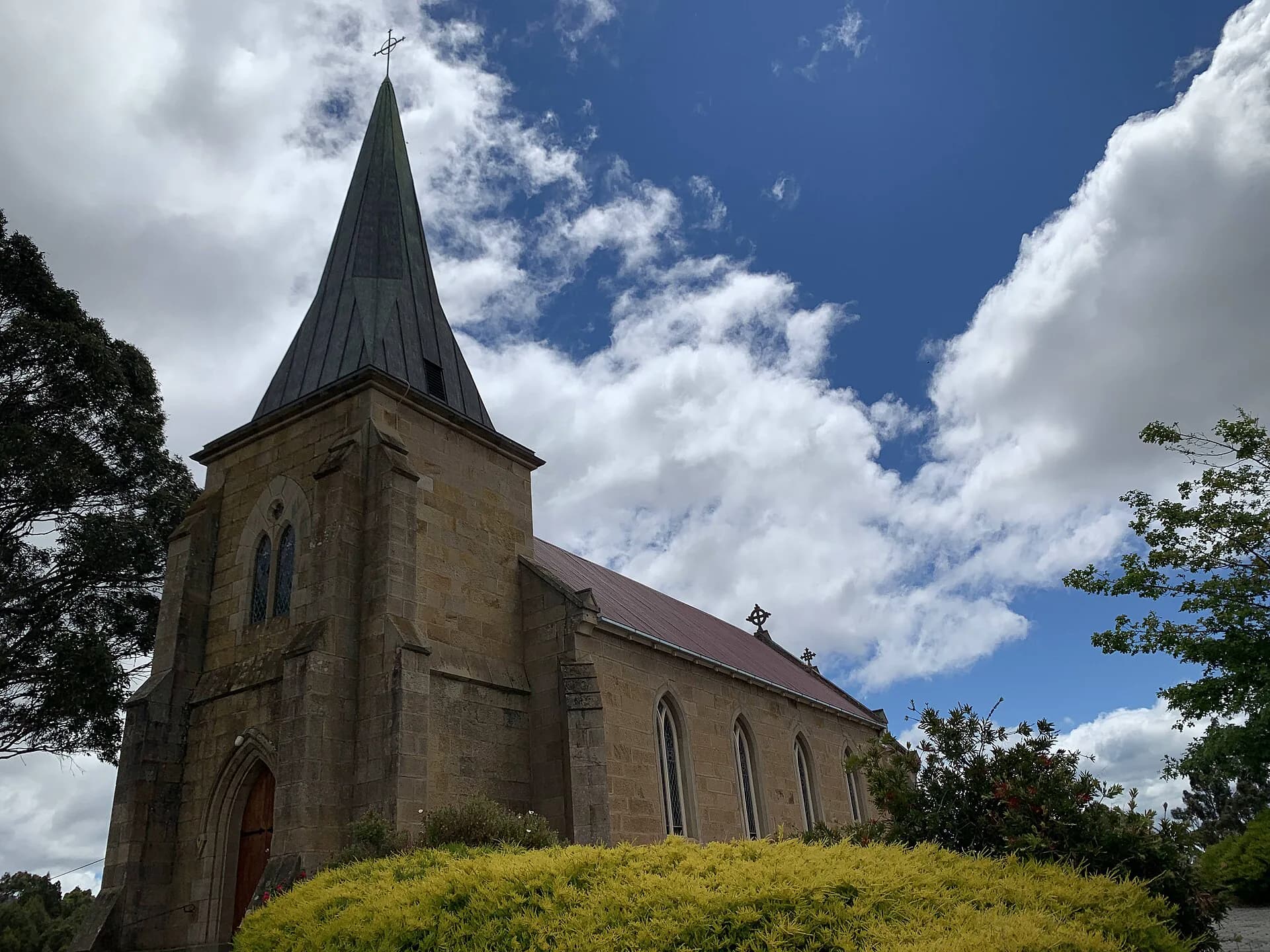

The City of Clarence heritage walk links these places in a practical circuit. Walk both Bridge Street and the quieter side streets. Setbacks, outbuildings, garden walls and changes in ground level reveal as much as the principal facades.
Planning a visit
Richmond is an easy day trip from Hobart, but there is no single public transport option suitable for every itinerary. Check current services rather than relying on old route advice. Parking fills quickly on weekends and holidays. Use designated areas and leave residential driveways clear.
The bridge reserve is free. Richmond Gaol and some house museums charge admission and maintain their own opening hours. The town has food, fuel and public facilities, but queues can be significant in peak periods.
Richmond combines naturally with the Coal River Valley, but drinking and driving must be planned. Appoint a non-drinking driver or use a tour if visiting cellar doors. For a longer historical route north, continue with the Heritage Highway.
What deserves attention
Richmond's intact appearance can make the past seem settled. It was not. The town records invasion and dispossession, coerced labour, colonial government, religion, farming and community adaptation across two centuries. The best visit holds those histories together rather than using the bridge as a decorative backdrop.