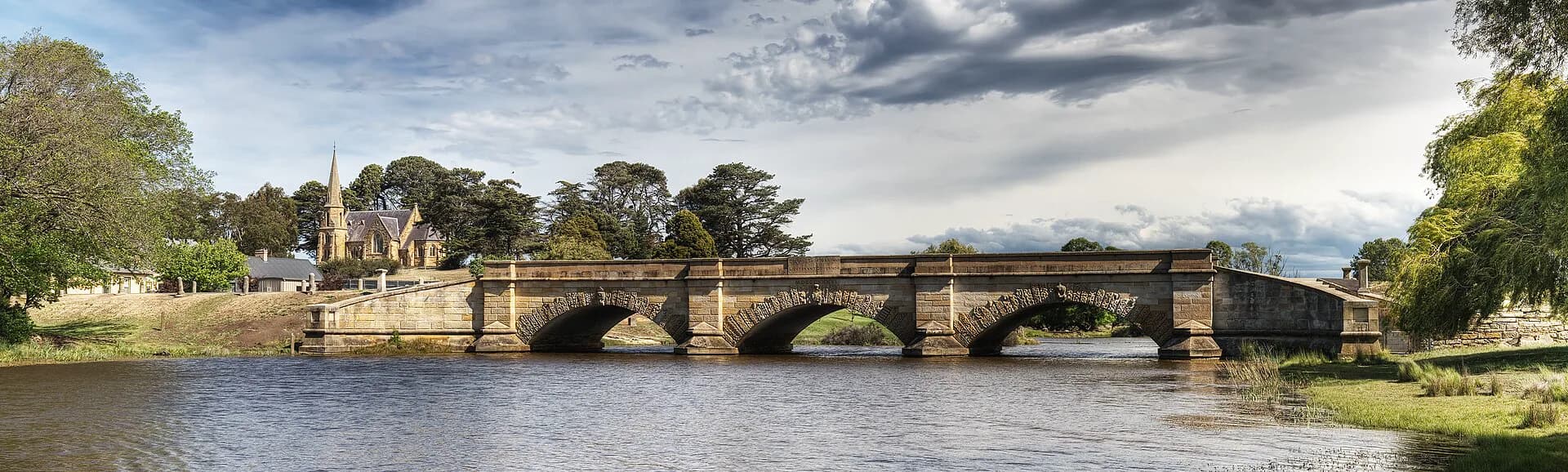

The Heritage Highway follows the Midland Highway corridor between Hobart and Launceston. The direct drive is about 176 kilometres, but the value of this route lies in leaving the main carriageway for towns such as Kempton, Oatlands, Ross, Campbell Town and Longford.
The name “Heritage Highway” can suggest a comfortable procession of Georgian buildings. The real history is more demanding. The road crossed Aboriginal Country, enabled colonial occupation and was built and maintained in part through convict labour. Town plans, bridges, farms, courts and gaols show how the colony imposed authority across the Midlands.
Plan the drive around stops
Allow a full day for three or four towns, or stay overnight to see more. Driving every detour in one day turns significant places into brief photographs. Oatlands and Ross each justify a proper walk; Longford adds World Heritage-listed rural estates nearby; Campbell Town provides services and a strong collection of colonial buildings.
Current highway works and traffic conditions may alter access. Use signed exits, do not stop on high-speed shoulders, and check opening days for museums and historic sites.
Southern Midlands: Kempton and Oatlands
Kempton preserves an early road-town pattern with inns, churches and houses close to the former highway. It is a quieter introduction than the better-known stops farther north.
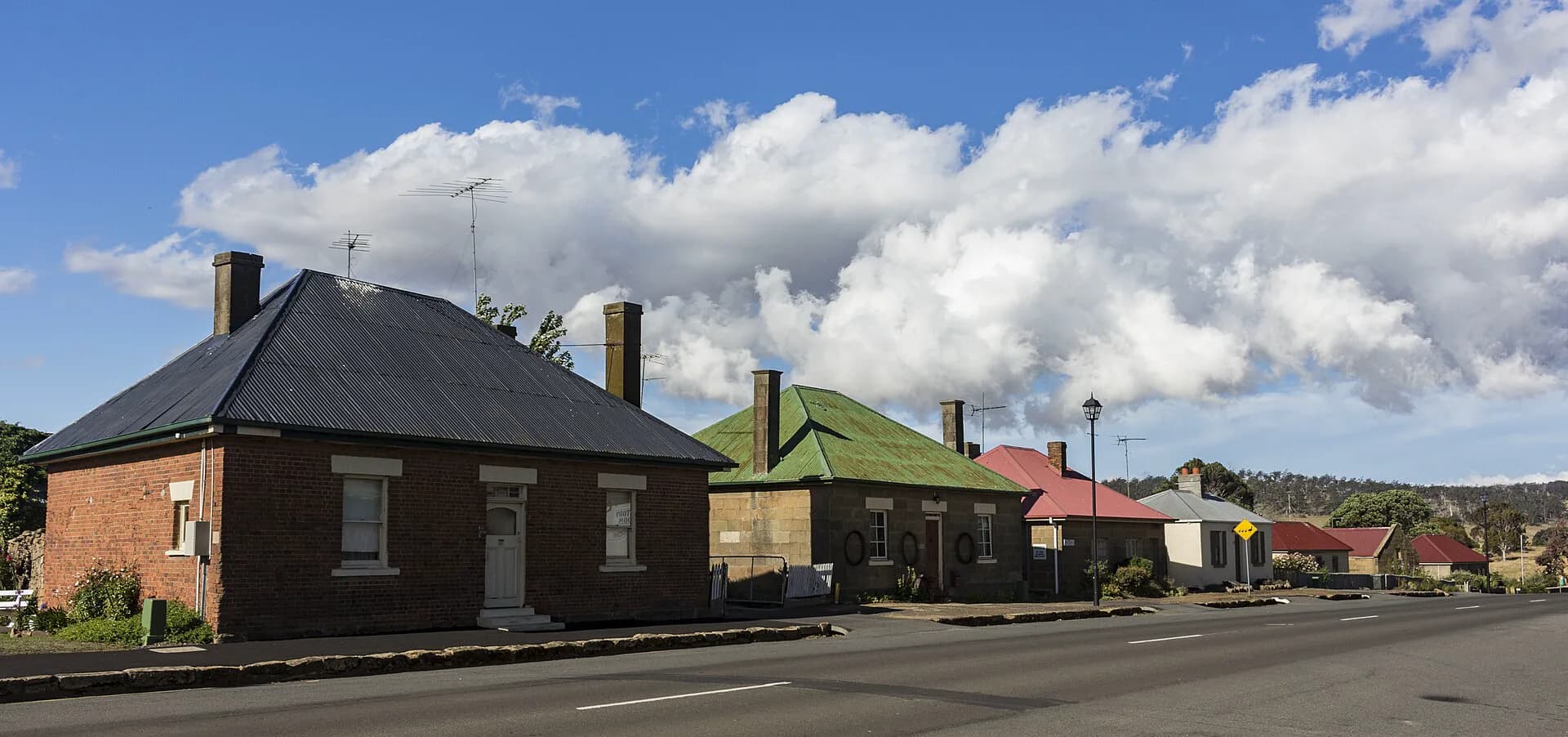
Oatlands has one of Australia's largest concentrations of colonial sandstone buildings. Its broad main street, courthouse complex, former military structures and Callington Mill reflect its roles in administration, transport and agriculture. The town is best explored on foot after parking once.
.jpg)
Do not read the stonework as evidence of an uncomplicated “pioneer” past. Public buildings enforced colonial law; road stations and work gangs relied on coerced labour; farms occupied Country from which Aboriginal people were violently displaced.
Ross: bridge, village and female factory
Ross Bridge was completed in 1836. Its carved sandstone panels are closely associated with convict stonemasons Daniel Herbert and James Colbeck. Walk beneath the approaches where public access permits to see the carvings and the bridge's relationship to the Macquarie River.
The Ross Female Factory site adds a history that streetscapes alone cannot convey. The institution held female convicts and their children, and later operated within the probation system. Archaeological remains and interpretation show how punishment, labour, motherhood and surveillance intersected.
Campbell Town and the northern Midlands
Campbell Town grew around another important river crossing. The Red Bridge, colonial commercial buildings and roadside services reflect nearly two centuries of through traffic. The Convict Brick Trail in High Street records individual convict names, but the full system is better understood through archives and dedicated historic sites.
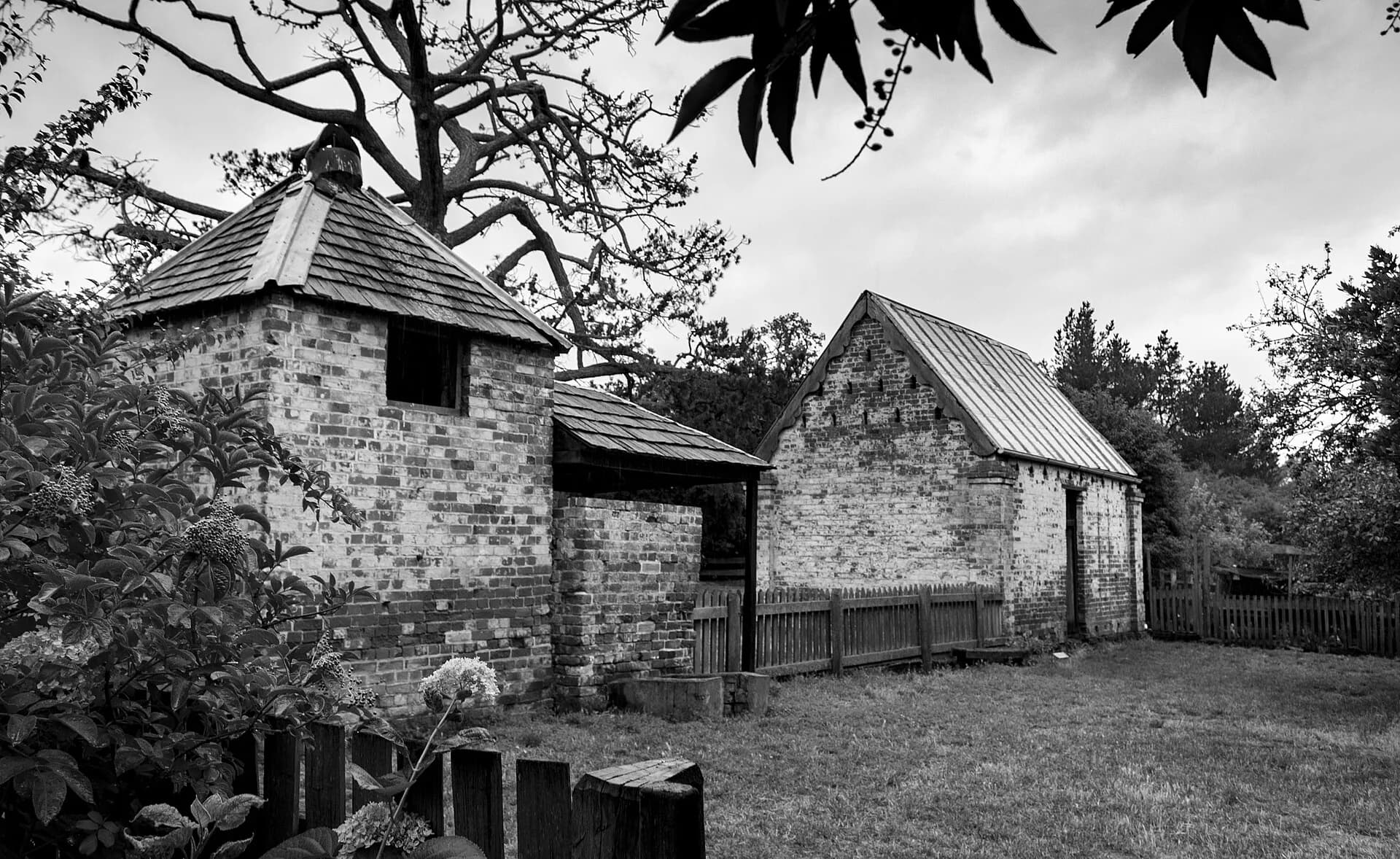
Near Longford, Brickendon and Woolmers are jointly included in the Australian Convict Sites World Heritage property. They represent the assignment of convict labour to private rural estates. They are not roadside pull-offs, and each sets its own access and admission arrangements.
.jpg)
Longford's town centre also deserves time for its churches, inns and residential streets. From here, the road continues to Perth and then Launceston, where the Launceston heritage walk extends the story into a larger civic and industrial city.
A more useful way to read the route
Look for the systems linking the towns rather than collecting old buildings. Bridges fixed reliable crossings. Courthouses and gaols extended government power. Inns served coach travel. Farms and mills supplied settlements. Later railways drew trade away from some road businesses, while twentieth-century highway bypasses changed them again.
The Richmond guide covers another early road town east of Hobart. Tasmania's convict past explains assignment, probation, female factories and the surviving records behind many sites on this route.
Driving well
Distances are short, but fatigue still matters. Avoid scheduling a flight or ferry connection immediately after a long day of stops. Wildlife is most active around dawn and dusk. In winter, fog, frost and low light can affect the Midlands even when conditions are clear in Hobart or Launceston.
Choose two or three themes if time is limited: bridges and engineering, convict institutions, sandstone architecture, or rural estates. This makes the drive coherent and leaves room to read the landscape rather than racing between plaques.