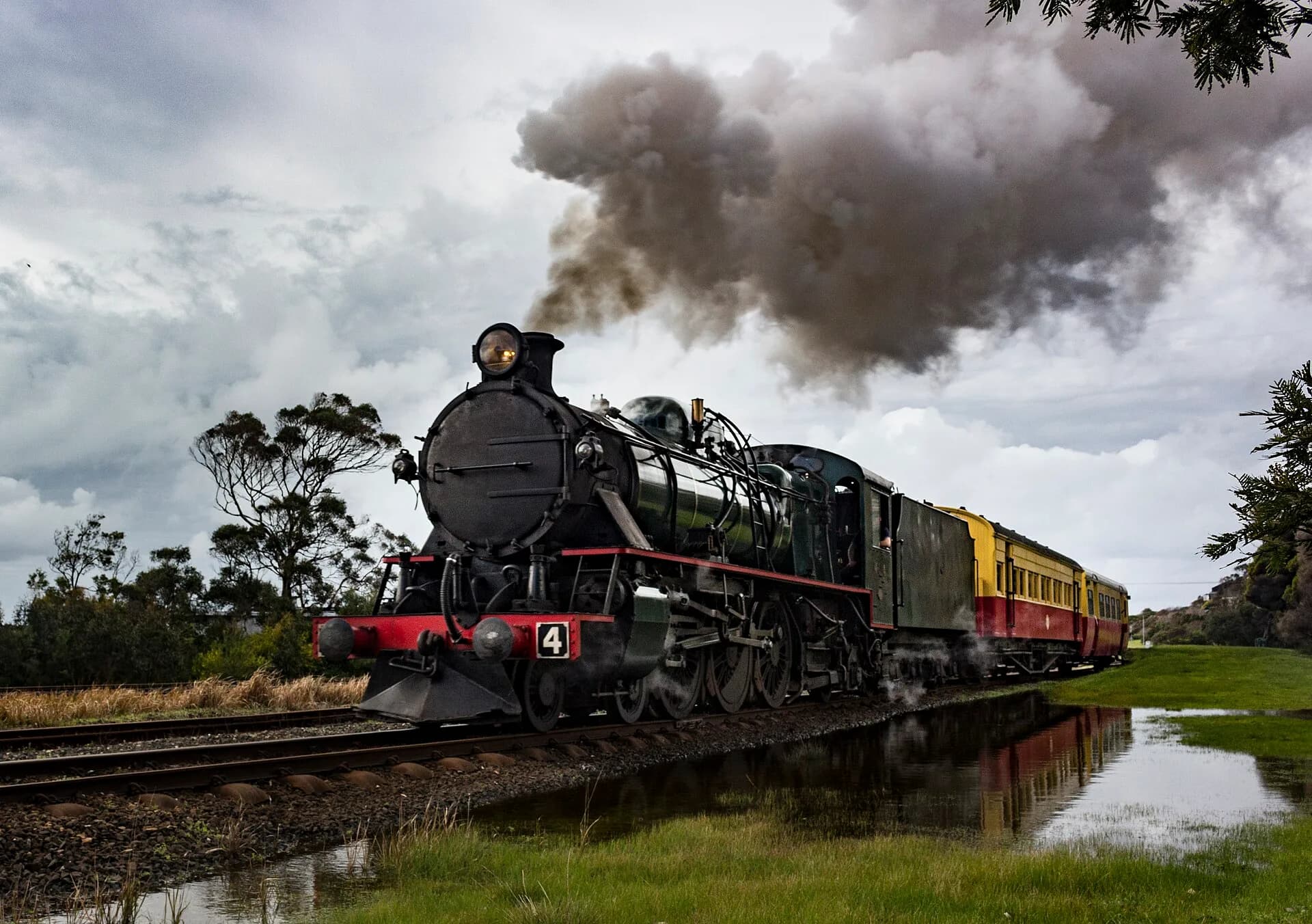

The Don to Melrose railway tells several transport stories at once. Its formation began as a horse tramway, later carried limestone for heavy industry and now supports heritage trains from Don to Coles Beach.
A route older than the preserved trains
The Tasmanian Heritage Register identifies the first phase as a nineteenth-century horse tramway operating from 1859 to 1884. The route served the Don district before modern road transport or the mature government railway network.
From 1916 to 1947, a railway associated with Broken Hill Proprietary carried limestone from Melrose. Quarry and rail infrastructure linked a rural resource to large-scale industrial production. The surviving corridor therefore matters for its alignment and industrial archaeology as well as its locomotives.
.jpg)
Preservation at Don
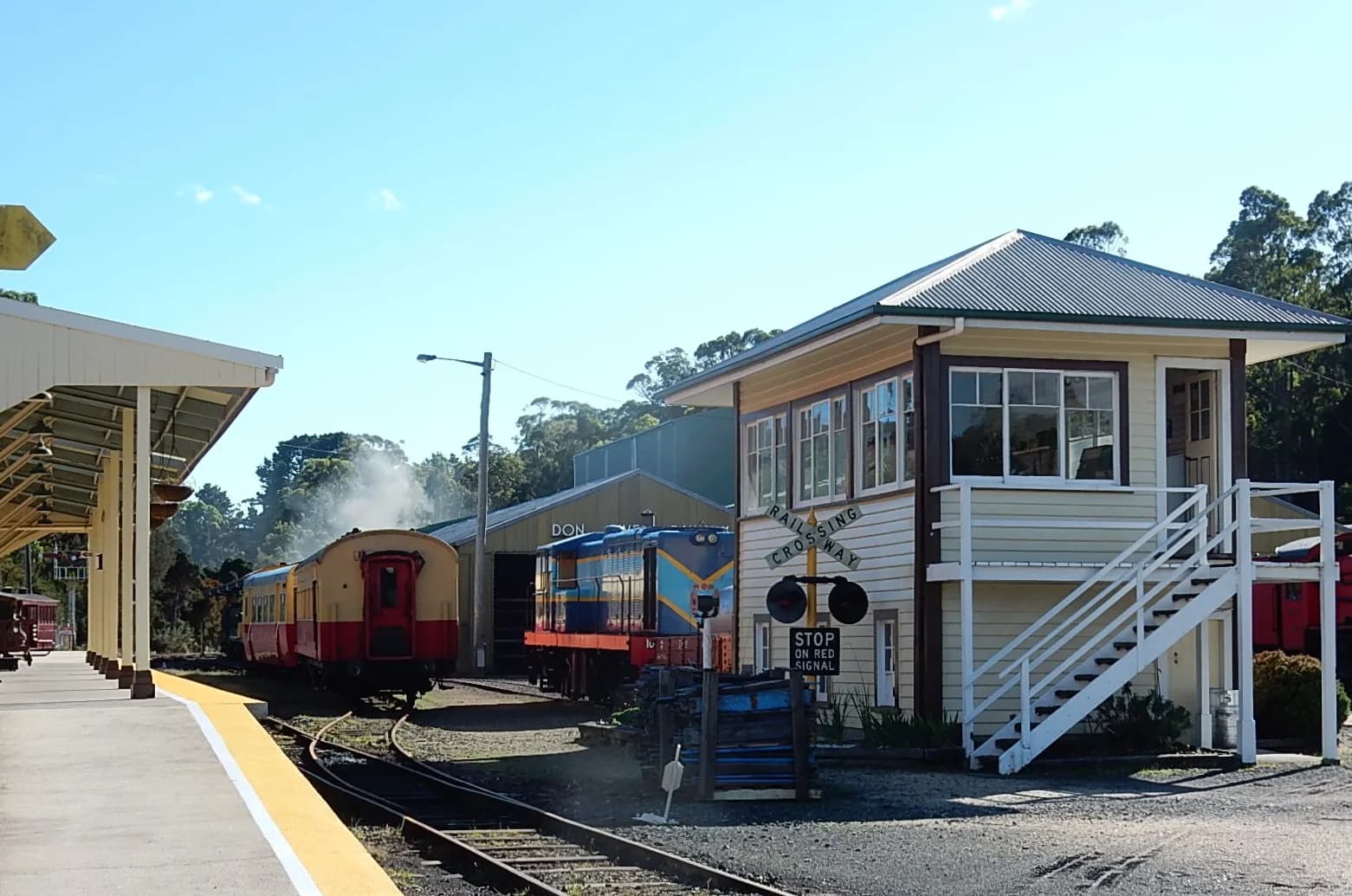
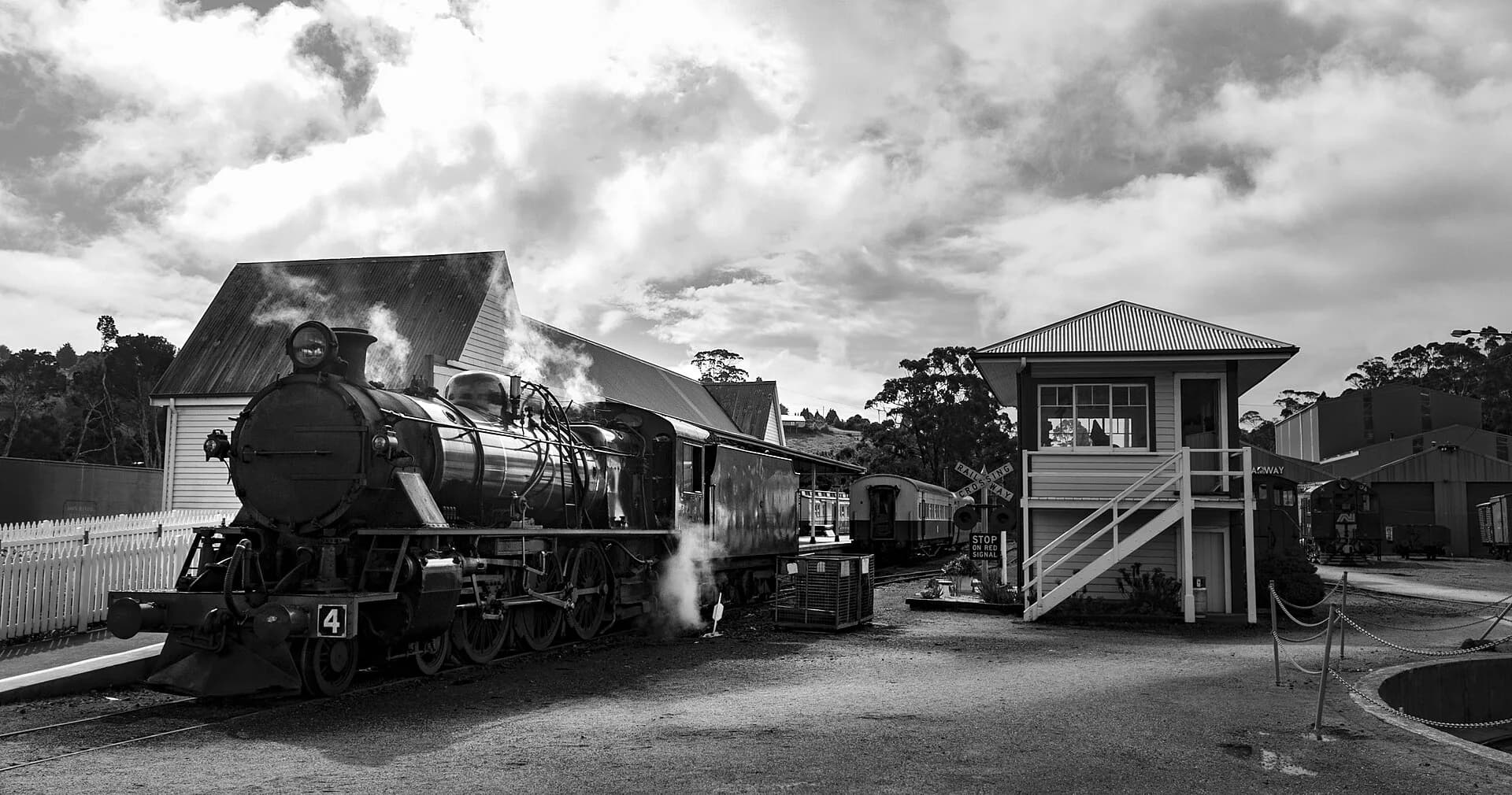
The present Don River Railway operates a roughly 3.5-kilometre heritage line between Don and Coles Beach. Its site includes a museum, station, signal box, turntable and workshops. Devonport City Council describes a return train trip of about 30 minutes, but timetables and operating days should always be checked with the railway.
The workshops are an essential part of the visit. Restoration requires skilled mechanical, electrical, timber and conservation work, and it keeps a representative collection functioning rather than static.

Planning the visit
Allow time beyond the train ride for the museum and working displays. Access can change when volunteers are moving rolling stock or conducting maintenance, so follow signs and keep clear of tracks and workshop operations.
Don is close to Devonport and the Port of Devonport. Pairing the railway with those places shows how local tramways, government rail, industry and sea transport formed a connected north-west network.