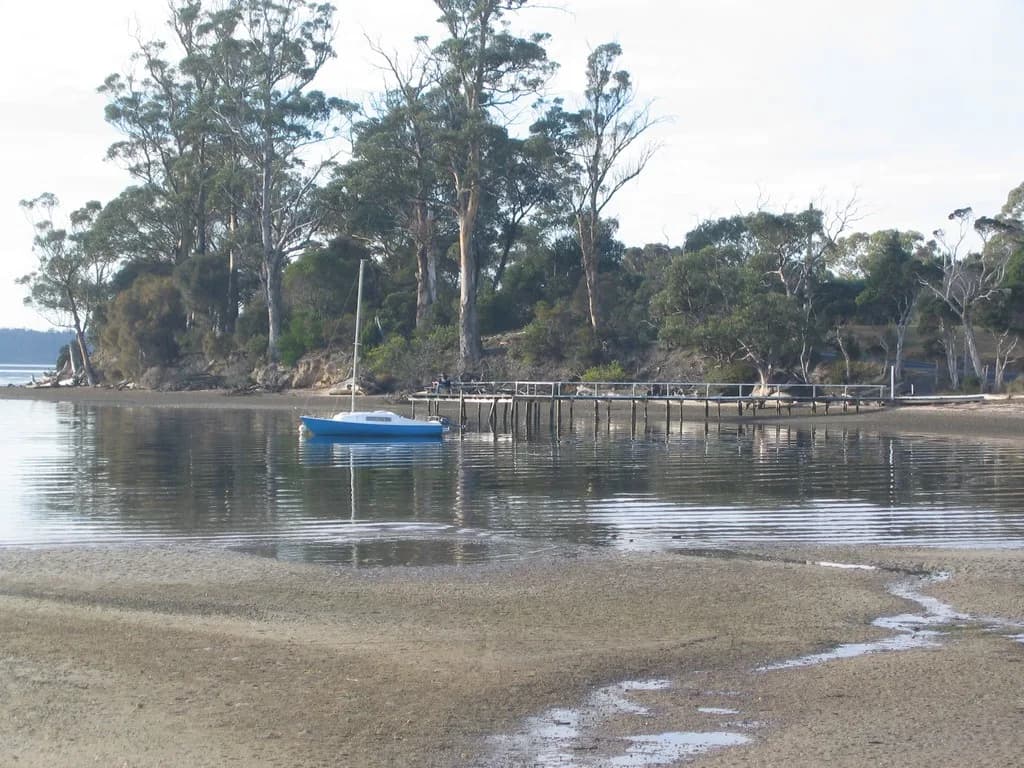

St Helens is the largest town on Tasmania’s north-east coast and the main place to refuel, shop and organise a longer stay in the district. It sits beside Georges Bay, with fishing, aquaculture, beaches and forest country all close to town.
A town shaped by the bay
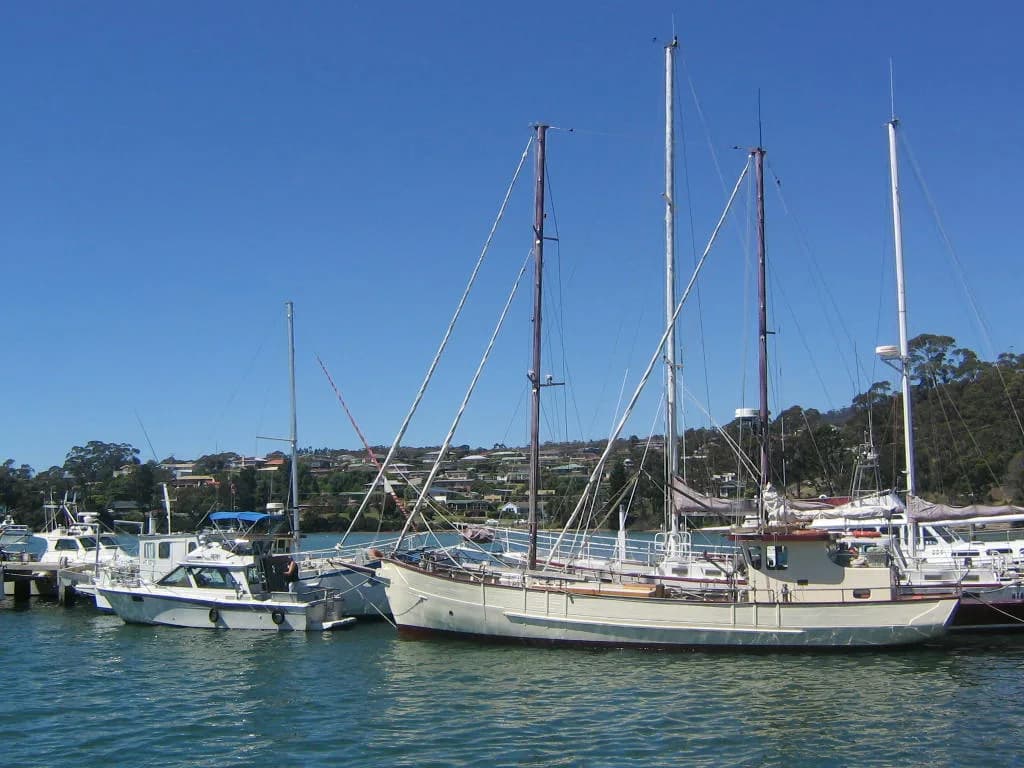
Georges Bay provides sheltered water inside the exposed east coast. Jetties, boat ramps and working vessels make the maritime economy visible. Recreational fishing is also important, but licences, size limits, seasonal closures and marine rules should always be checked with the Tasmanian Government before setting out.
The town centre contains supermarkets, fuel, accommodation and services that become sparse north of Binalong Bay and on forest routes inland. Stocking up here makes a coastal or camping trip much easier.

Bay of Fires and larapuna
Binalong Bay marks the southern end of the Bay of Fires Conservation Area, reached from St Helens by sealed road. Parks Tasmania explains that larapuna is a meeting place for Aboriginal family groups and that middens and other sites remain culturally significant. Leave shells, stone and cultural material exactly where they are.
The coast is known for granite boulders with orange lichen, pale beaches and clear water, but conditions are not uniformly gentle. Some beaches have steep drop-offs and rips. Campgrounds can be affected by fire restrictions, and facilities differ between sites.

Inland forests and trails
Forest and former mining country lie west of town. Mountain-bike networks have increased travel between St Helens and the Blue Tier, while St Columba Falls and other reserves provide walking options farther inland. Road surfaces and access can change after rain or forestry operations, so use current trail and land-manager information.
The north-east Tasmania guide connects St Helens with Scottsdale, Derby and Bridport. Those places are not quick side trips on winding regional roads, so an itinerary should account for actual driving time.
When to visit
Summer brings long daylight and the greatest pressure on beaches and campgrounds. Autumn can offer settled conditions, while winter is quieter but cooler and wetter. Wind can alter boating and beach plans in any season.
Two nights allow time for the bay and a day on the coast. Stay longer if walking, riding or exploring inland. Check fire restrictions, park alerts and marine conditions on the day of travel.