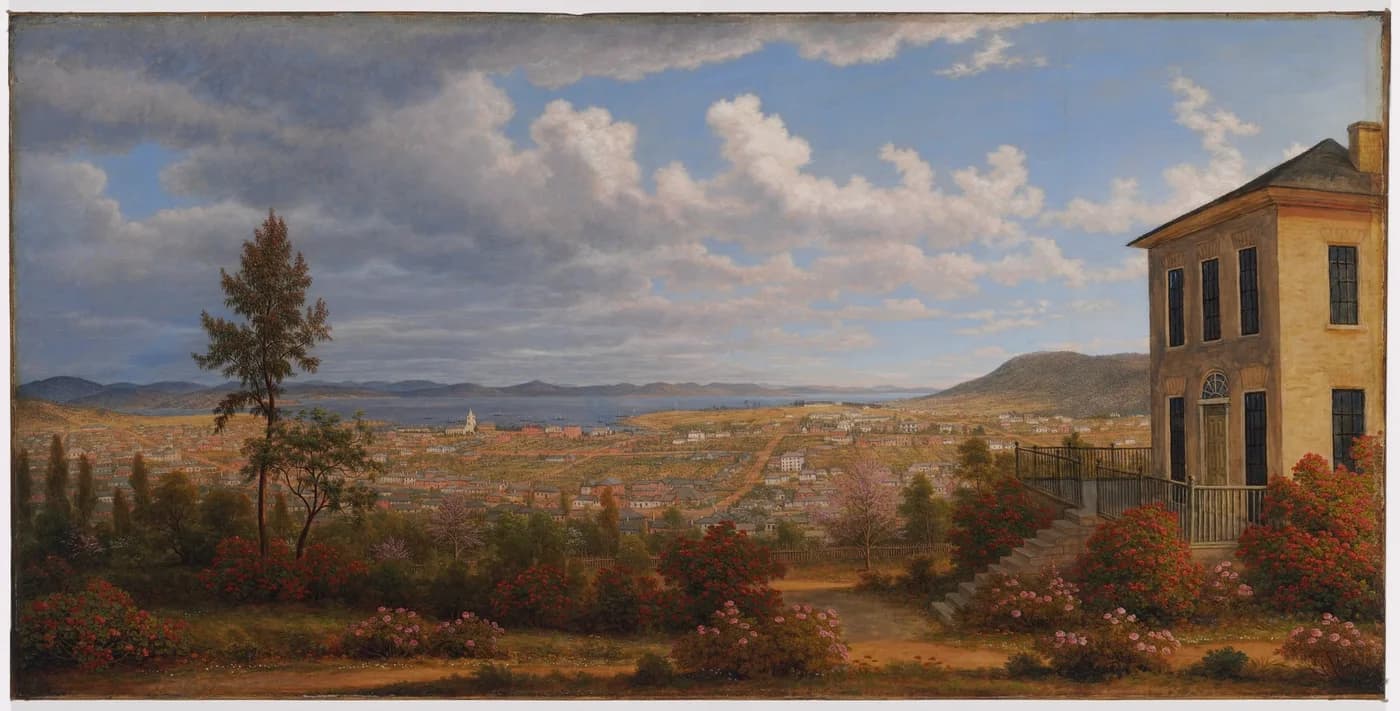

Hobart’s British founding was a two-stage occupation of Muwinina Country. John Bowen established a camp at Risdon Cove in September 1803. David Collins moved the principal southern settlement to Sullivan’s Cove in February 1804, creating the administrative and port centre from which Hobart grew.
The land was already known and lived in
Muwinina people had lived around nipaluna and timtimili minanya / River Derwent for countless generations. The language of an empty site or peaceful “discovery” hides the invasion, dispossession and violence that followed British occupation.
At Risdon Cove on 3 May 1804, soldiers fired on a large Aboriginal hunting party, killing and wounding an unknown number of people. The event belongs within the story of the settlement, not outside it.
_(15205244415).jpg)
Bowen at Risdon Cove
Governor Philip Gidley King instructed Lieutenant John Bowen to establish a settlement on the Derwent, partly in response to strategic concern about French activity. Bowen arrived with 49 people in September 1803. Poor supplies and the site’s limitations weakened the camp.
Collins chooses Sullivan’s Cove
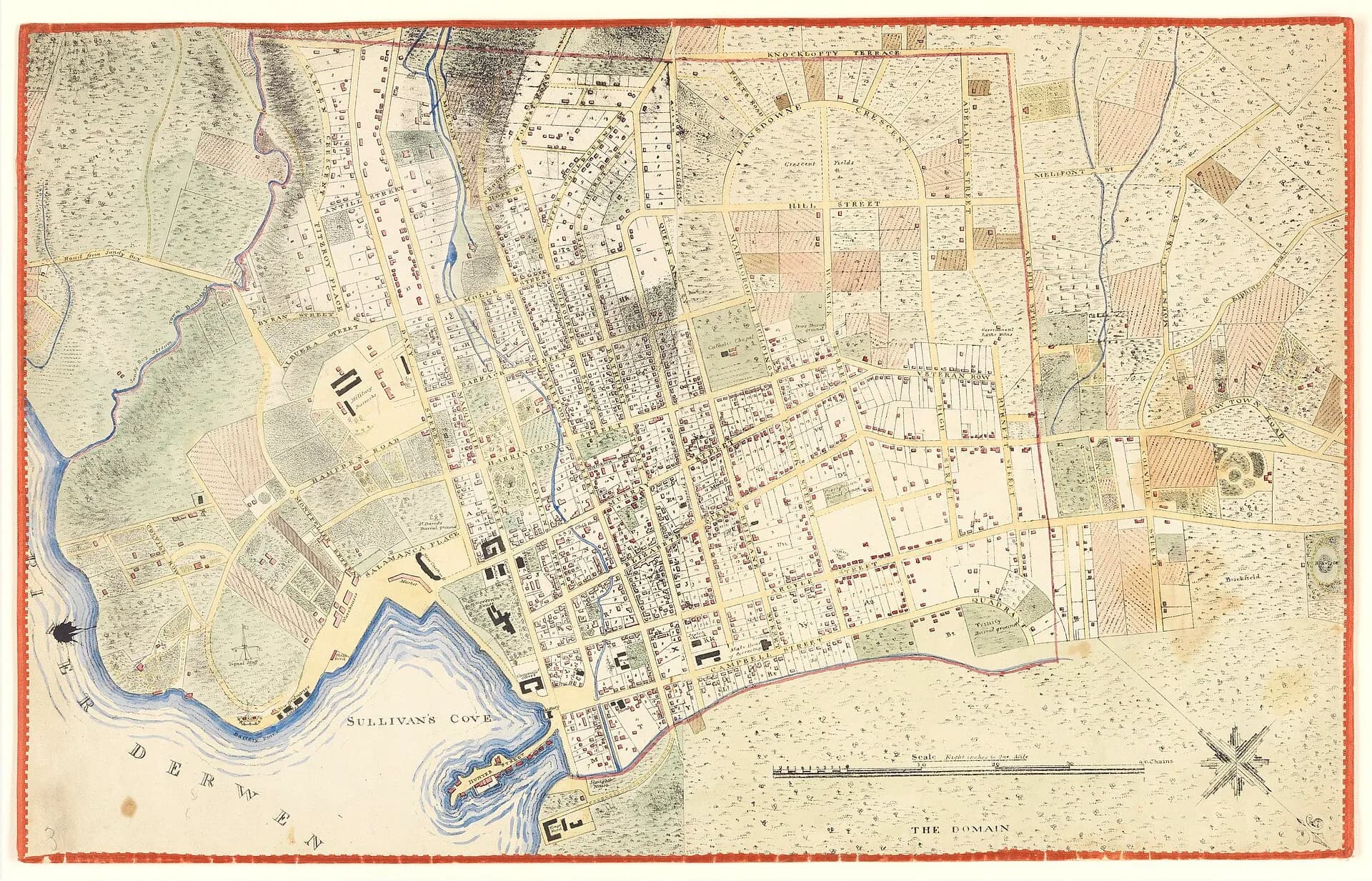
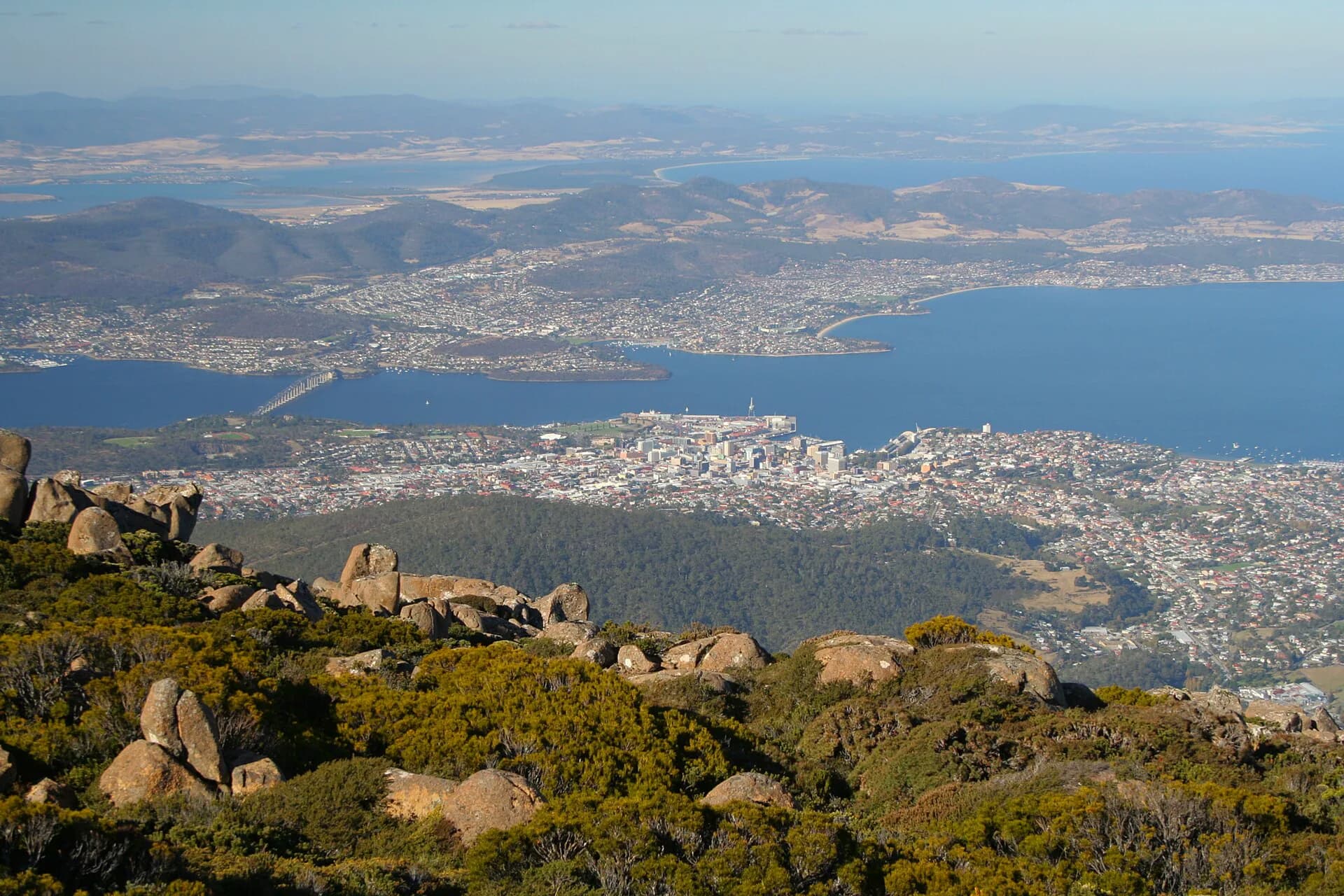
David Collins reached the Derwent after abandoning an attempted settlement at Port Phillip. He selected Sullivan’s Cove for its sheltered harbour, fresh water from the Hobart Rivulet and nearby ground. Bowen’s party was absorbed, and the Risdon camp was abandoned.

From camp to colonial capital
The early settlement faced food shortages and depended on convict labour. Government offices, wharves, houses and roads gradually occupied the cove. By 1811 Governor Macquarie ordered a town plan, consolidating an urban centre that had already become the southern administration’s base.
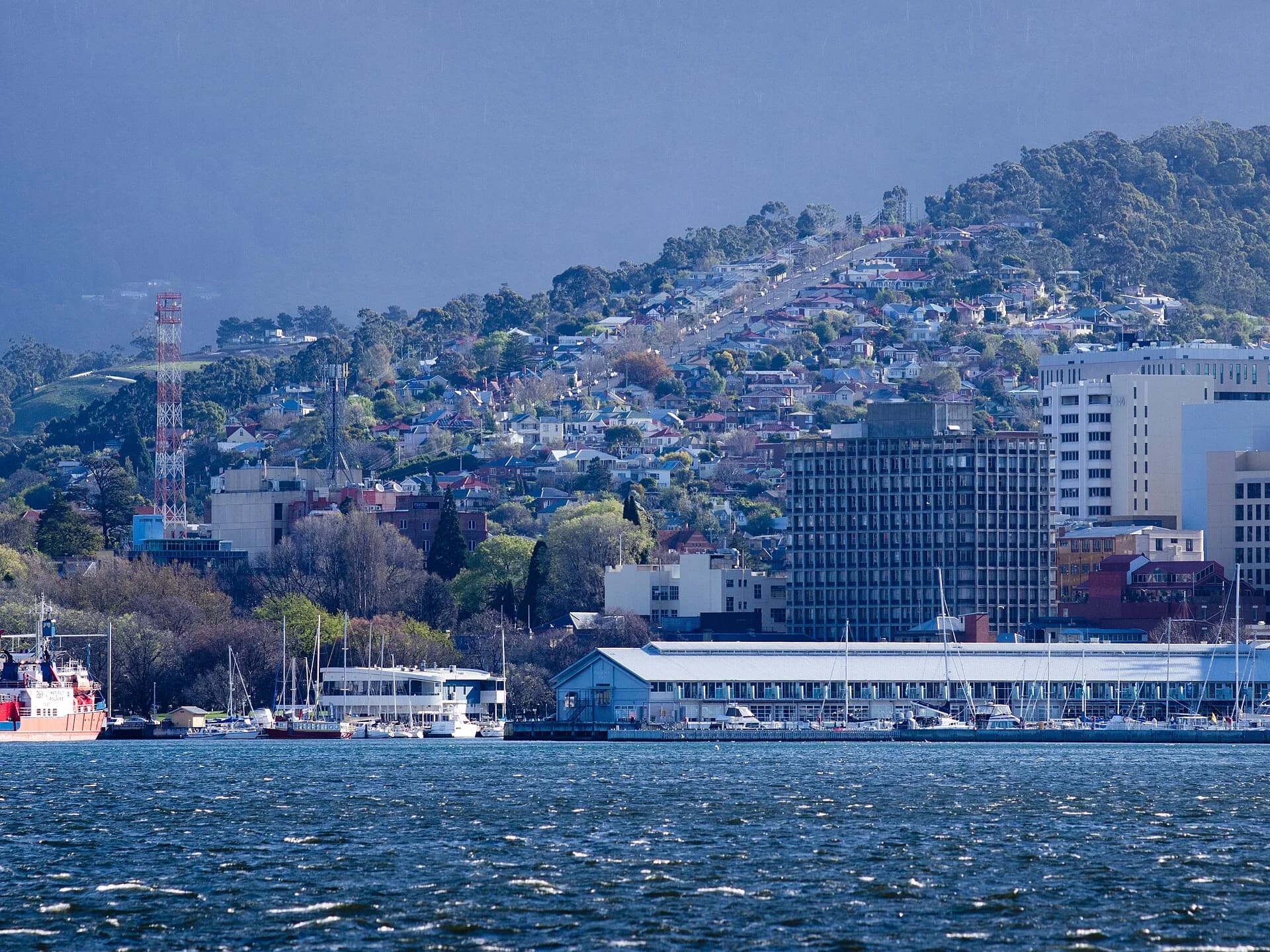

Visit Risdon, Hobart’s rivulets and Hunter Island to read surviving landscapes from different parts of this history.