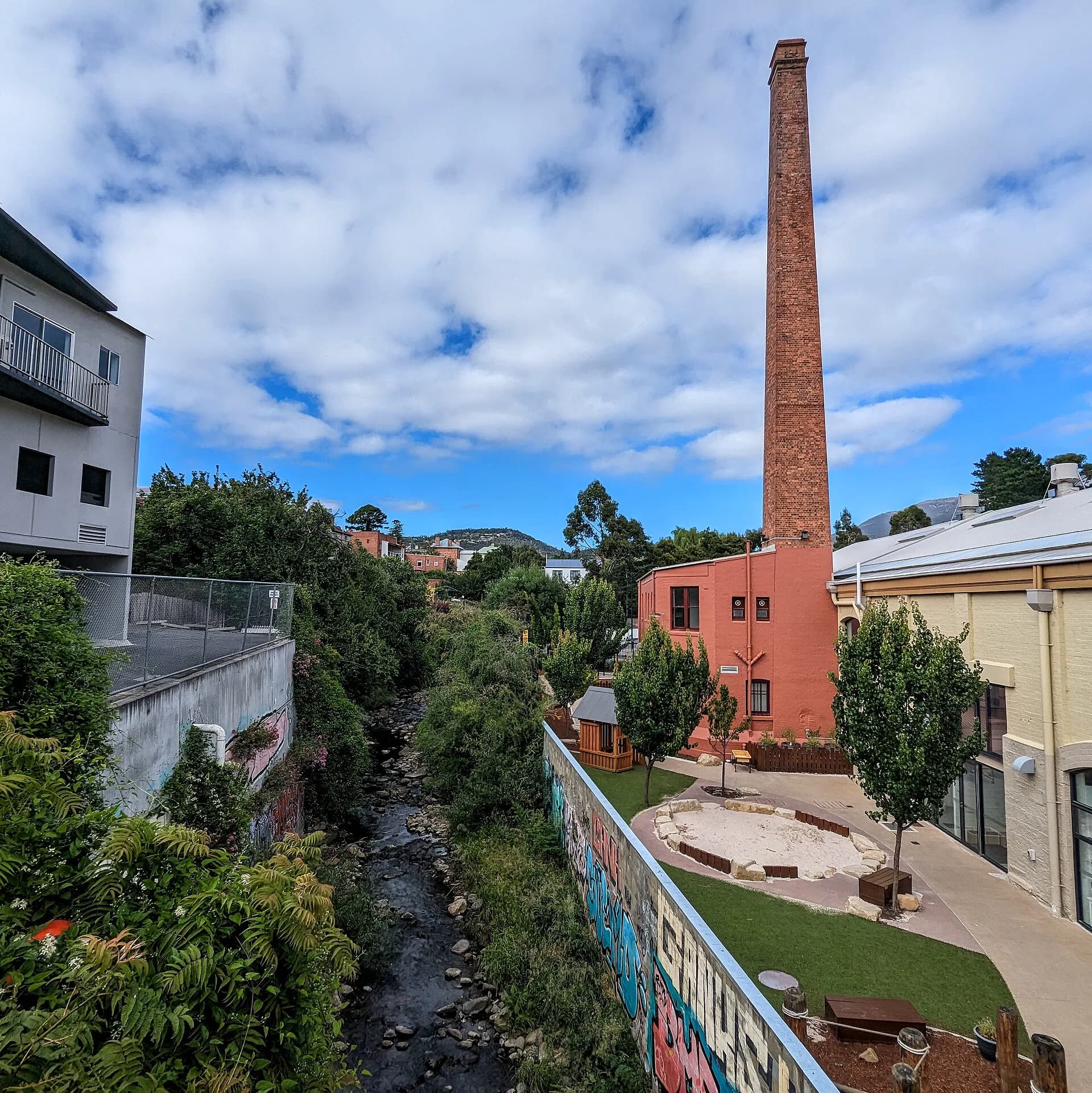

Three main rivulets descend from kunanyi / Mount Wellington through Hobart to timtumili minanya / River Derwent: Hobart Rivulet, New Town Rivulet and Sandy Bay Rivulet. They are short, steep waterways. In their upper reaches they run through protected forest; lower down they pass roads, houses, industry, parks and underground channels.
The rivulets explain much about why Hobart developed where it did. They supplied water and power, carried waste, flooded streets and later became recreation corridors. Their present restoration also shows how a city can recover ecological value from infrastructure once treated mainly as drainage.
Hobart Rivulet: the most visible route
Hobart Rivulet rises high on the mountain and runs through South Hobart. A popular shared path follows its lower open section between the city edge and Cascade Gardens. The City of Hobart's measured Riv5 course runs 2.5 kilometres from Molle Street to the gardens and returns, making a straightforward 5-kilometre walk, run or ride.
Along the way, the path passes the former Campbell Street gaol area, the Cascades Female Factory precinct and the brewery landscape. Platypuses use the rivulet, especially where banks and pools provide shelter. Give wildlife space, keep dogs controlled according to signs and never enter the water to pursue a sighting.
Above Cascade Gardens, access becomes less continuous and the waterway enters steeper terrain. Do not assume an informal bank track is public or safe. Use signed council and Wellington Park routes.
The stream beneath the streets
Near Molle Street the rivulet disappears into engineered channels beneath central Hobart before reaching the Derwent. Blue pavement markings in Collins Street now indicate part of its hidden course. Openings, artworks and changes in street level offer clues to a waterway that still moves below the city.
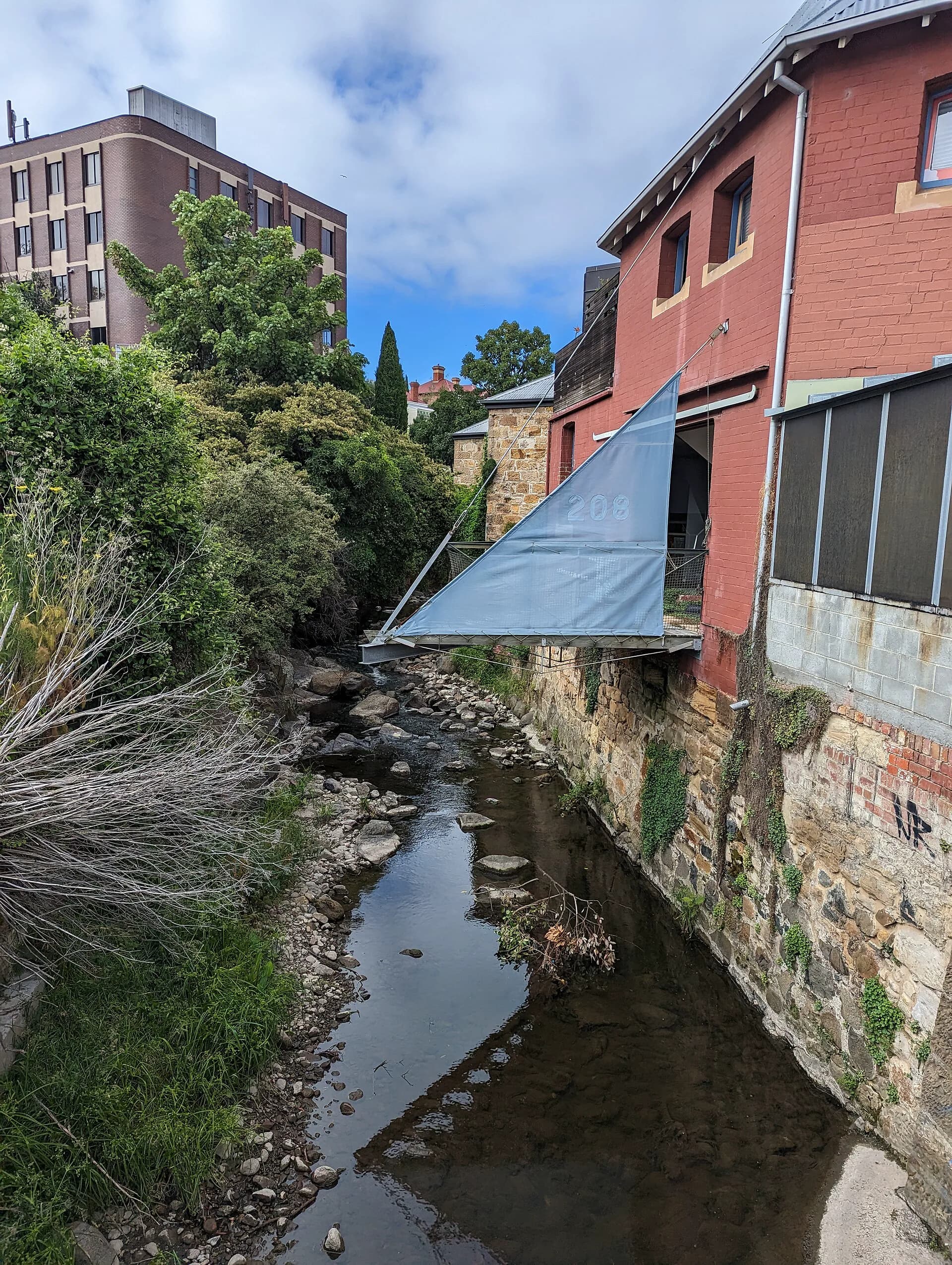

Covering the lower stream created space for roads and buildings, but it did not remove flood risk. Intense rainfall on the steep mountain catchment can move quickly into the urban system. Grates, tunnels and channels are dangerous during rain and should never be entered.
Water supply, industry and pollution
Early Hobart depended on the rivulet for drinking water while also using it for mills, breweries, tanneries and waste disposal. By the 1830s its condition posed a serious public-health problem. The eventual mountain water-supply system and Waterworks reservoirs reduced reliance on the polluted urban stream.
This history is visible farther south and uphill. Sandstone channels, reservoirs and the Pipeline Track show the scale of nineteenth-century work required to bring cleaner water from the mountain. Waterworks Reserve and its nature trails provide the best public introduction.
New Town and Sandy Bay rivulets
New Town Rivulet descends through Lenah Valley and New Town. Sections run in reserves and beside suburban streets, while others are constrained by private land and crossings. Restoration work has targeted weeds, bank stability and habitat.
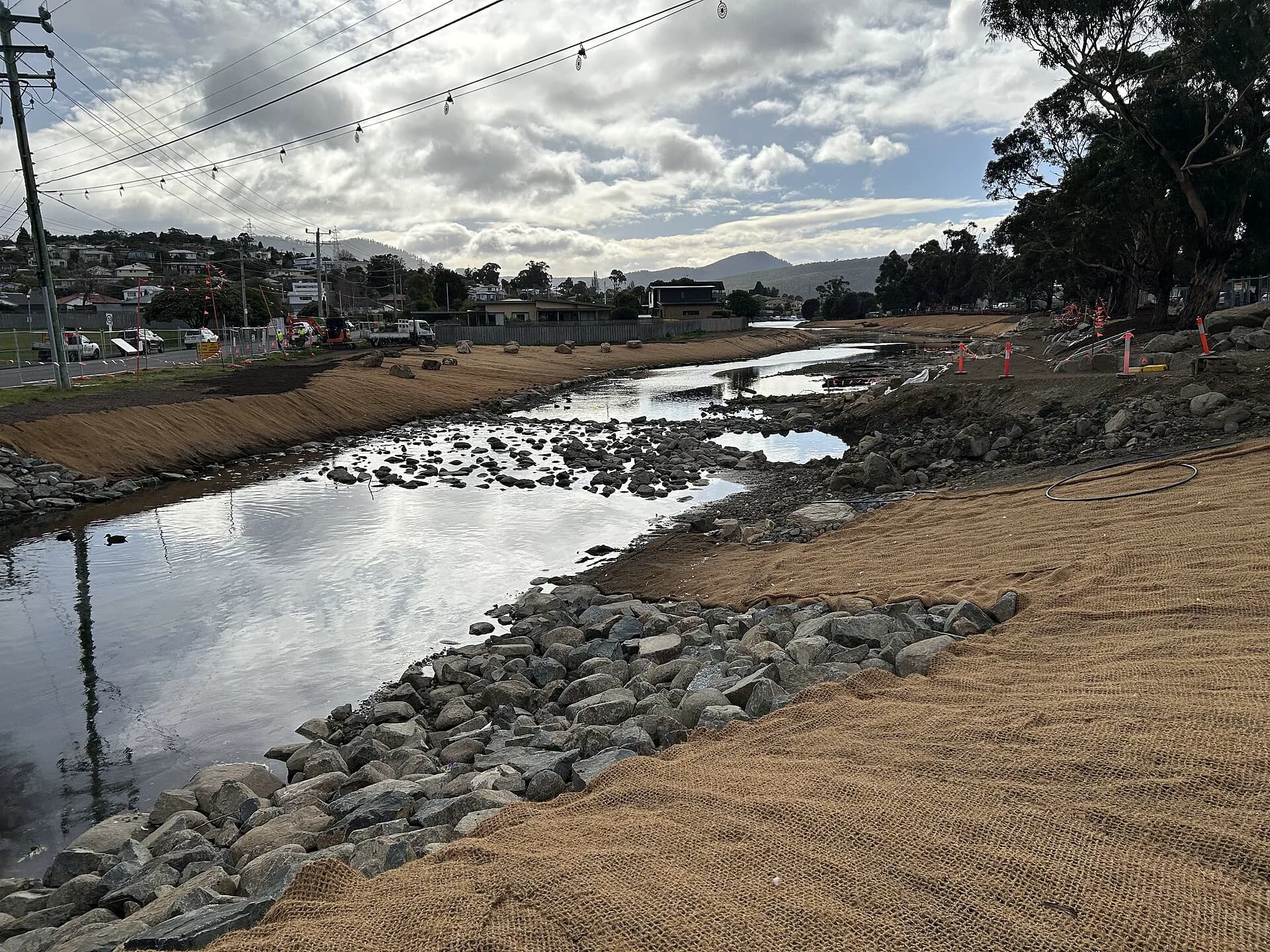

Sandy Bay Rivulet runs through another heavily urbanised catchment. It is less suited to a continuous visitor walk, but its remaining open sections help explain the steep gullies and drainage lines behind Sandy Bay.
The City of Hobart's planning work treats all three as ecological and recreational systems. Upper reaches generally have better ecological health. Downstream, stormwater pollution, sediment, altered channels and barriers reduce habitat quality.
Walking responsibly
The Hobart Rivulet Track is shared. Keep left, signal before passing on a bicycle and slow near children, dogs and blind corners. After heavy rain, stay clear of fast water and flooded underpasses. Platypus burrows can be damaged by trampling, so remain on formed paths.
For current tracks, closures and access, use the City of Hobart walking-track information. A useful broader itinerary links the Hobart Rivulet Track with Waterworks Reserve or the lower Pipeline Track, but these are separate routes and require planning.
The River Derwent place-name guide follows the water after the rivulets reach the estuary. Tasmania's convict past adds context for the Cascades Female Factory beside Hobart Rivulet.