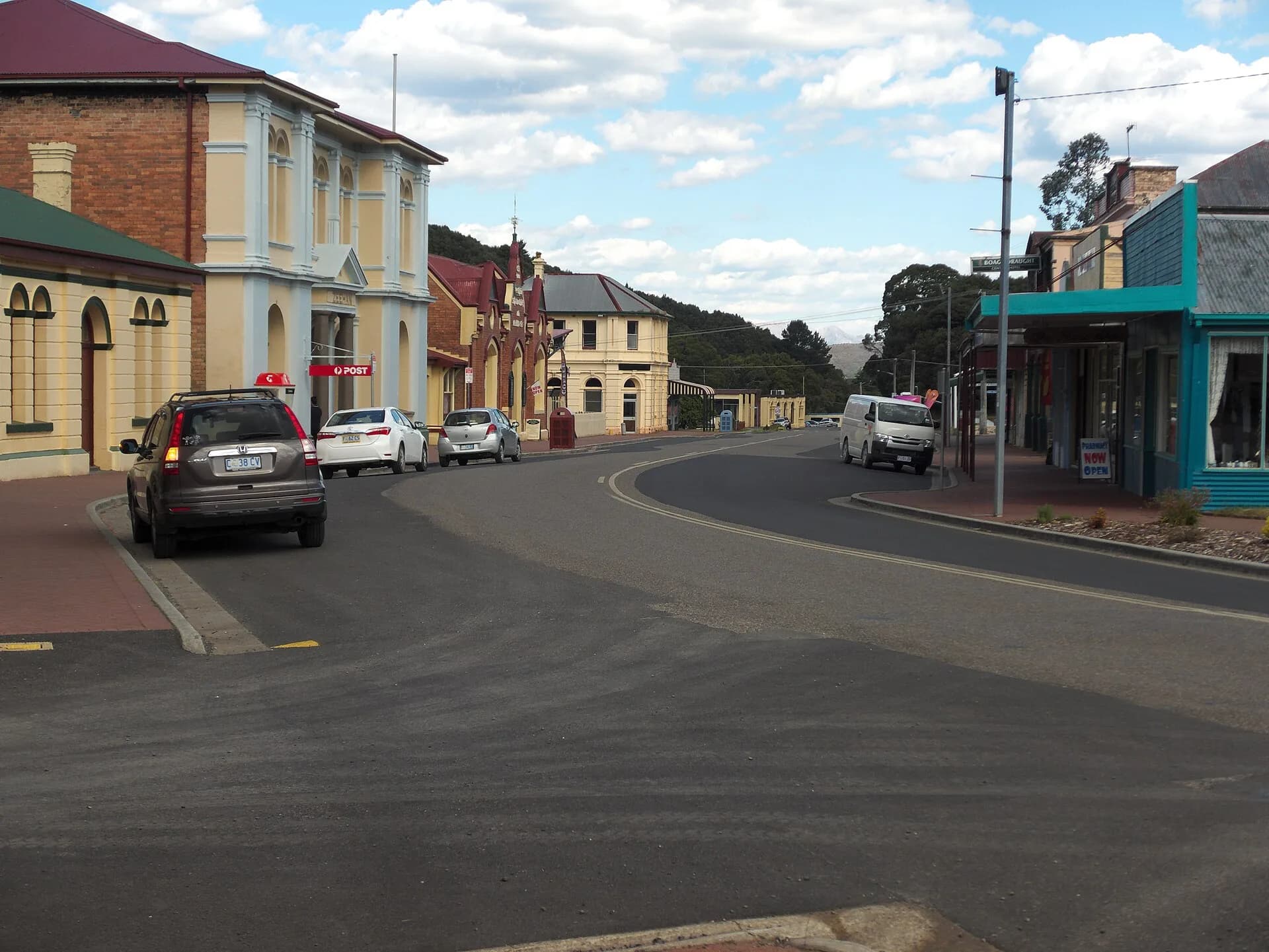

Zeehan grew rapidly after silver-lead discoveries in the 1880s and became one of Tasmania’s largest towns before ore grades, markets and mining activity changed. Its wide main street and surviving public buildings now sit within a much smaller west-coast community.
Start with the heritage centre
The West Coast Heritage Centre occupies several historic buildings and brings mineral specimens, machinery, photographs and social history together. Check current opening hours before making the journey.
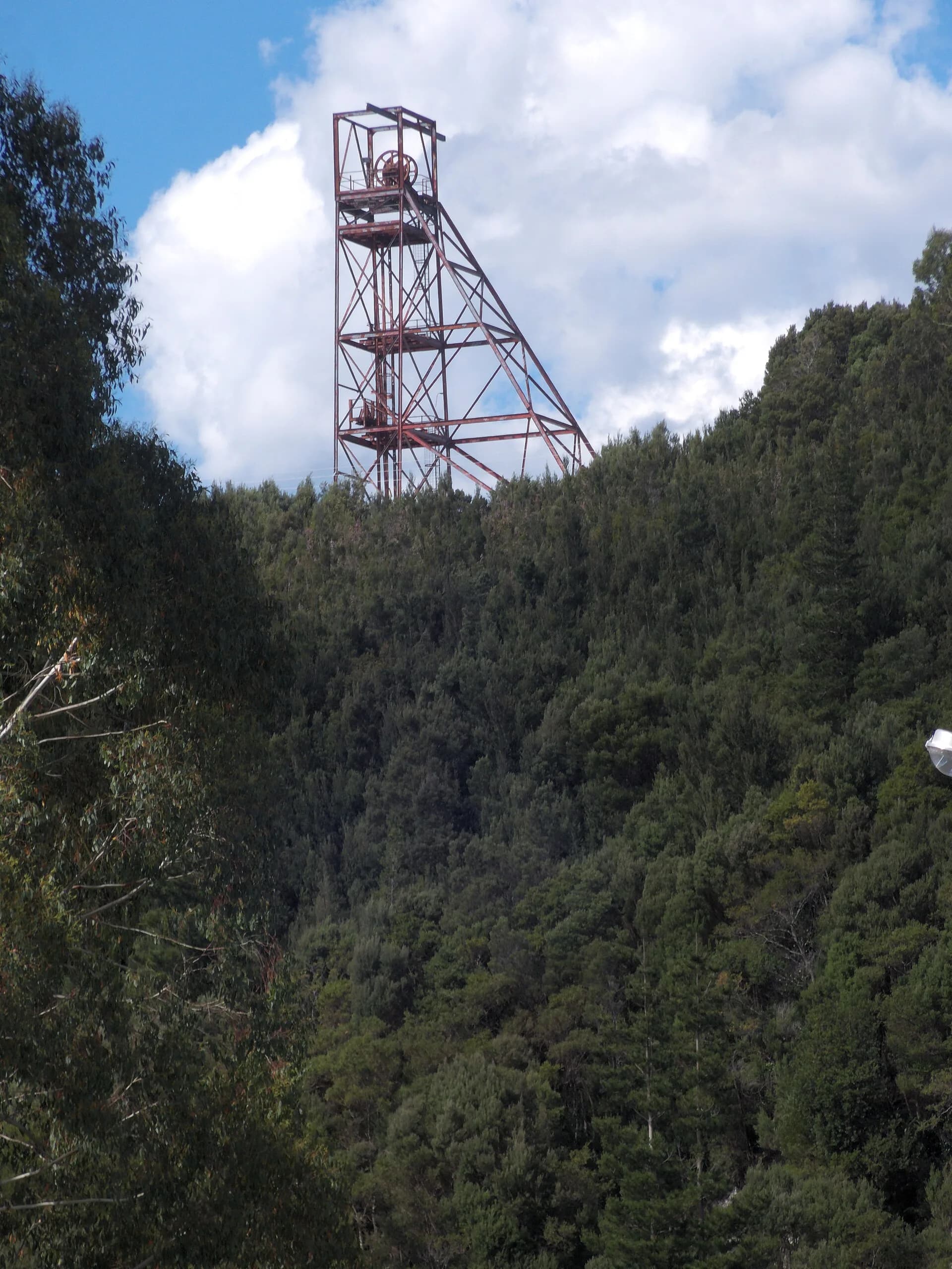

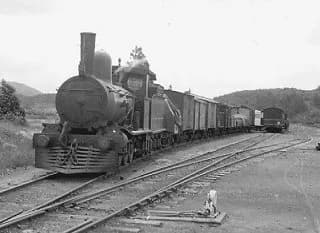
Railways served many mines
Different companies built lines through difficult terrain to move ore, supplies and people. Preserved locomotives and formation traces make most sense when tied to a named mine, route and date.

Use the town as a remote-road decision point
Zeehan has basic services, but roads to Trial Harbour, Corinna and Strahan differ in surface and distance. Check fuel, weather and daylight before selecting more than one.
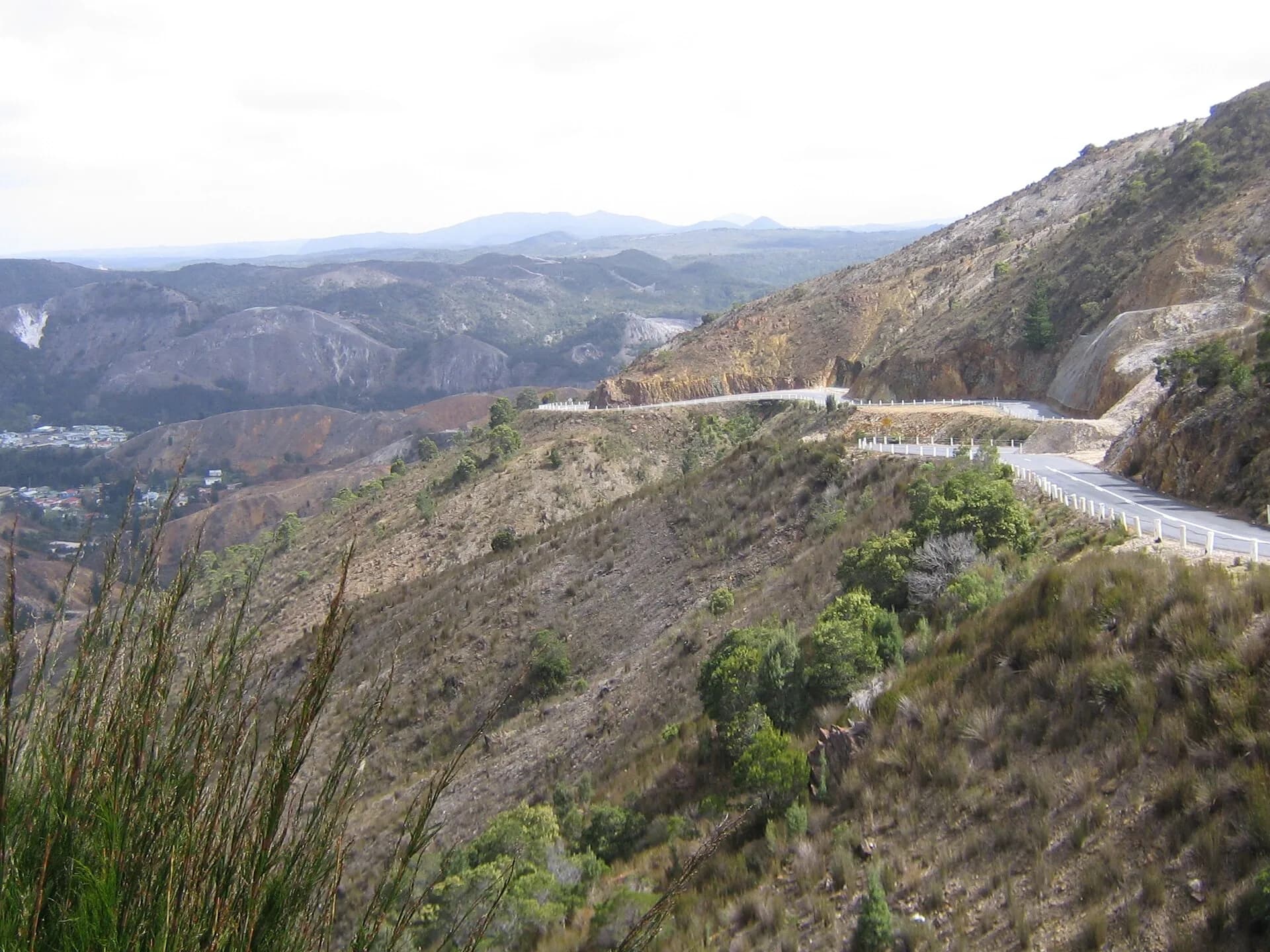

Queenstown provides a contrasting copper-mining landscape, while the West Coast guide helps sequence a multi-day trip.