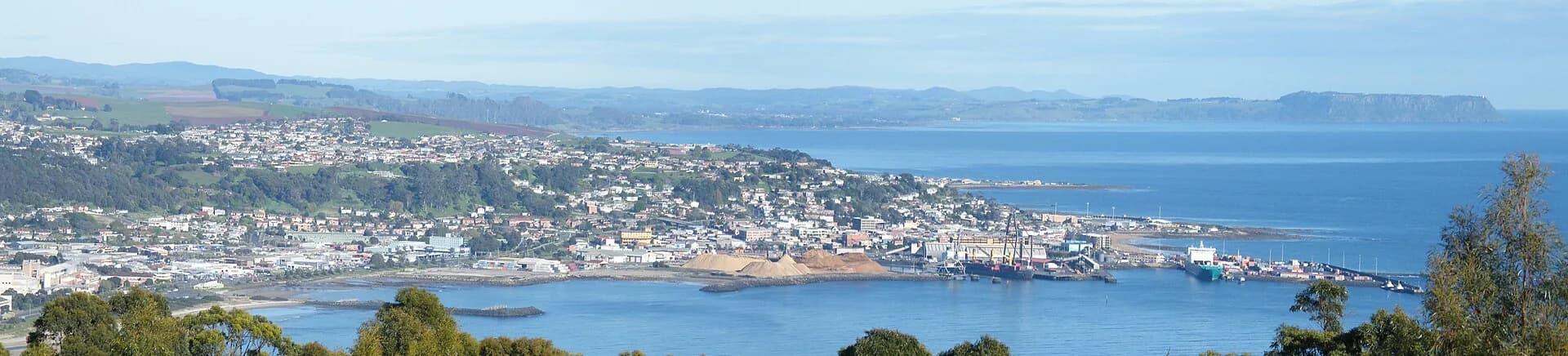

pataway / Burnie grew around Emu Bay as a port and industrial centre. Its history is not a simple progression from settlement to city. Aboriginal dispossession, company ambitions, west-coast mining, railways and twentieth-century industry each changed the place.
Country and company settlement
Burnie stands on the Country of north-west Tasmanian Aboriginal people. The Van Diemen’s Land Company established an Emu Bay settlement in 1827 as part of its much larger landholding, with severe consequences for Aboriginal communities.
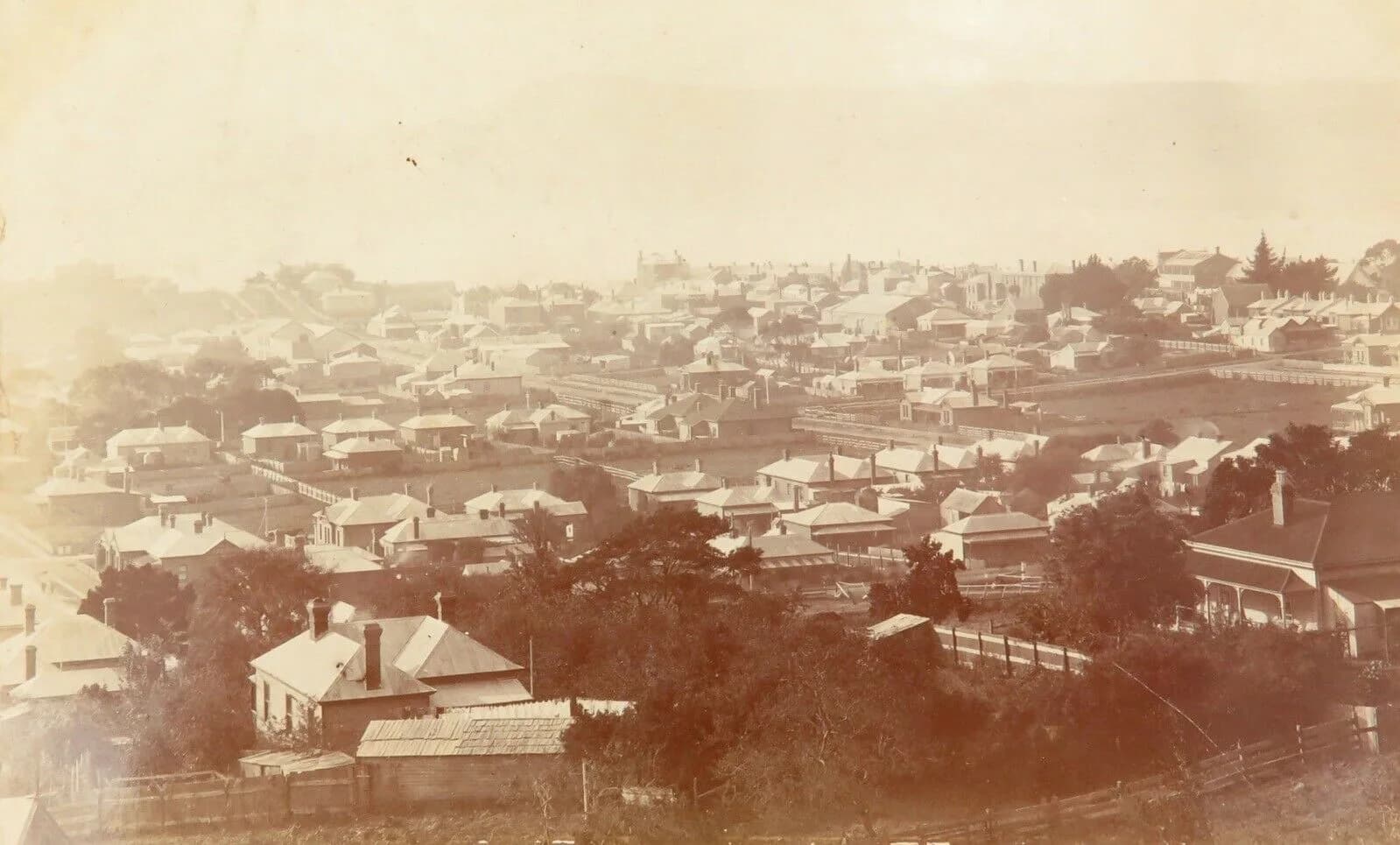

The first settlement remained small. Its name changed from Emu Bay, and port functions expanded as inland industries developed.
Railway and mining port
West-coast mineral discoveries increased Burnie’s importance. The Emu Bay Railway carried ore, goods and passengers between the port and mining districts, tying the city’s growth to places far inland.
Pulp and paper city
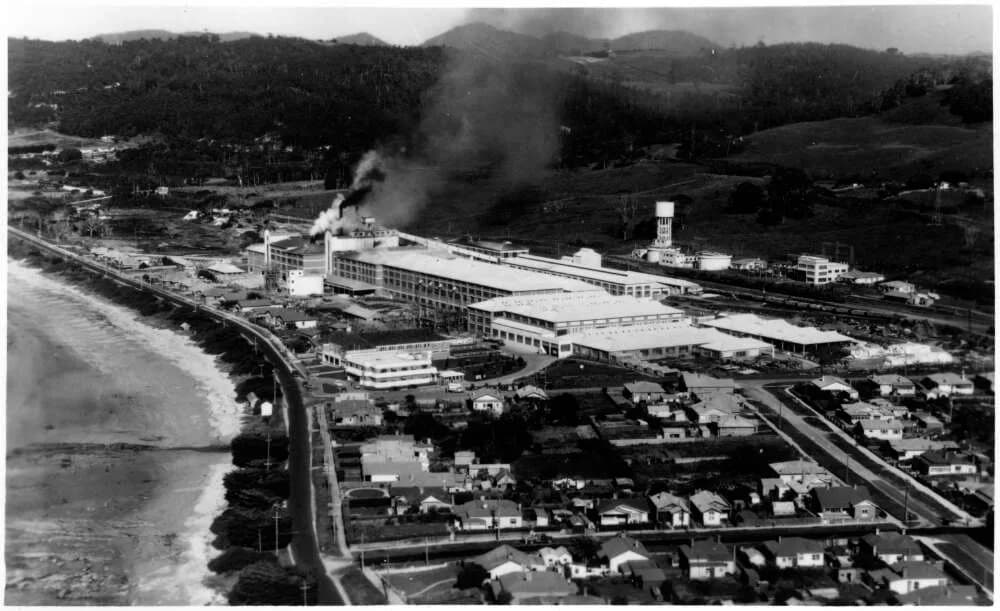
Associated Pulp and Paper Mills began production in 1938. The mill drove rapid population growth, employment and suburban expansion, while also producing environmental and economic legacies. It closed in 2010.
_%E2%80%93_Winter%27s_Snappy_Service.jpg)
Reading Burnie today
Port infrastructure, industrial land and altered shorelines remain central to the city. The council’s Living History Walk links surviving and lost sites within the centre, while the museum and gallery collections provide deeper evidence.
Pair this history with the broader north-west Tasmania history and the Port of Devonport to compare two industrial ports.