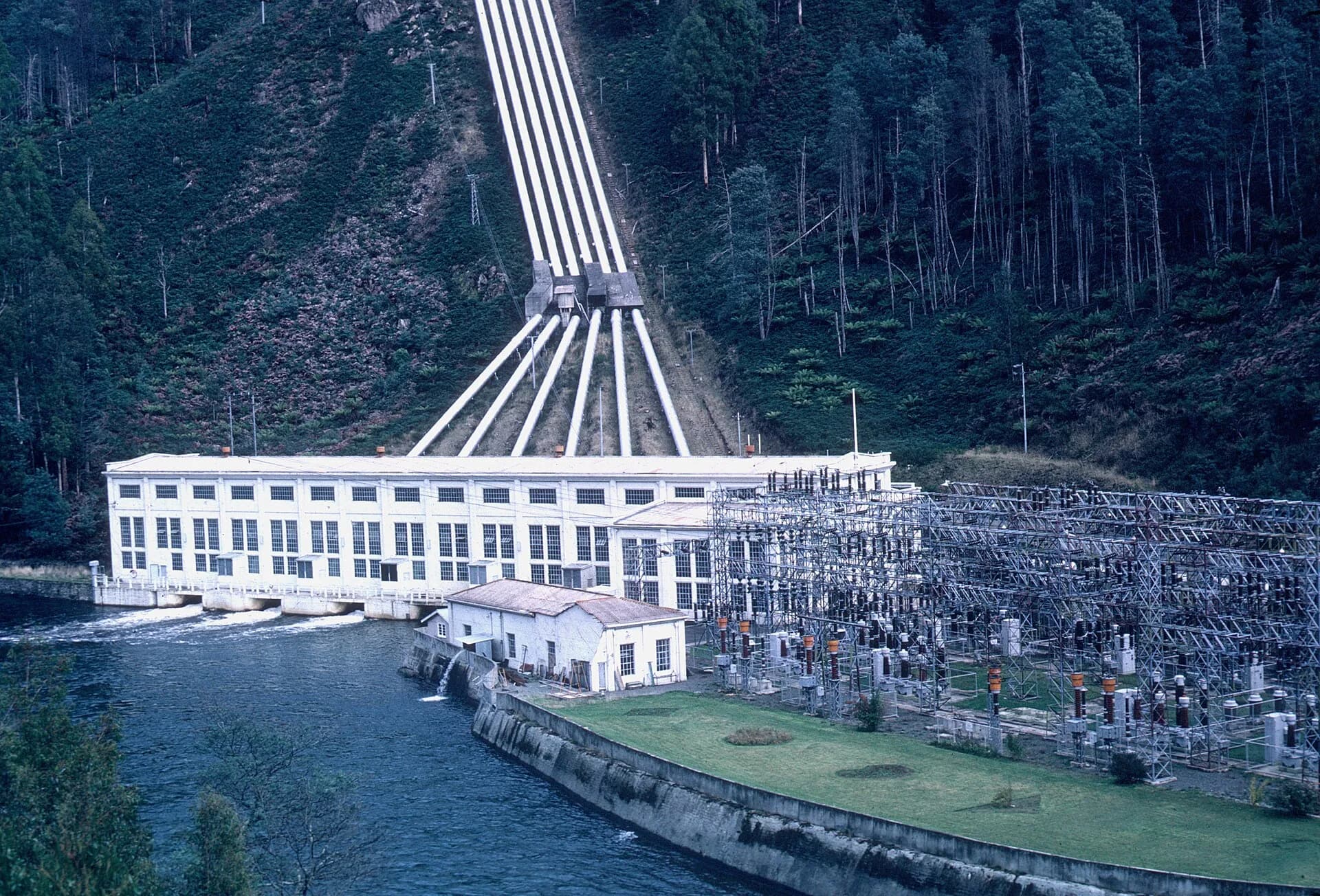

Tarraleah is a small Central Highlands village whose streets, cottages and industrial landscape grew around one of Tasmania’s major twentieth-century hydro-electric projects. It sits above the Nive and Derwent river systems, away from the main services of the lowlands.
A village built around water and power
Construction of the Tarraleah scheme began in the 1930s. The undertaking required canals, flumes, tunnels, steep penstocks and a workforce housed close to the works. Hydro Tasmania records the original station as having been commissioned in stages from 1938 to 1951.
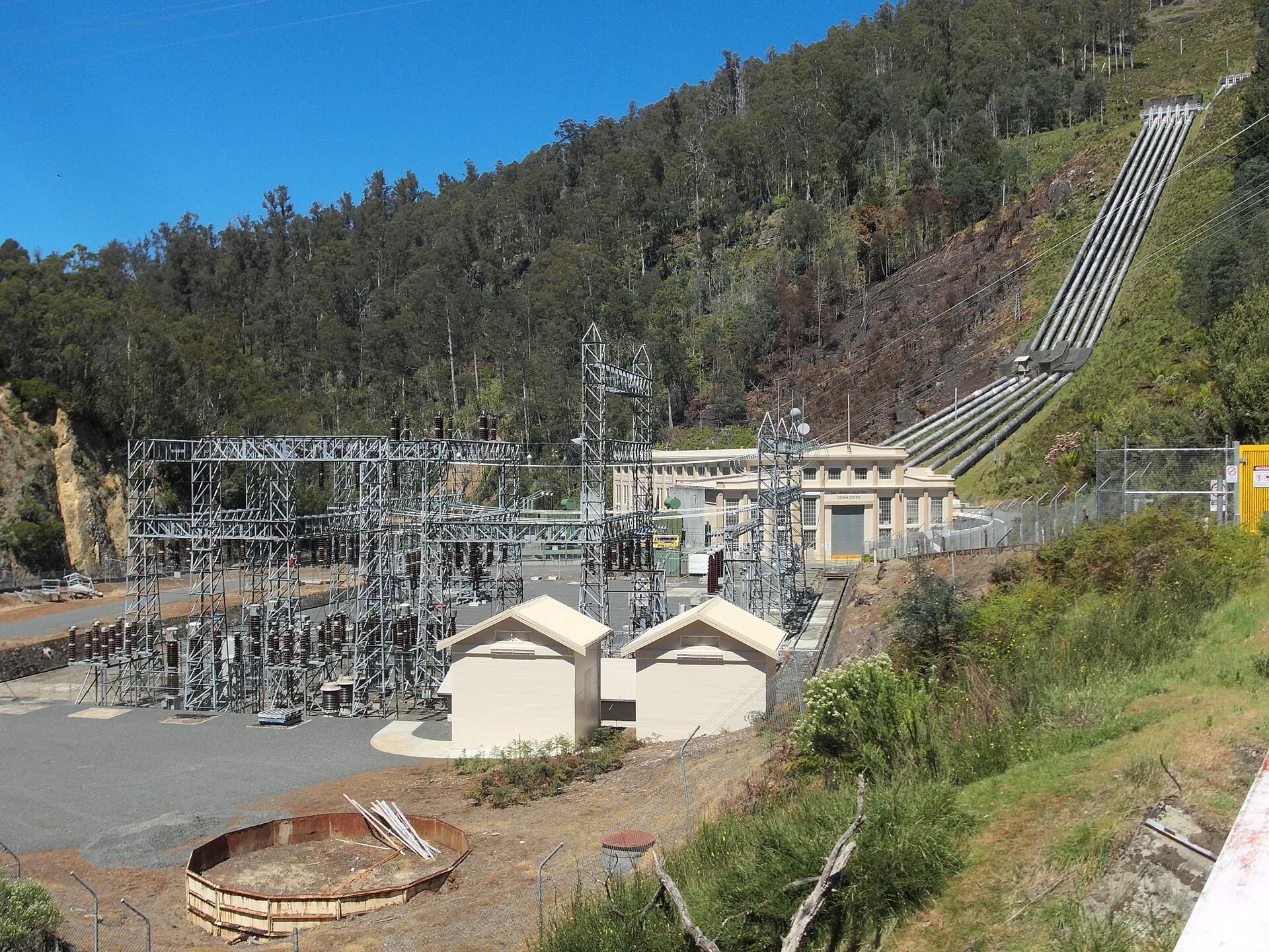
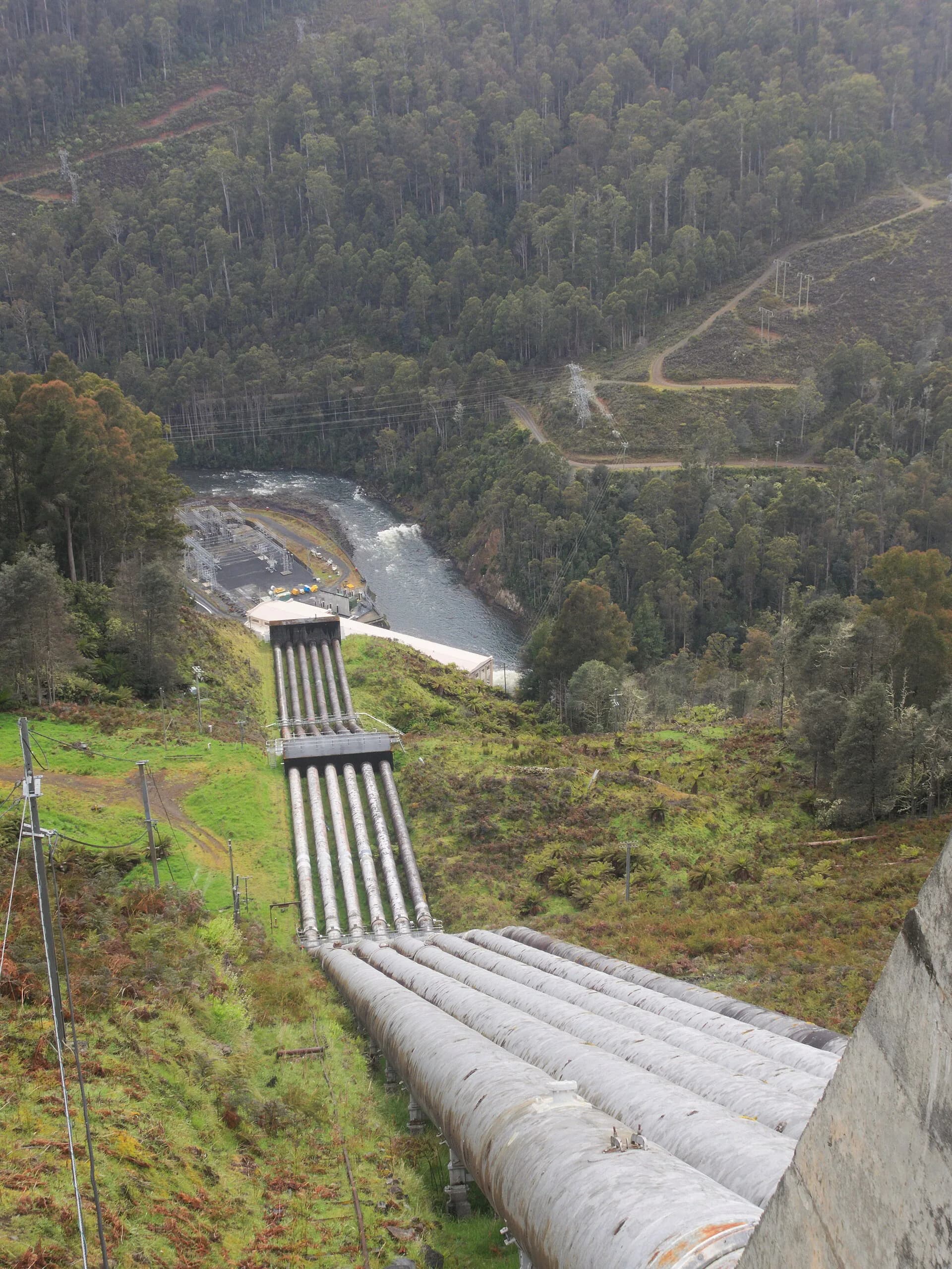
Six Pelton turbines use water descending roughly 290 metres through the penstocks. Their combined capacity is 93.6 megawatts. The figures help explain why the pipes, channels and station buildings are such a visible part of the district, but the infrastructure remains operational and is not an unrestricted visitor attraction.

Read the village as part of the scheme
The settlement is as important as the machinery. Workers and their families lived in a planned community with accommodation and shared facilities. Postwar migrants were among the people who built and maintained the system. Surviving buildings now have a mix of private, visitor and operational uses.
Stay on public roads and respect closed compounds, works areas and private property. The best understanding comes from viewing the village and the water system together, then comparing Tarraleah with Waddamana, where the earlier power station is preserved as a heritage site.

The redevelopment is still a proposal
Hydro Tasmania is planning a major redevelopment that would replace much of the old scheme with a new, more flexible station while retaining the historic power station. As at March 2026, procurement had moved to a further stage, but the project had not reached a final investment decision and still required approvals. Visitors should expect conditions and access around construction areas to change if work proceeds.
Planning a stop at Tarraleah
Tarraleah is better treated as a deliberate highland stop than as a full-service town. Check fuel, food and accommodation before leaving larger centres. Mobile coverage and opening hours can be limited, and frost, snow, wind or fallen trees can affect roads in any cold period.
The village fits naturally into a route between Bothwell, Derwent Bridge and the Central Plateau. Allow extra daylight for wildlife and changing conditions.