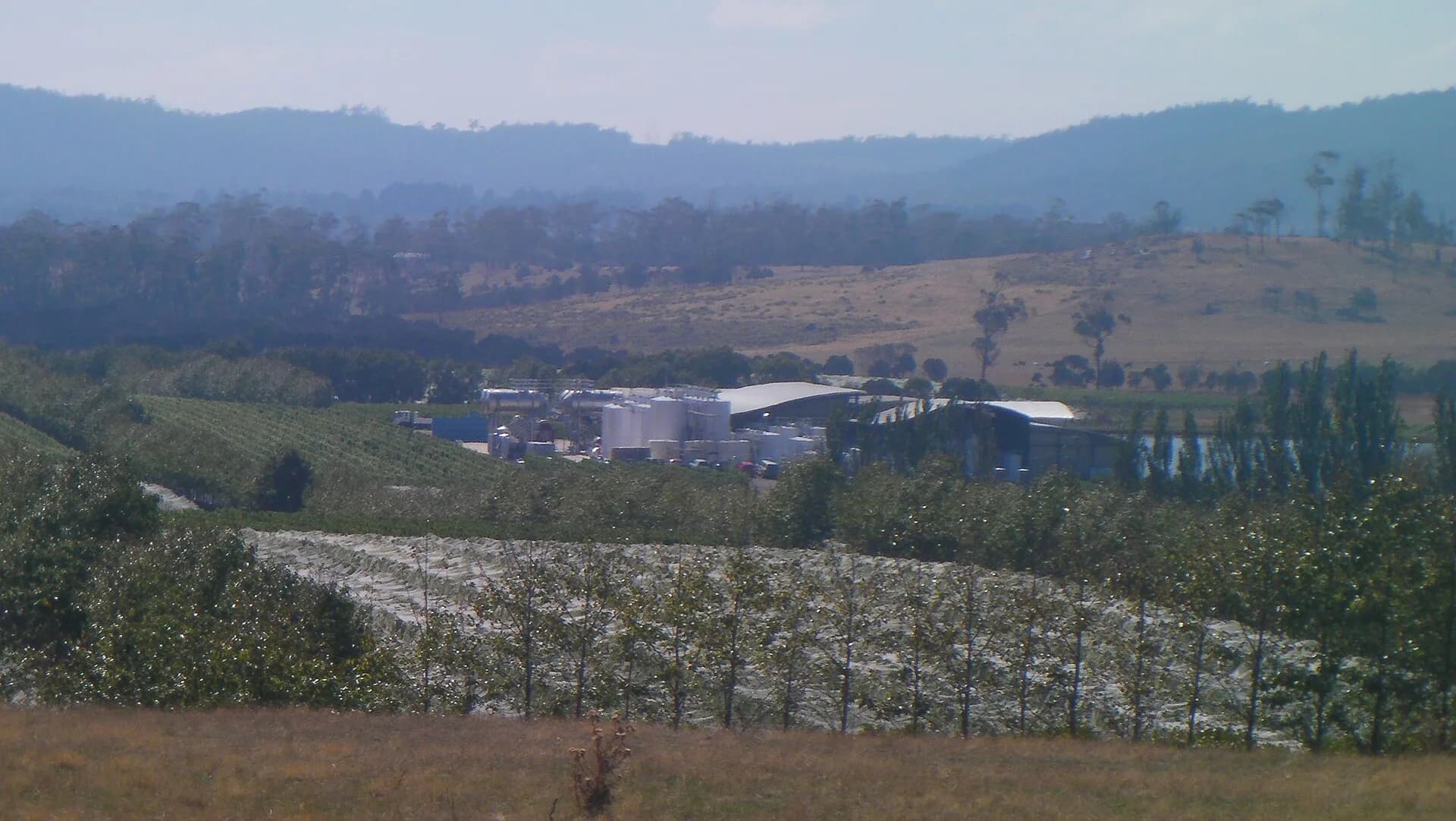

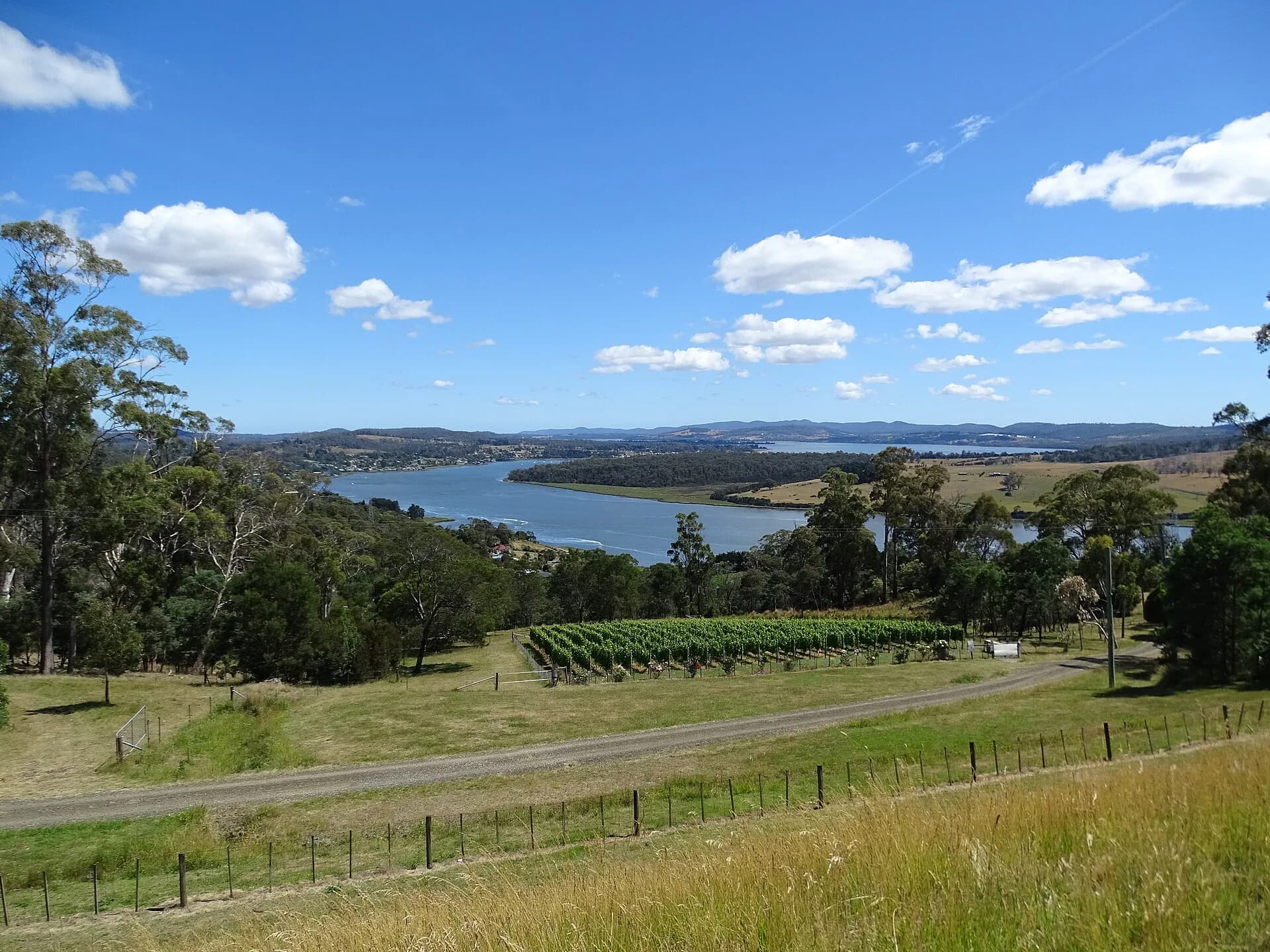
The Tamar Valley extends north from Launceston around kanamaluka / River Tamar. Vineyards occupy slopes and tributary valleys on both sides of the river, but the region is not one continuous strip of cellar doors.
Tasmania’s wine geography
Wine Australia treats Tasmania as a single geographical indication. The Tamar Valley is a recognised wine-touring area and major production district, rather than a separate registered geographical indication.
Cool conditions suit varieties including pinot noir, chardonnay, riesling and sauvignon blanc. Sparkling wine is especially important. Site, slope and soil vary considerably, so broad claims about one “Tamar style” should be treated cautiously.
Plan one side of the river
Launceston is the usual starting point. The western side leads towards Legana, Exeter, Beaconsfield and Beauty Point. The eastern side passes through areas such as Relbia, Hillwood and Pipers River, depending on the chosen route.
The Batman Bridge provides a northern crossing, but using it to visit both sides can create a long driving day. Wine Tasmania’s current trail map is a better planning tool than an old printed list because cellar doors open, close or move to appointment-only visits.

Cellar-door etiquette
Check each producer’s official site for opening days, bookings, tasting fees, accessibility and food. A vineyard may make wine without operating a public cellar door. Groups often need advance arrangements.
Buy directly when a tasting has been useful, but do not feel obliged to rush through a large number of venues. Two to four well-chosen visits allow time for conversation, travel and lunch.
Safe transport
The legal blood-alcohol limit is not a tasting target. Nominate a driver who does not drink, book a tour, or use transport arranged in advance. Taxis and rideshare availability can be limited outside Launceston, especially late in the day.
Carry water and eat properly. Never rely on spitting alone to make repeated tastings safe for driving.
Add local context


Wetlands, river towns, orchards and historic sites make the valley more than a wine route. Pair a small number of tastings with one non-wine stop. Beaconsfield, river viewpoints or a local produce stop can give the day a clearer sense of place.