.jpg)
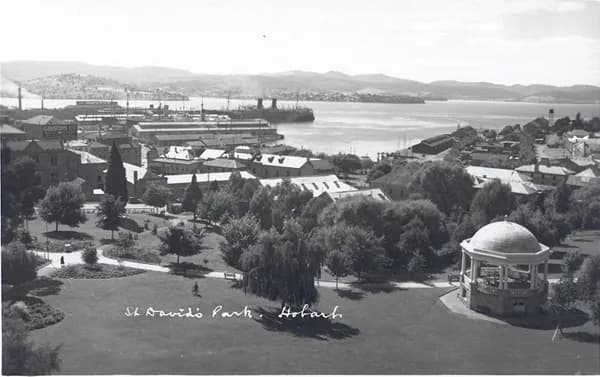
St David’s Park occupies the site of Hobart’s first European burial ground, established in 1804. The cemetery closed in the nineteenth century and the grounds were later remade as a formal public park.
A memorial landscape
The surviving headstones and memorial wall record only part of the burial ground. Names, inscriptions and monument materials reveal social position and commemoration, while many people left no durable marker.


From cemetery to park
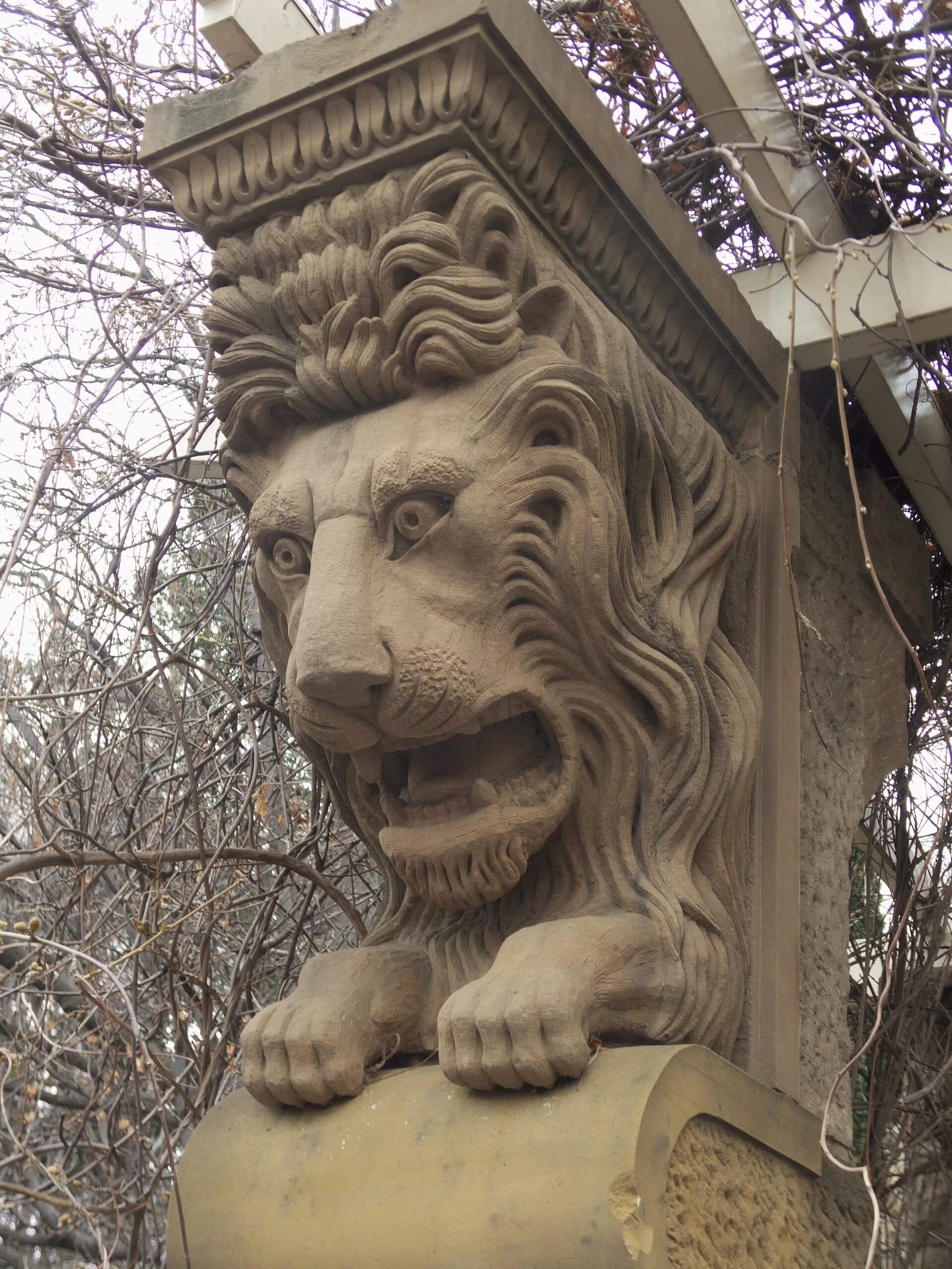
Paths, lawns, mature trees and the pavilion reflect twentieth-century park design. Stone lions at the Salamanca Place entrance came from the former Bank of Van Diemen’s Land, adding another displaced fragment of city history.

Visit with care
The park is a public route between the city and Salamanca, but it remains a burial place. Avoid climbing memorials, keep events and picnics clear of fragile fabric and use City of Hobart notices for temporary works.


Continue to the Hobart architectural walk or compare the city’s wider parks and reserves.