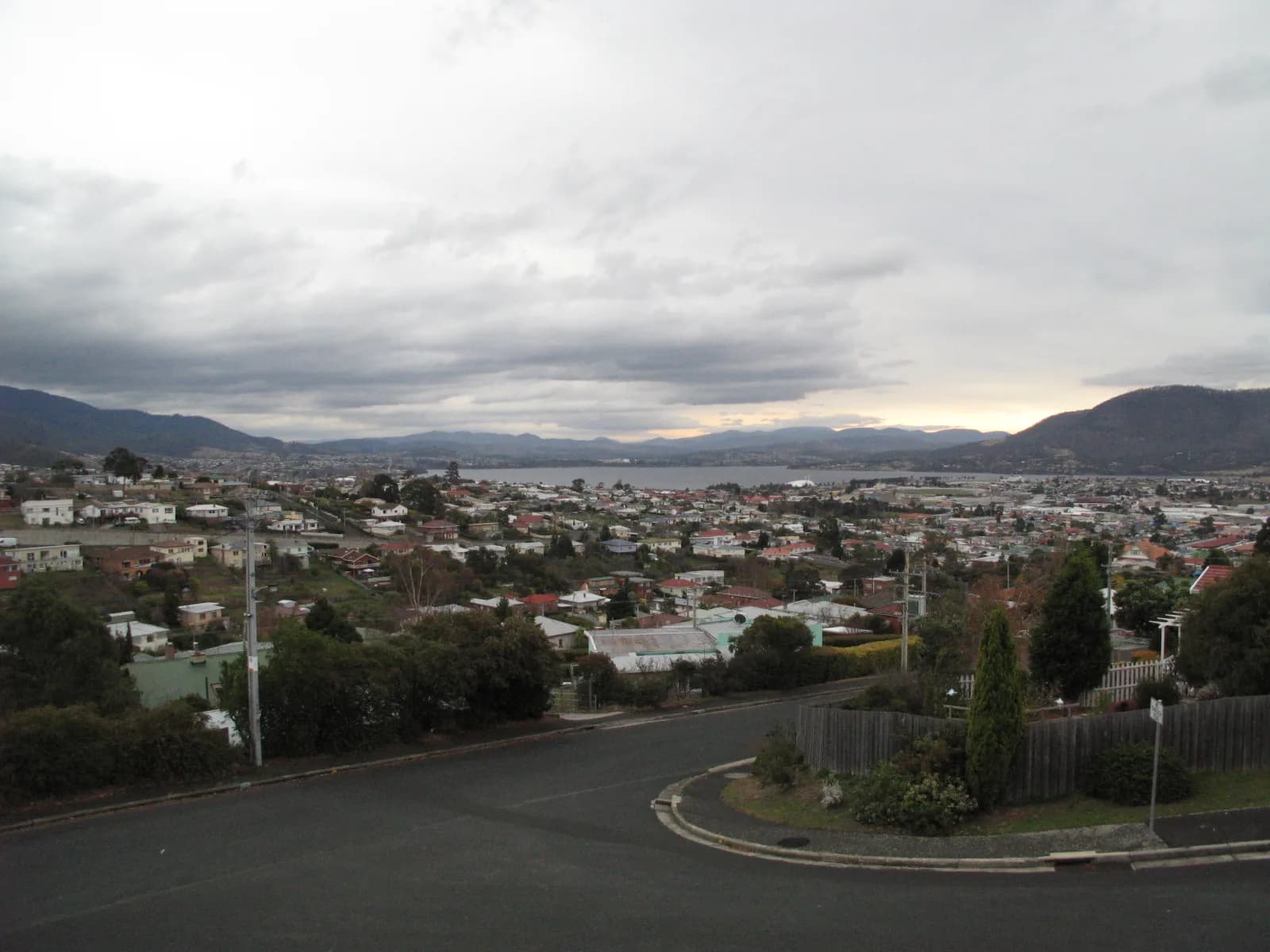

Moonah is a busy residential and commercial suburb north of central Hobart. Main Road carries buses, shops, restaurants and services through its centre, while industrial areas and quieter streets extend towards the River Derwent and the foothills.
From South Glenorchy to Moonah
The district was once commonly described as South Glenorchy. Farms, orchards and open land gradually gave way to housing, workshops and factories as greater Hobart expanded. The official name Moonah is now used for the suburb and is generally associated with an Aboriginal word for gum tree, though older place-name compilations should be checked against current Aboriginal language guidance.
Transport shaped the change. The railway and Main Road connected Hobart with Glenorchy and northern districts, while tram and bus services supported denser suburban growth.

Industry and everyday work
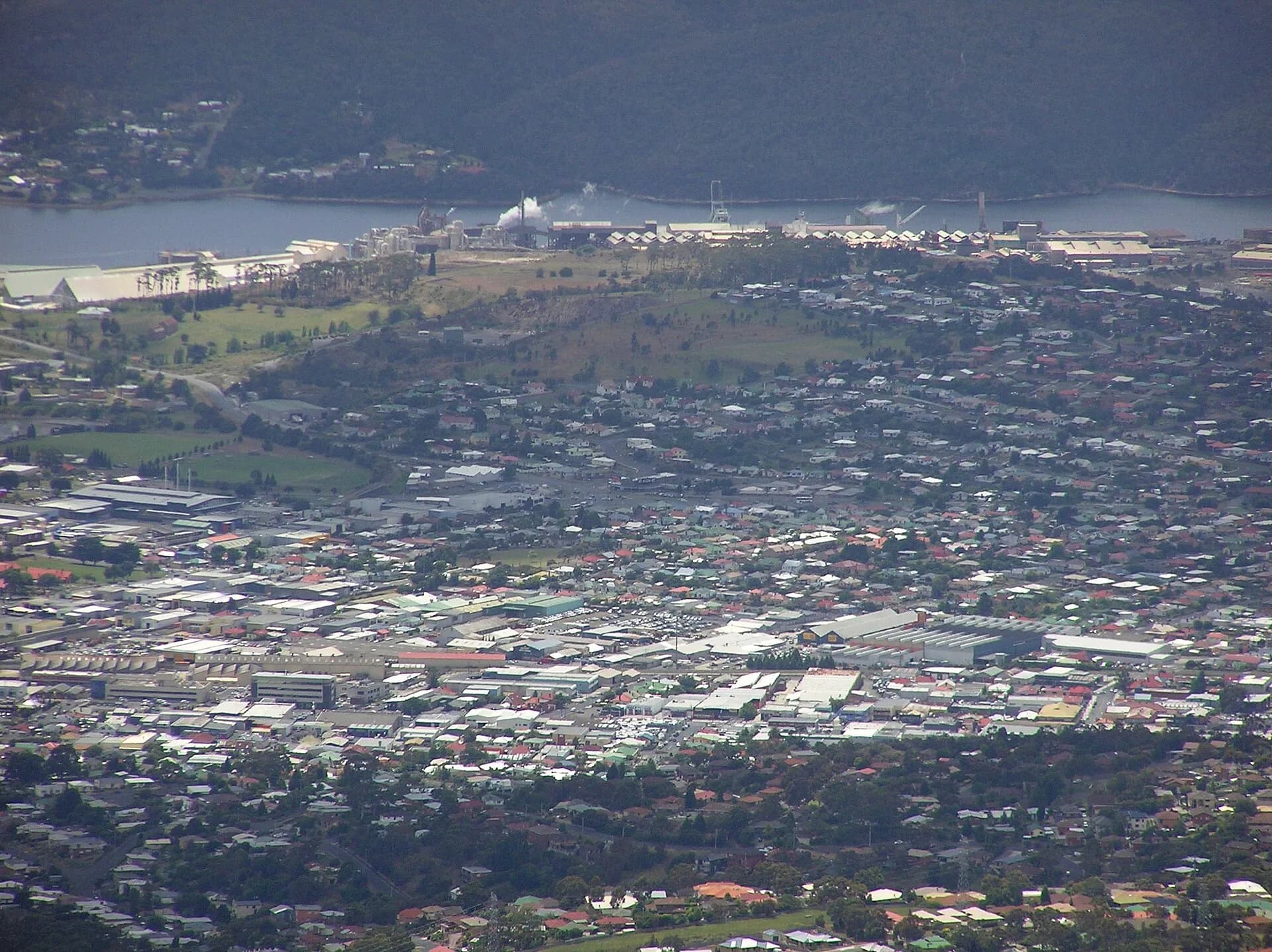
Moonah’s historical character comes as much from workshops, warehouses and shops as from individually prominent buildings. Manufacturing, motor trades, food businesses and logistics occupied practical sites near transport routes. Many buildings have changed use as industry shifted outward or premises were adapted.
The commercial strip remains one of greater Hobart’s most varied. Independent grocers, cafes and restaurants reflect successive waves of migration and local enterprise. Community history is therefore present in businesses and associations, not only in heritage architecture.

Arts and community life
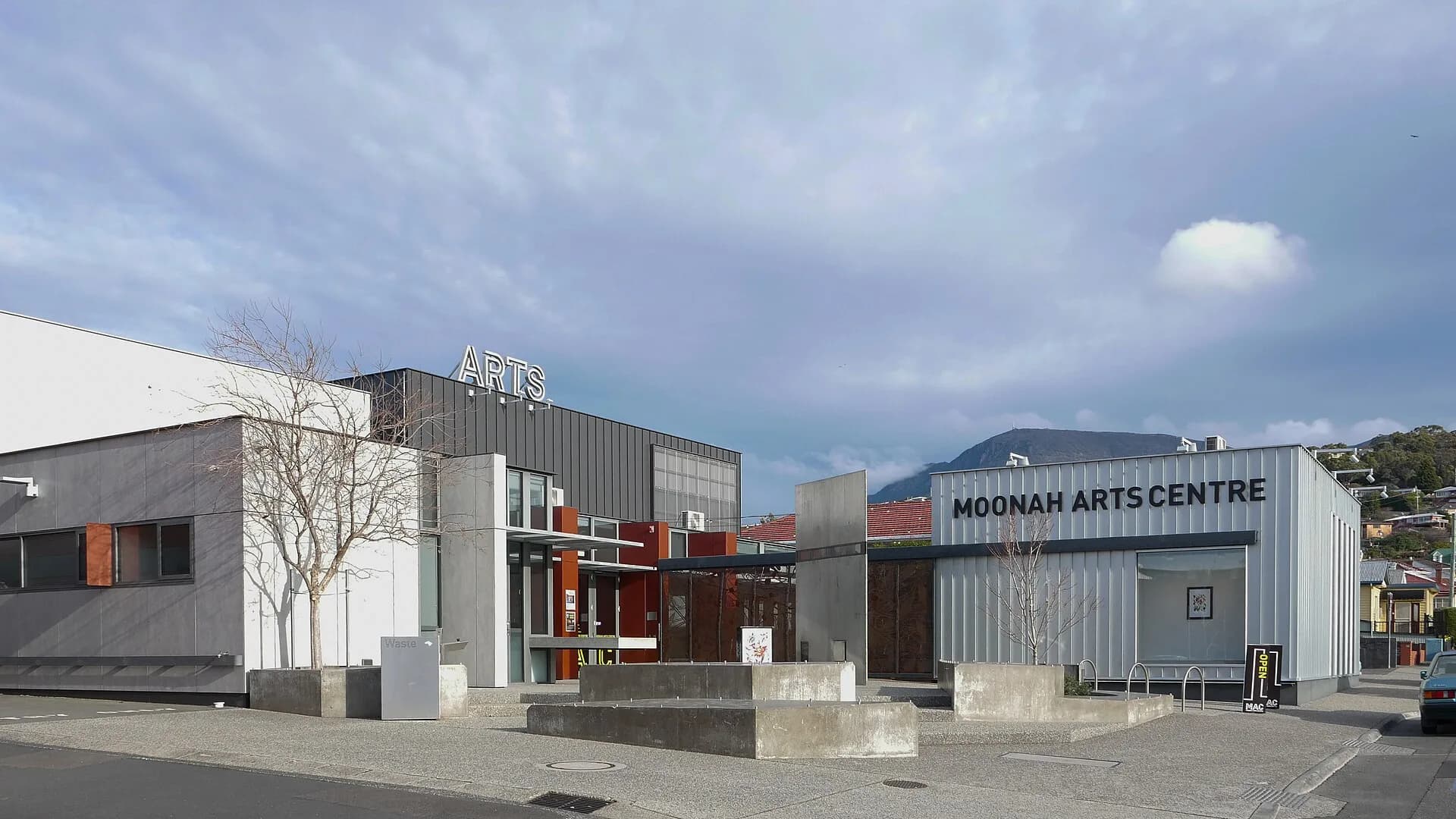
Moonah Arts Centre is a regional venue for exhibitions, performance and community programs. Its role fits a suburb with strong cultural and migrant networks. Check the current program rather than assuming gallery spaces are always open between installations.
The area’s Ukrainian community established premises in Moonah in the 1950s, supporting language, dance, music and community activity. Other communities have likewise built organisations and businesses across Glenorchy.
Visiting Moonah
Moonah is reached easily by bus from central Hobart. Main Road traffic and parking can be busy, so public transport is often the simplest option for a food or arts visit. The Intercity Cycleway passes nearby on the former railway corridor and offers a separated cycling connection through the northern suburbs.
This is a lived urban centre rather than a conventional sightseeing precinct. Visit for a meal, an exhibition or local shopping, then use the street pattern and adapted buildings to understand how Hobart’s industrial and suburban growth spread north.