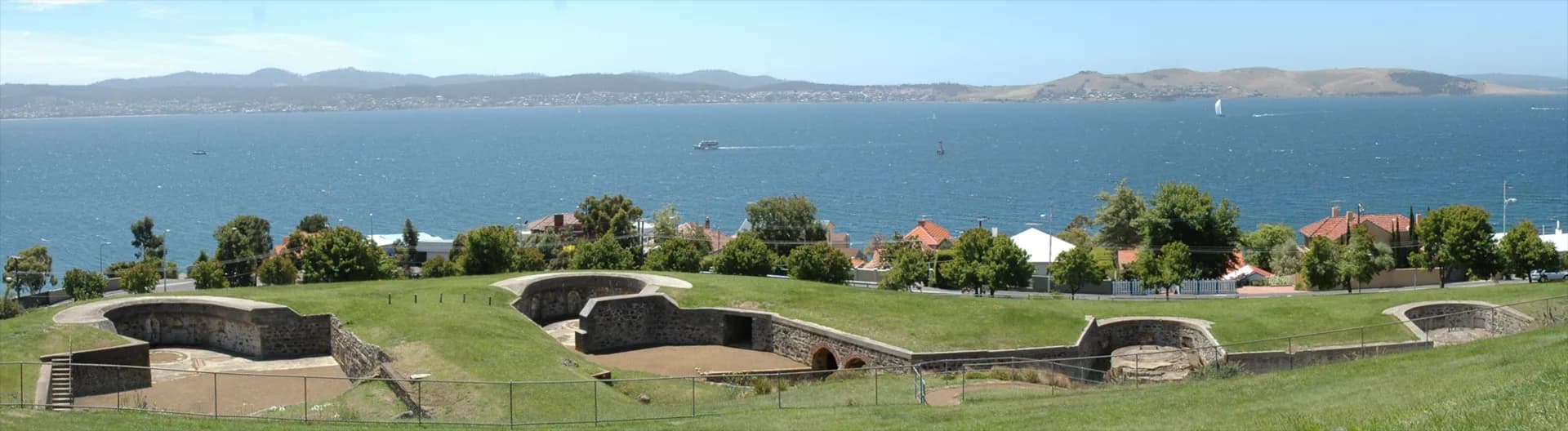

Hobart’s colonial and later Australian defences were built around the River Derwent. Batteries moved and changed as artillery range, harbour use and perceived threats changed.
Early batteries near the town
Mulgrave, Prince of Wales and Queen’s batteries protected the anchorage from sites close to the growing settlement. Most were removed or absorbed into later public spaces, so archaeological records and interpretation matter as much as visible walls.
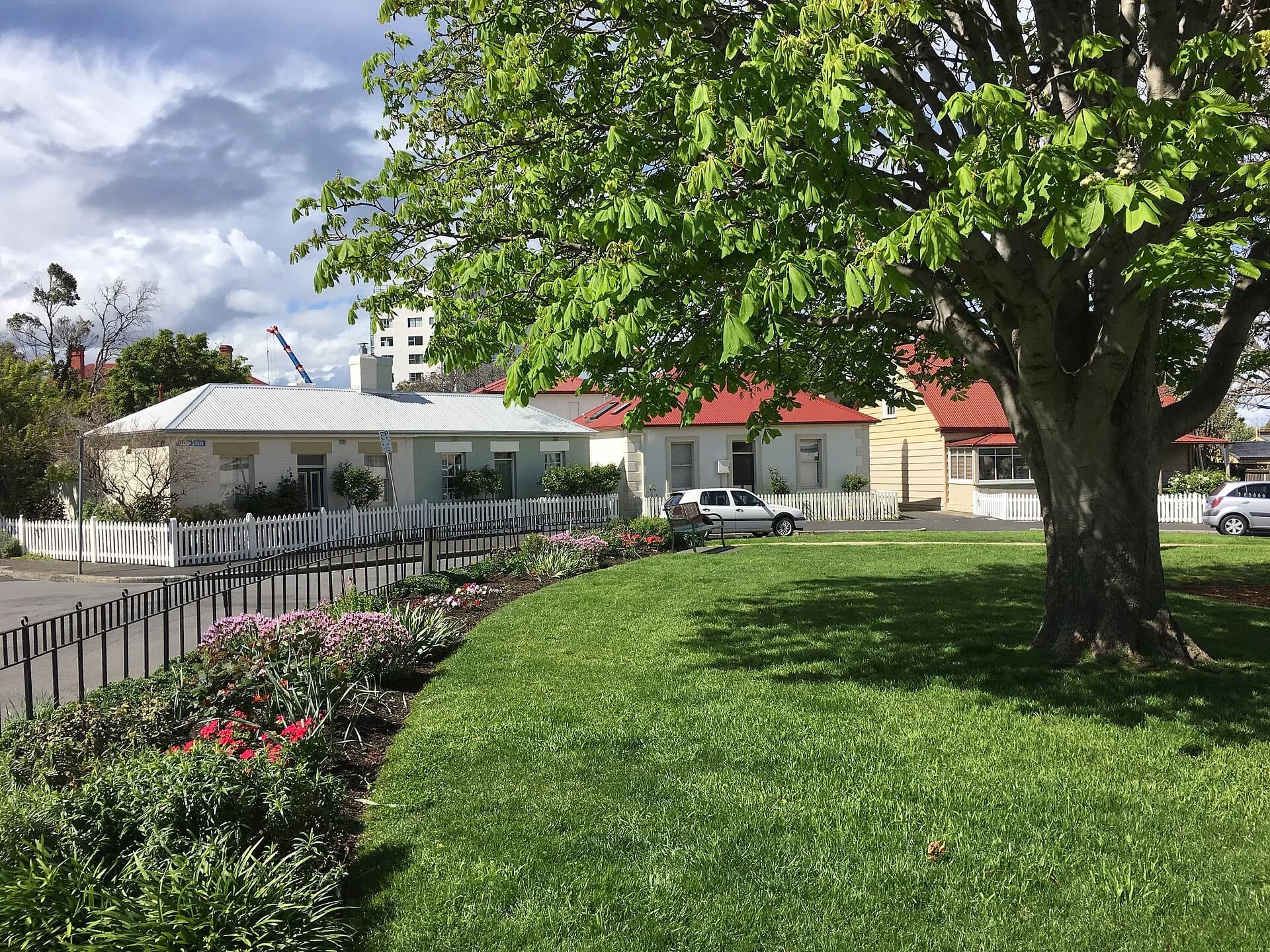

A cross-river network
Alexandra Battery at Sandy Bay and Kangaroo Bluff Battery at Bellerive were completed in 1885. Their positions supported a wider system of guns, magazines, observation points and searchlights.
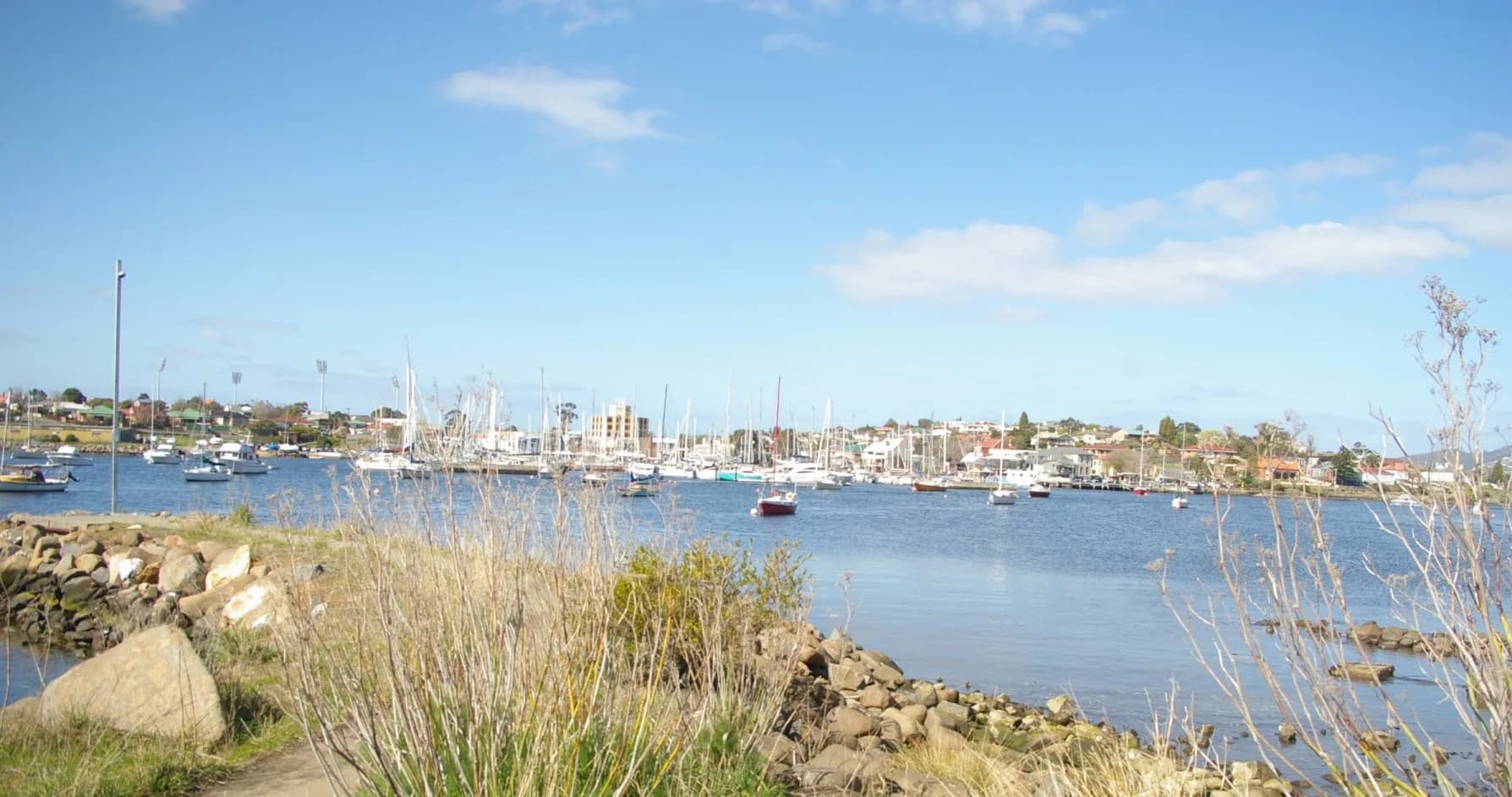
_Bellerive_2012.jpg)
Visit surviving places carefully
Alexandra Battery and Kangaroo Bluff can be viewed from public reserves, but enclosed structures, drops and masonry require care. Follow local signs and never enter locked or unsafe spaces.
Combine the sites with Battery Point, Bellerive and the Hobart architectural walk.