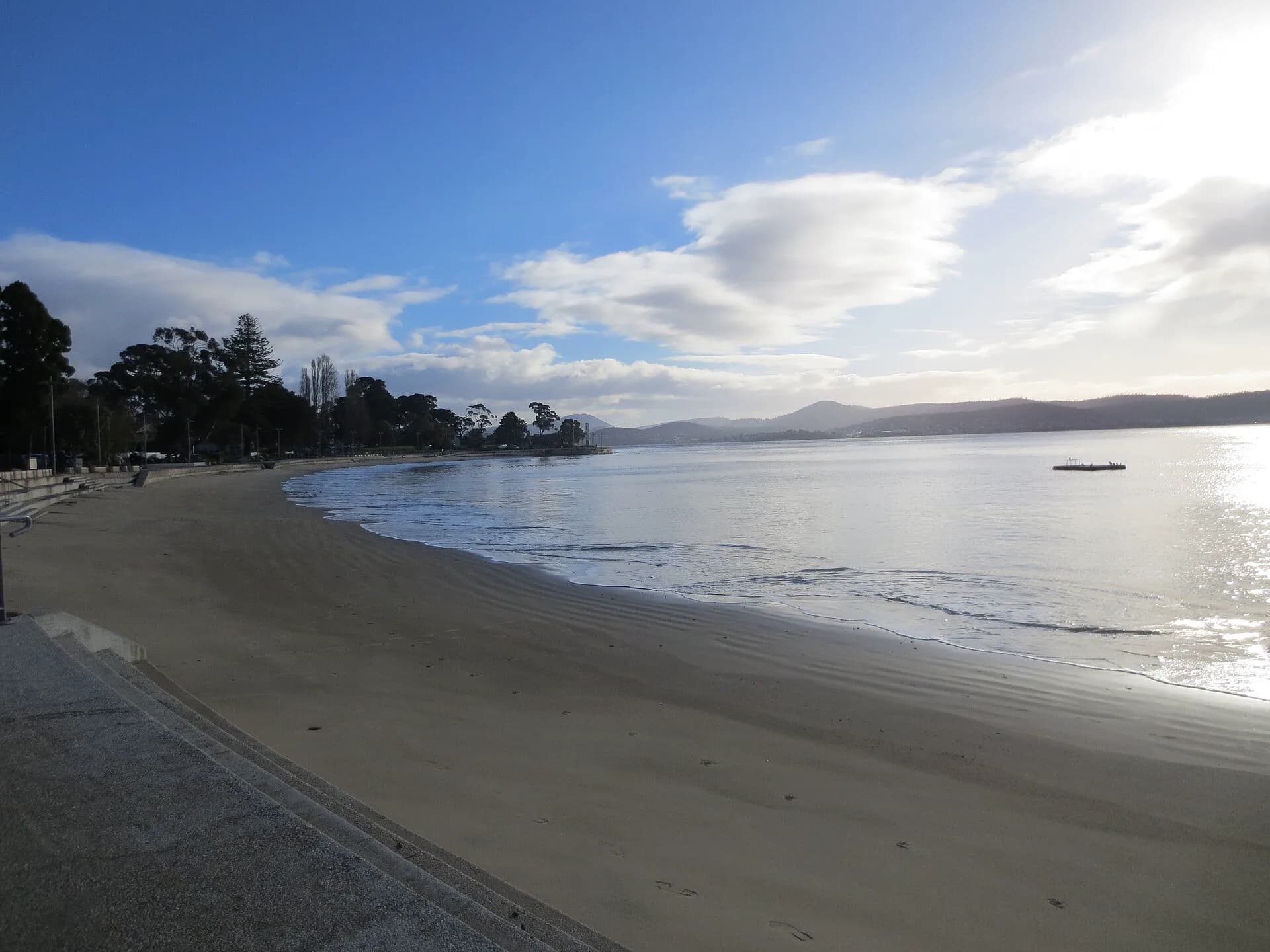

Hobart’s beaches sit on a river estuary rather than a continuous ocean coast. Conditions change with wind, tide, rain and location. A beach that is sheltered on one shore can be exposed across the Derwent.
Long Beach and Nutgrove
Long Beach in Sandy Bay has a promenade, toilets, play facilities and easy access to nearby food. The adjoining Nutgrove shore is longer and less formal. City of Hobart material identifies ongoing erosion and a heavily modified dune system, so use formed access points rather than cutting through vegetation.
Long Beach is popular with paddlers and swimmers, but it is not a permanently supervised pool. Check water quality after heavy rain and assess cold water, wind and boat traffic.
Taroona and the lower Derwent
Hinsby Beach is a small rocky and sandy cove at Taroona. The lower river is more exposed to swell and southerly weather than central Sandy Bay. Limited parking and residential streets make a quieter arrival important.
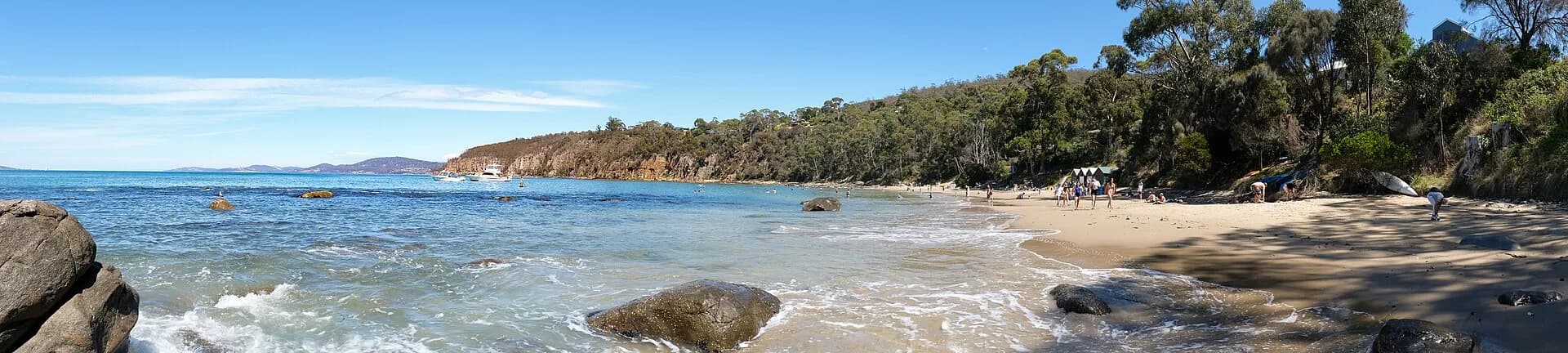

Farther south, Kingston Beach and Blackmans Bay lie outside the City of Hobart but are useful choices when weather favours that side of the river. Travel time and parking increase on busy summer days.
Eastern-shore beaches
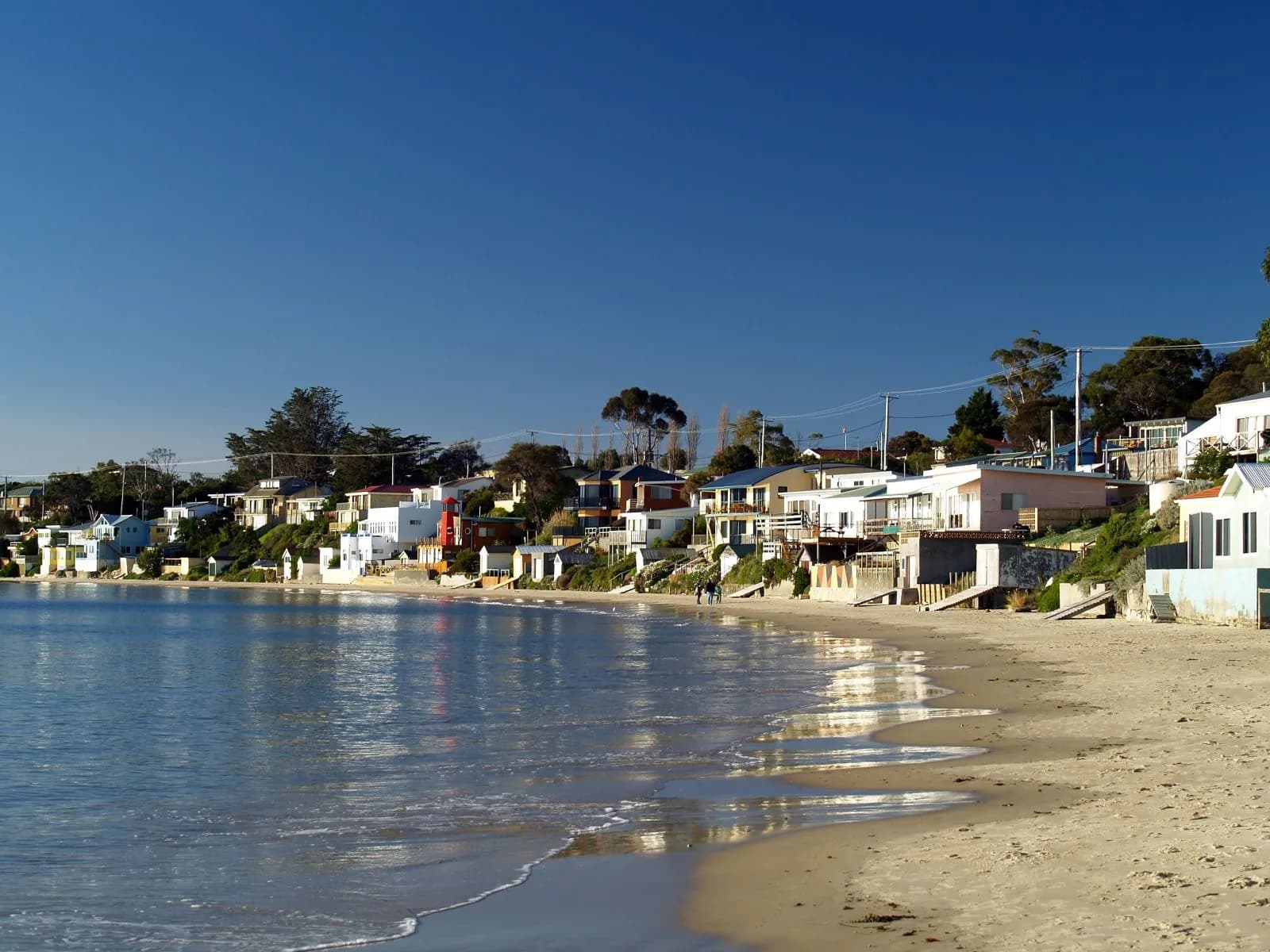
Bellerive, Howrah, Lauderdale and the South Arm Peninsula provide different aspects and water conditions. Their distance across the river looks short, but road access uses the Tasman Bridge and eastern-shore network.

Check before swimming
EPA Tasmania publishes recreational water-quality monitoring. Avoid swimming near stormwater outlets or after heavy rain, and follow any warning signs. Most local beaches are unpatrolled. Cold shock, wind and current still matter in sheltered-looking water.
Dog access varies by beach, section and time of day. Use current council signs rather than an old list. For a first visit, choose the shore that matches the day’s wind and combine it with the Hobart guide instead of driving around the whole estuary.