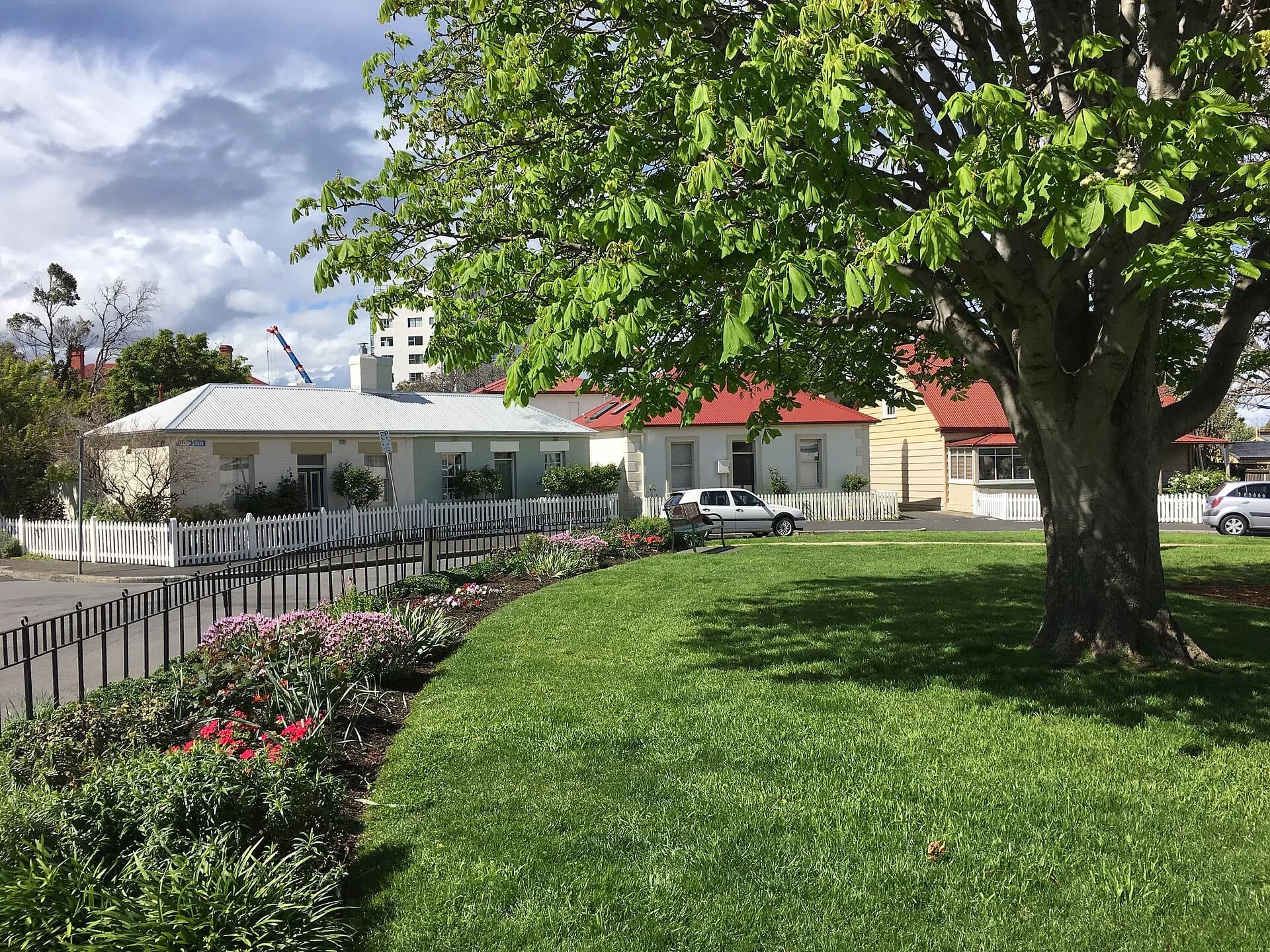

Battery Point is best understood on foot. Its compact streets reveal a neighbourhood shaped by maritime work, private estates, small cottages, substantial houses and later conservation. This route begins near Salamanca Place, climbs into the suburb and returns along the lower streets. Allow extra time to look closely rather than treating every historic building as a checklist stop.
Salamanca Place to Kelly’s Steps
Begin at Salamanca Place, where sandstone warehouses face the former working waterfront. Walk towards Kelly’s Steps. The stairway was built through Captain James Kelly’s property in the 1830s and remains a direct pedestrian connection between Salamanca and the higher ground of Battery Point.
At the top, pause to read the change in scale. Narrow lanes and modest cottages sit close to larger houses. Building size, setbacks and materials reflect different occupations and phases of subdivision, but a facade alone cannot reveal who lived or worked inside.
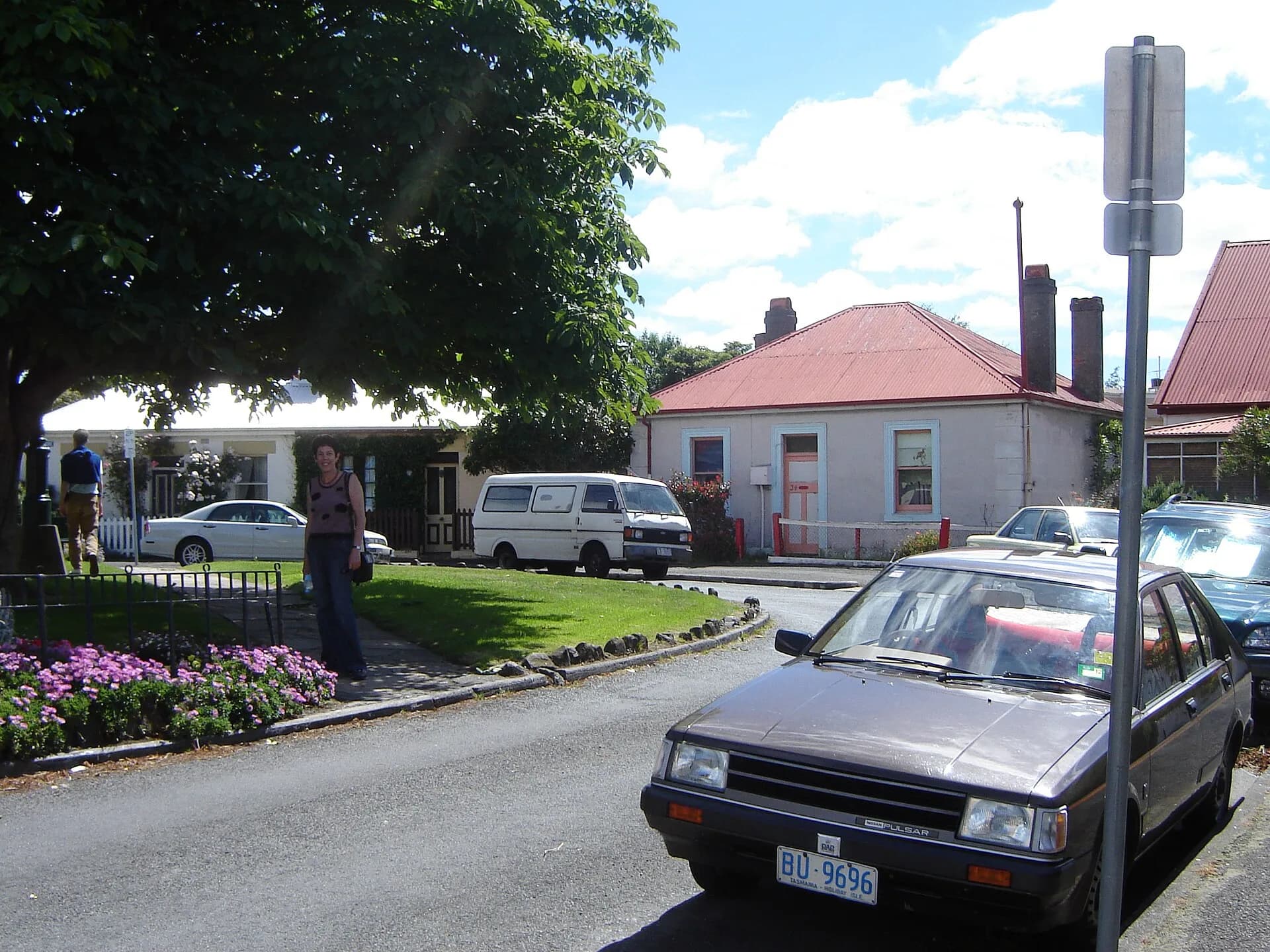

Hampden Road and Arthur Circus
Follow Hampden Road through the commercial heart of the suburb, then turn towards Arthur Circus. The circular arrangement is one of Hobart’s most distinctive urban spaces. Its cottages were built over time rather than as a single perfectly uniform composition.
Walk around the outside and respect residents’ privacy. The central green is a neighbourhood space, not an outdoor museum. Details worth noticing include roof forms, chimneys, verandahs, small front gardens and the way buildings meet the pavement.
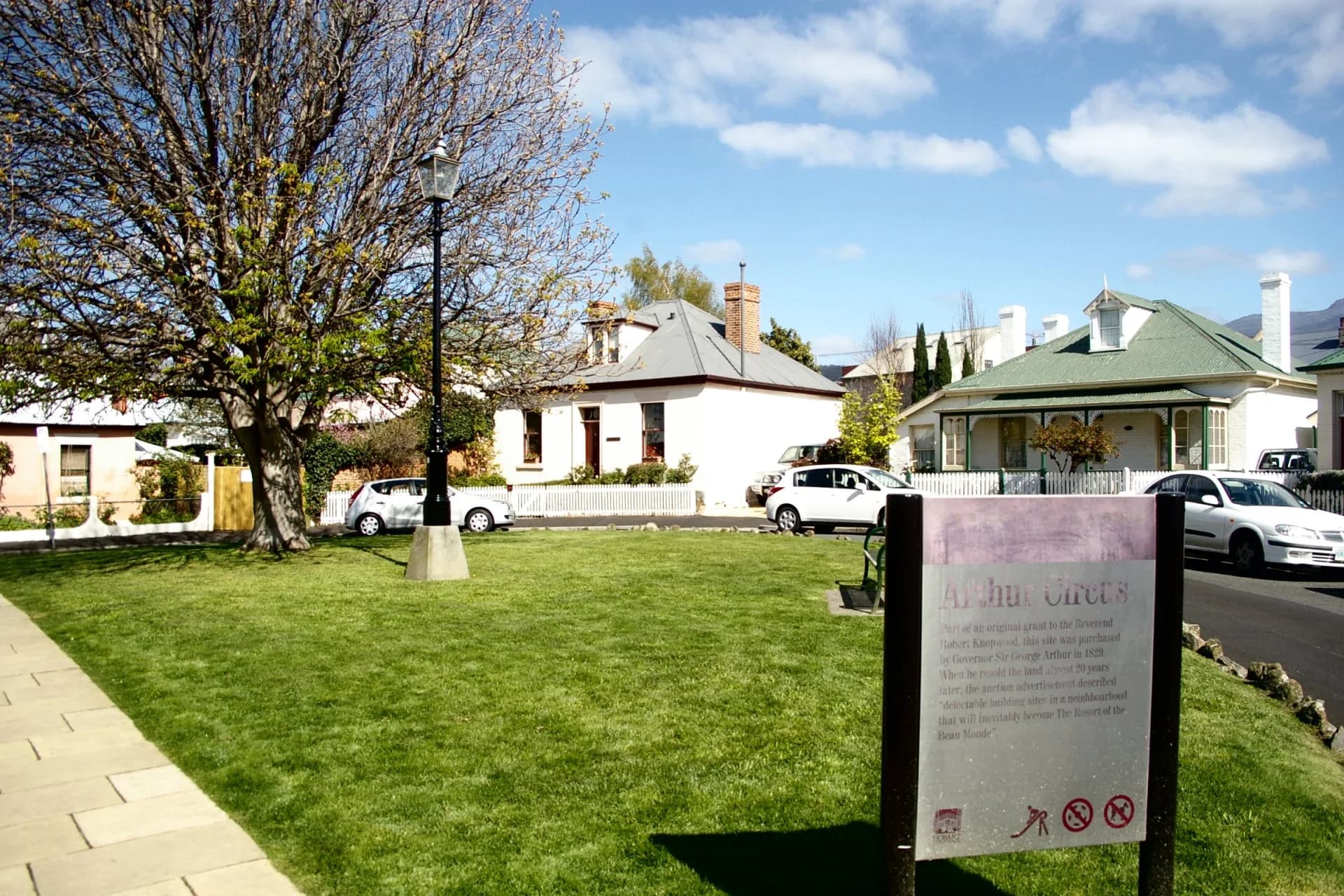
_Arthur_Circus_2012.jpg)
Princes Park and the battery
Continue towards Princes Park. The suburb takes its name from a gun battery established on the headland. The surviving landscape has been remade for recreation, but its position still explains the military logic: a clear outlook across the river approaches and harbour.
From here, views reconnect the elevated streets with shipping and waterfront work. Battery Point was home to seafarers, shipwrights, merchants, labourers and their families. Its maritime identity came from daily work as well as prominent captains and shipowners.
Return through the lower streets
Return by Napoleon, Cromwell or Kelly streets, choosing public footpaths and signed routes. Look for the irregular grain produced by older property boundaries. Some buildings are listed on the Tasmanian Heritage Register, while others contribute to a broader local precinct.
Heritage protection does not mean the neighbourhood is frozen. Houses have been altered, adapted and repaired, and good conservation often requires close physical and documentary research. Use the Heritage Tasmania register to investigate a particular place rather than relying on a plaque or repeated anecdote.
Walking responsibly
Battery Point is residential. Keep noise low, avoid blocking gates and do not enter private lanes or gardens. Footpaths can be narrow and steep, and sandstone steps may be slippery when wet. Salamanca and the waterfront can be busy during markets and events, so an early weekday visit offers a quieter reading of the streets.