
What the railway is and where it runs
The West Coast Wilderness Railway is a heritage tourist railway that operates on the historic Mt Lyell line between Queenstown and Strahan in lutruwita/Tasmania. Trains run through rainforest and river gorges and interpret the region's mining heritage. Services depart from Queenstown Station and from Regatta Point in Strahan depending on the journey selected.
Types of journeys and typical timings
The railway offers a range of journeys from short, fully seated trips to half-day expedition experiences. Timings in the source material include:
- Rinadeena, Rack & Rainforest: a three hour return steam journey departing Queenstown at 10:00. This includes travel along the Abt rack and pinion section.
- Rinadeena Footplate: a three hour return experience leaving Queenstown at 10:00 that places passengers in the cab to work alongside the driver and fireman.
- Lynchford Express: a one hour 30 minute return steam trip from Queenstown, with a 14:15 departure, and includes time at Lynchford for panning activities.
- The Cryptic Express: a one hour 45 minute return diesel journey from Strahan, with departures noted at 10:00 and 13:15. It is described as fully seated and presented as an accessible introduction to the line.
- Dining and premium on-board experiences: dining options operate on Cryptic Express services from Strahan over the same one hour 45 minute return duration and are presented as fully seated culinary experiences.
Journeys are identified in broad categories such as Expedition for longer experiences with station stops and off-train activities, and Express for shorter trips with limited or single station visits.
What you will see and do on specific trips
Rainforest, river gorges and mining-era sites feature strongly in the narrative of every journey. The Rinadeena routes include travel along about three kilometres of the historic rack and pinion section and an overhead lookout at Rinadeena station. Lynchford visits allow time to explore a former mining settlement and to try panning for gold. Dining trips focus on an on-train culinary experience rather than station stops.
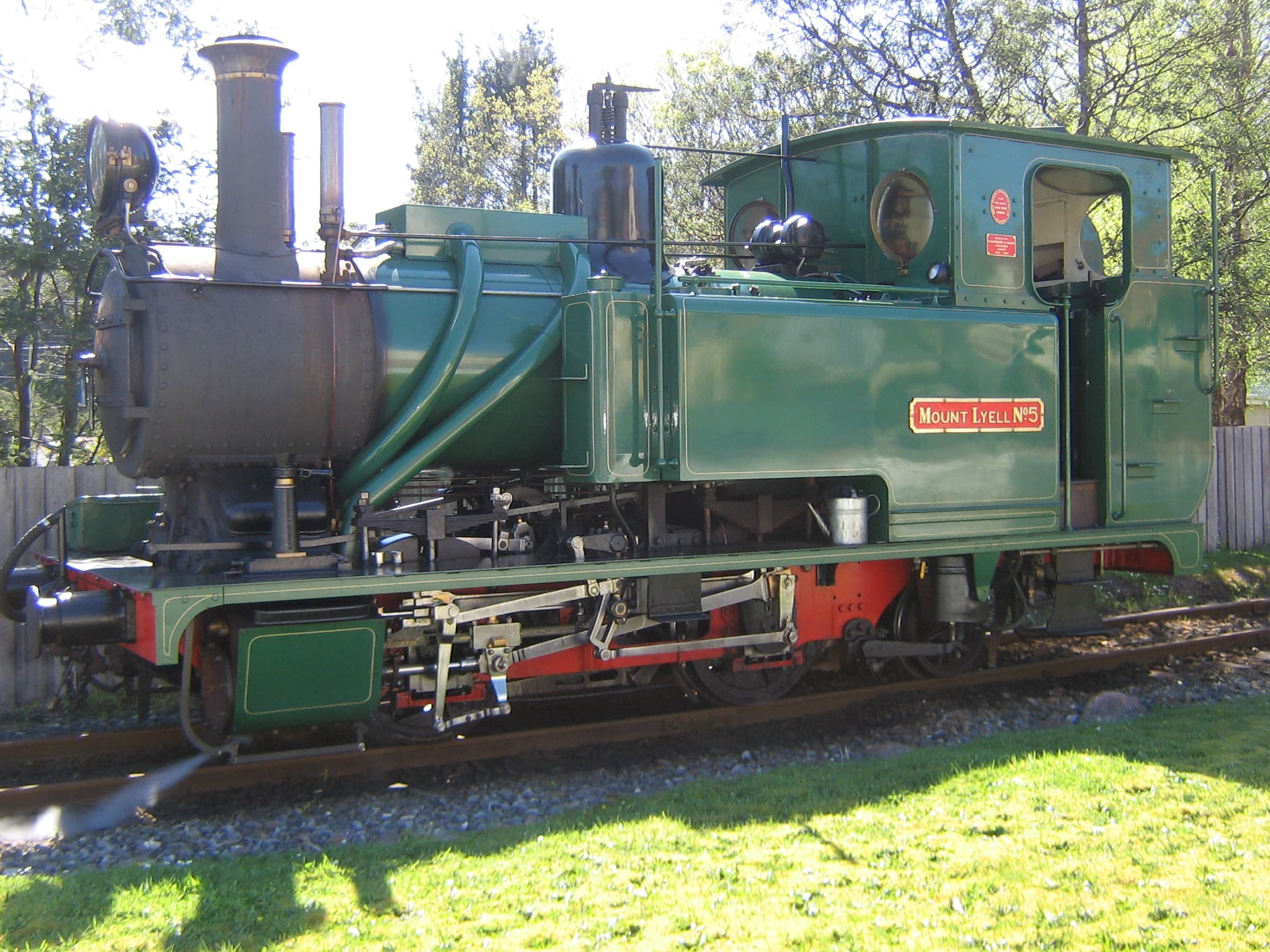
Steam and diesel traction are both used. Steam services include specialised experiences such as a footplate ride where you join the driver and fireman in the locomotive cab. Diesel services provide a relaxed, fully seated commentary-style trip from Strahan.
History, restoration and engineering
The line began running in 1896 and was officially opened in stages through 1897 and 1899 as the main link between Queenstown and Strahan. It remained the primary land access to Queenstown until road connections improved in the early 1930s. The original railway ceased operation in June 1963. A large-scale restoration project began in the late 1990s with funding and community support and resulted in the return of passenger services in December 2002. Restoration work included clearing culverts, relaying track, rerouting sections and dismantling and rebuilding nearly all of the line's forty bridges.
The line includes an Abt rack and pinion section that was built to handle steep gradients. One documented gradient for the historic rack section is listed as 1 in 16, which is part of the reason special rack equipment and steam locomotive operation are used on some trips.
Suitability and how to choose a journey
If you prefer a short, accessible run with commentary and no station stops, a fully seated diesel Cryptic Express from Strahan is described as suitable. If you want time off train to explore and try activities such as gold panning, choose trips that stop at Lynchford or other stations on expedition or express services. For enthusiasts of steam operation, the Rinadeena journeys and footplate option put you close to historic steam operation and the rack section. Dining experiences are fully seated with no station stops and focus on on-board catering.
Match the departure point to your itinerary. Some journeys depart Queenstown while others depart Strahan. The public materials suggest comparing the five main journeys to find the right fit and contacting the operator for questions.
Practical checks before you travel
Check which journey best suits your interests and which town the service departs from. Schedules, departure times and available experiences can change, so confirm current departure times and availability before planning travel. The line has a history of impacts from environmental events including landslips, floods and bushfires, and restoration work was substantial; for this reason check current operating conditions and any advisories before you go.
If you require accessibility information or have mobility considerations, note that one route is described as an accessible, fully seated introduction, while other experiences include station stops and a footplate ride that involves being in the locomotive cab. Dining services are fully seated and do not include station stops. For more detailed or up-to-date answers about bookings, accessibility or specific journey content, contact the operator directly.
What to expect on the day
Expect interpretive commentary about the line, its engineering and local people along most trips. Off-train activities are part of some journeys and not part of others, so confirm whether your chosen service includes station access. Steam operations involve heritage locomotives and specialized equipment on the rack section; diesel services provide a different on-board experience. Finally, be prepared for changing conditions in West Coast rainforest country and allow time to move between Strahan and Queenstown if your plans require it.