
Overview
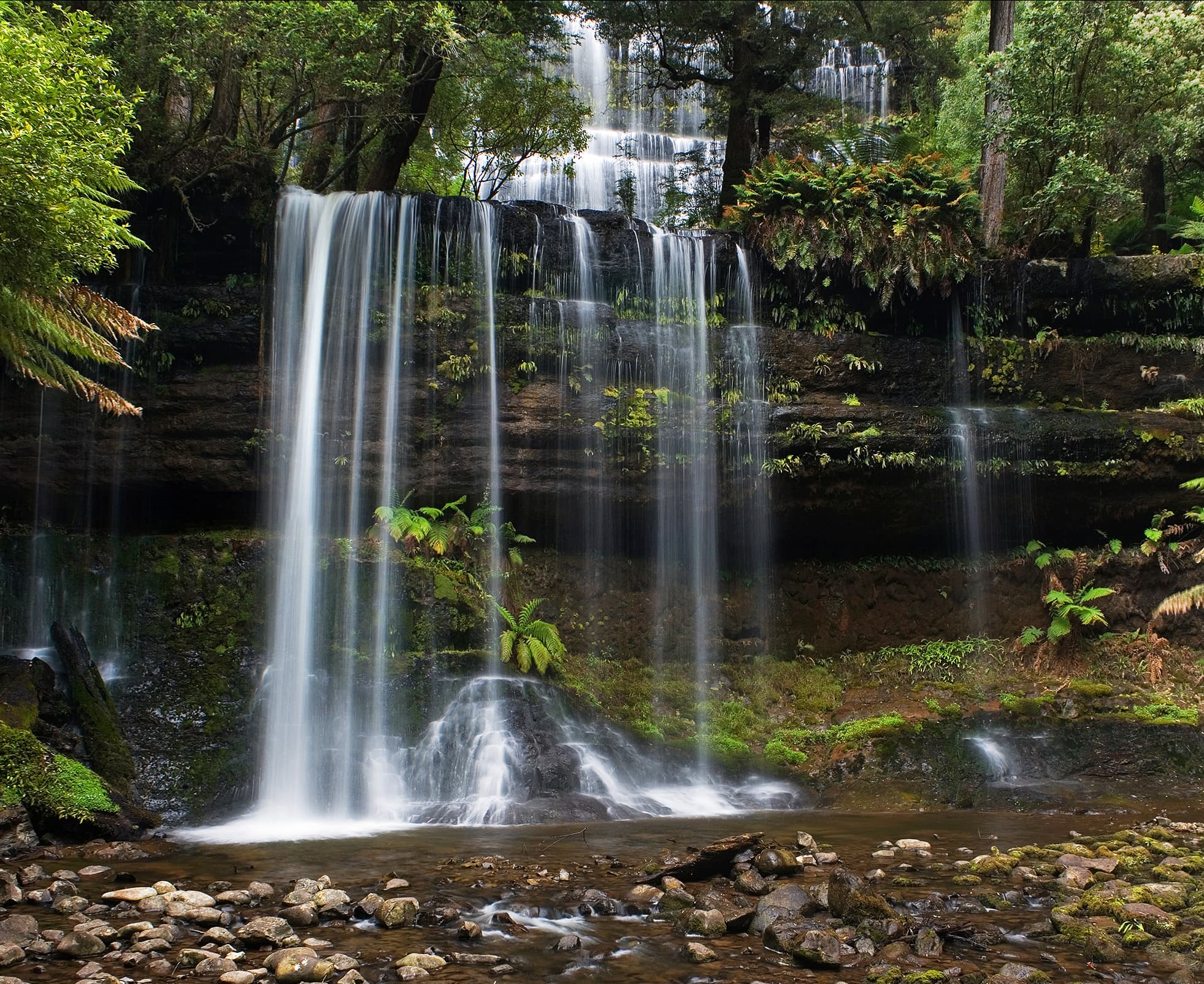
Mount Field National Park sits within the Tasmanian Wilderness World Heritage Area and combines tall eucalypt forest, rainforest gullies, glaciated high country and alpine moorlands. The park has a long conservation and tourism history and contains familiar highlights such as the three-tiered Russell Falls, the Tarn Shelf and Lake Dobson.
Getting there and access
The park is just over an hour's drive from Hobart via New Norfolk and Westerway on the A10 or B62. From the small township of National Park you follow a winding road up into the reserve. A valid parks pass is required for entry to Tasmania's national parks; a range of pass options is available through Parks and Wildlife Service Tasmania. Avoid driving in reserves at night where possible and take care for wildlife on the roads.
Short walks and accessibility near the entrance
The visitor centre and the Russell Falls precinct form the most visited section of Mount Field. A sealed, wheelchair-accessible 15 minute walk leads to Russell Falls. From there you can continue to the Tall Trees walk to view some of Tasmania's largest eucalypts. The visitor centre offers information, displays and facilities, and wheelchairs or a TrailRider (an all-terrain wheelchair) are available for hire from the centre.
High country, seasons and longer walks
Driving up to Lake Dobson takes you through forest to alpine country in about 30 minutes from the entrance. The high country contains snow gums, glacial tarns and alpine moorlands. A well-marked track from the ski huts leads to the Tarn Shelf, an area of upland lakes and fragile alpine vegetation. In winter cross-country skiing is popular when snow conditions are favourable; there are also downhill opportunities accessed via a 30 minute walk from Lake Dobson along the Urquhart Track. In autumn the deciduous beech, or fagus, turns vivid gold, orange and red on the Tarn Shelf and around Lake Fenton.
Facilities and services
The Mount Field Visitor Centre provides maps, park pass sales and local advice. There is a privately run Waterfalls Café at the entrance area. Picnic facilities, toilets and parking are available near the visitor precinct. For longer visits there are options for staying overnight, and some huts and historic features exist in the higher country. Maps for the park can be purchased as TASMAP products; the visitor centre stocks these and can advise on current track conditions.
Wildlife, cultural and natural values
Mount Field protects a wide range of vegetation from lowland to alpine habitats and contains glacially formed valleys and tarns. Common animals include wallabies, wombats and echidnas; platypus may be seen in waterways. Species that are rare or extinct on the Australian mainland, such as the eastern quoll and eastern barred bandicoot, occur in the area. Archaeological surveys indicate long-term Aboriginal occupation in the wider landscape, and local Aboriginal communities maintain ongoing connections to the place. The park was added to the Tasmanian Wilderness World Heritage Area in 2013, and Russell Falls Reserve was the first reserve proclaimed in Tasmania in 1885.
Safety, planning and what to take
Tasmania's weather can change rapidly, particularly in mountain areas. Parks and Wildlife Service Tasmania recommends planning walks to match your fitness and experience, carrying maps (mobile phone range cannot be relied upon), and carrying sufficient clothing, food and water. The agency publishes a minimum day-walk pack list and additional items for alpine or multi-day trips. A Personal Locator Beacon (PLB) is strongly recommended for remote walking. PLBs can be hired from Service Tasmania shops on weekdays and limited hire stocks are held at some visitor centres, including Mount Field, but numbers are limited and cannot be reserved.
Before you go, check current park alerts and fire information and the weather forecast. Record trip intentions where log books are provided at track heads and check in at the visitor centre for the latest advice. Be prepared to change or abandon plans if conditions deteriorate.
Practical checks and suitability
Short, sealed walks to Russell Falls are suitable for people with limited mobility when assisted. Grade 2 and 3 walks, and many alpine routes, require moderate fitness and some experience. Grade 4 or 5 walks in the park are suited only to experienced bushwalkers with navigation and emergency first aid skills. If you plan to ski or travel into the high country in winter, prepare for snow and cold and carry appropriate alpine clothing and equipment.
Continue through the Tasmania outdoors collection for more walks and natural places. For up-to-date information on park facilities, track conditions and safety advice, consult the Parks and Wildlife Service Tasmania pages linked below before you travel. Conditions such as centre opening hours, fire alerts and snow cover do change through the year, so check again close to your trip date.