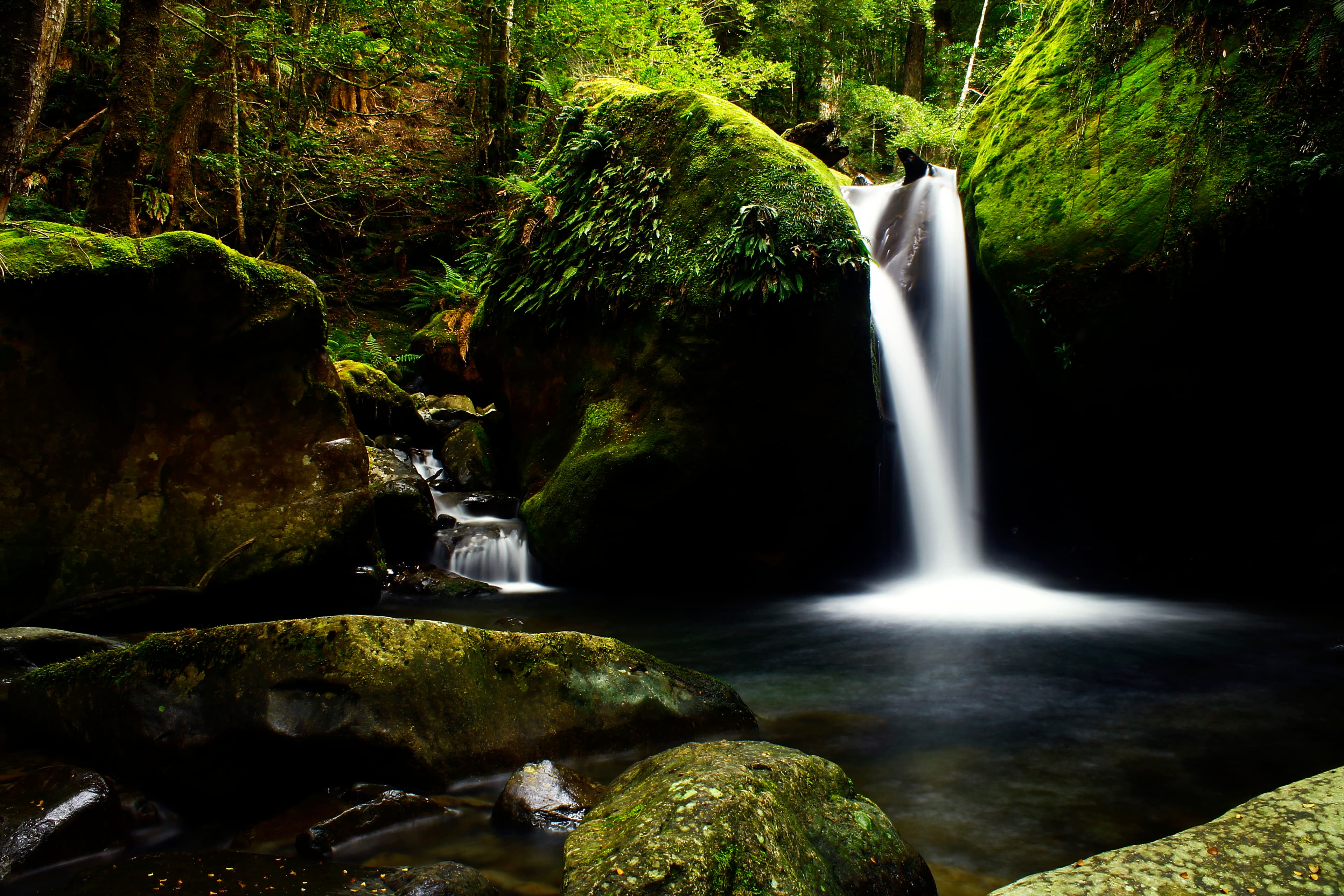

Location and character
Chasm Creek sits within the Burnie municipal area on Tasmania's north-west coast. Local government material lists it among the rural and scenic suburbs of Burnie and describes it as a quiet coastal locality that offers seclusion and natural surroundings. The entry in local council materials places Chasm Creek among the semi-rural and coastal places around Burnie rather than inside the urban centre.
Legal status and size
Chasm Creek has been declared a conservation area under Tasmania's Nature Conservation Act 2002. The proclamation that created the Chasm Creek Conservation Area records the parcel as about 56.11 hectares and identifies it on the relevant cadastral plan. The proclamation text includes formal dates associated with its making and Gazette notification. Because this is reserved land in the conservation class, the site is managed for conservation outcomes and is administered through the Tasmanian Department of Primary Industries, Parks, Water and Environment.
What to expect on the ground
The available official material frames Chasm Creek as coastal, rural and quiet. That signals a landscape of natural values rather than formal recreational infrastructure. Interpret this as an area primarily for low‑impact appreciation of nature rather than developed picnic areas or large‑scale visitor facilities. The conservation status suggests that management priorities will focus on protecting habitat and waterways, and that some uses may be restricted to protect those values.
Access, conditions and suitability
Public access arrangements and permitted activities can vary for conservation areas. Because Chasm Creek is a formally reserved conservation area, check with the administering department for any site‑specific rules or access limits before you go. The Burnie City Council lists Chasm Creek within its suburbs and manages local infrastructure and catchments, so the council is also a relevant contact for practical access information.
Suitability: the place is suited to low‑impact nature observation, quiet walks near managed entry points where such access is permitted, and for people seeking a secluded coastal setting. It is not presented in official material as an urban park with amenities, so plan for limited facilities and a simple, self‑sufficient visit.
Environmental management and drainage considerations
Local stormwater and drainage management covers the Chasm Creek catchment. Burnie City Council maintains a stormwater system management plan that references Chasm Creek as a defined catchment area. That plan means local drainage and infrastructure works, erosion control and water quality protection are active considerations in the locality. Seasonal rainfall, local runoff and drainage works may influence access routes and the condition of tracks or minor roads in the catchment.
Checks to do before you travel
- Confirm access and permitted activities with the Tasmanian Department of Primary Industries, Parks, Water and Environment because the area is reserved under the Nature Conservation Act 2002. Rules and seasonal conditions can change.
- Check local access and infrastructure status with Burnie City Council, particularly where local roads, gates or stormwater works might affect entry.
- Expect minimal visitor facilities. Carry water, shelter, footwear and navigation aids suitable for unserviced rural coastal land.
- Be prepared for variable weather and for the possibility that local drainage or maintenance works may temporarily alter access. Contact the council or the administering department for recent notices.
Practical approach for visitors
Treat Chasm Creek as protected countryside. Keep to marked or management‑approved routes if they exist, leave no trace and avoid wildlife disturbance. If you need maps or plan information for legal parcels and plan numbers, the proclamation text references the official plan entry used to identify the Chasm Creek Conservation Area. For any organised activity, research or larger group visit, obtain written permission or guidance from the administering department ahead of time.
Changing details such as temporary closures, seasonal restrictions and maintenance works happen from time to time. Planning a visit around current information will reduce the chance of encountering unexpected restrictions and helps protect the conservation values of Chasm Creek.