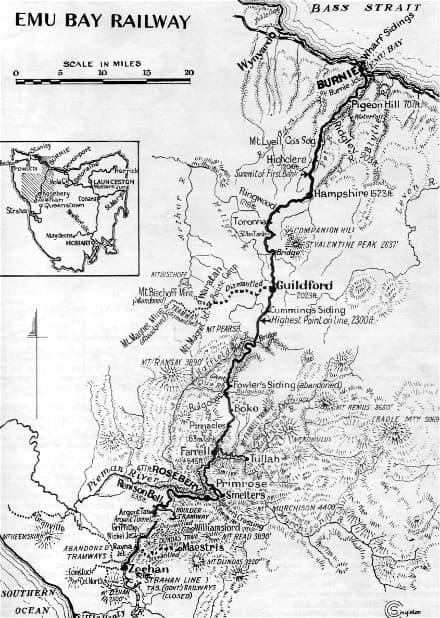

The Melba (Emu Bay) line today
The Melba (Emu Bay) railway forms part of Tasmania’s active freight network. TasRail operates services that connect Burnie with other rail terminals on the island. The company describes the network as supporting industry across the State and runs freight services around the clock. That means trains, heavy vehicles and loading activity occur at all hours rather than at set visitor times.
How the railway links with the Port of Burnie
Burnie’s deep‑water port is one of Tasmania’s main general cargo gateways. The port handles several million tonnes of freight every year and a large share of the island’s container traffic. The port and the railway interface directly: there are dedicated rail yards and shiploader facilities for concentrates and bulk cargo, and rail sidings and refuelling infrastructure sit alongside the berths. For practical purposes this creates an integrated freight corridor rather than a passenger or tourist railway experience.
What the trains carry and who uses the line
The line is freight focused. TasRail and the Port of Burnie support movement of bulk products, concentrates and containerised freight as part of the statewide logistics chain. TasRail’s published material notes frequent services across the network and identifies Burnie as a key node in the northwest. Expect diesel hauled freight consists, wagons loaded for export at port facilities and regular shunting in the yard.
Visiting rail heritage in Burnie
If you want rail history without entering an operational freight zone, Burnie offers museum displays and cultural collections that document the city’s industrial story. The regional museum holds recreations and photographic collections that reflect Burnie’s past industries. The city has also recently completed a major arts centre redevelopment to bring together gallery, performance and community spaces. These venues are the appropriate places to explore rail heritage for visitors.
Access, permissions and practical constraints
The rail yard, shiploader areas and working berths are active commercial facilities. Port operations and rail yards are managed by TasPorts and TasRail and have access rules. Public access to operational areas is restricted for safety and security reasons. If you need to enter the port or rail precinct for any reason, make arrangements with the relevant operator and follow the port procedures that apply to visitors and contractors.
Safety on and near the tracks
Rail safety is an ongoing focus for operators. TasRail runs public safety initiatives and emphasises responsible behaviour at level crossings and around rail corridors. When moving around Burnie, assume trains operate at any time. Keep clear of tracks, obey signage at crossings and do not enter fenced or signed working areas. Noise and vehicle movements can start or continue overnight because freight services operate 24/7.
Suitability for visitors and planners
This corridor is suited to industry users, logistics planning and people interested in industrial heritage through museums and curated displays. It is not a scenic or tourist passenger line. Photographers and rail enthusiasts should plan shoots from public vantage points only and avoid approaching active infrastructure. For research, logistics or organised group visits, contact TasRail or TasPorts to discuss permissions and safety requirements.
Checks to make before you go
- Confirm operational notices with the rail operator before visiting any site near the tracks. Service patterns, track works and safety closures can change.
- Check Port of Burnie procedures if your plans involve the port precinct. Permits, induction and protective equipment may be required for shore side access.
- Verify museum and arts centre opening hours and temporary exhibition arrangements with local council venues if you want to view heritage collections.
What to bring and what to expect on site
Bring a camera and suitable footwear for public vantage points and museum visits. If your visit requires entry into operational areas, follow any specified personal protective equipment rules and induction steps. Expect industrial sounds, large vehicles and active loading equipment at the port and rail yard. Take care with children and keep them well clear of tracks and fenced areas.
Short practical checklist
- Assume operations are continuous and that freight moves overnight.
- Treat level crossings as live and obey all signals.
- Do not enter port or rail yards without permission.
- Use museums and designated public viewpoints to explore rail history.
This guide concentrates on the Melba (Emu Bay) freight corridor through Burnie and practical considerations for visiting or working near it. For operational or regulatory details contact the responsible operators and the Burnie municipal cultural venues to confirm access arrangements and opening hours before travel.